About Etheostoma parvipinne Gilbert & Swain, 1887
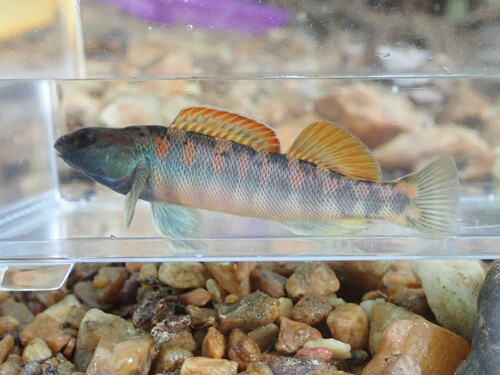
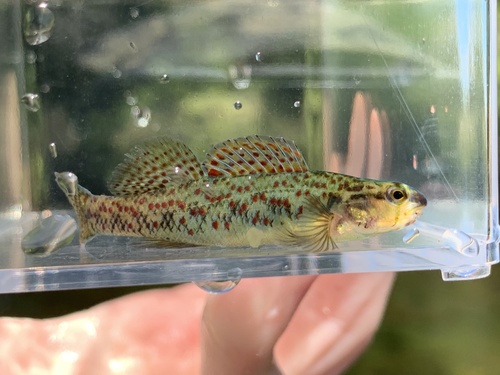
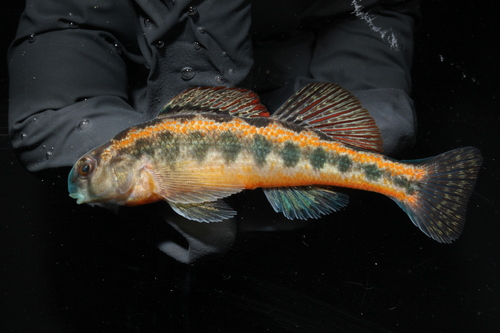
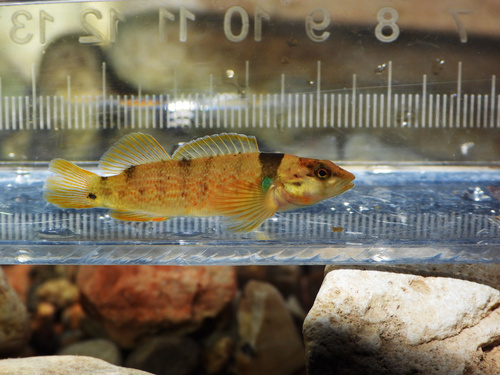
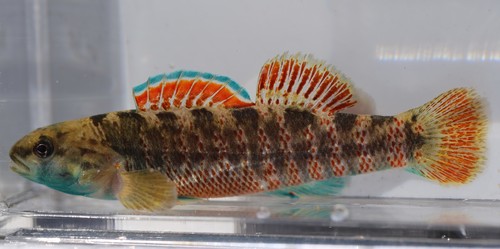
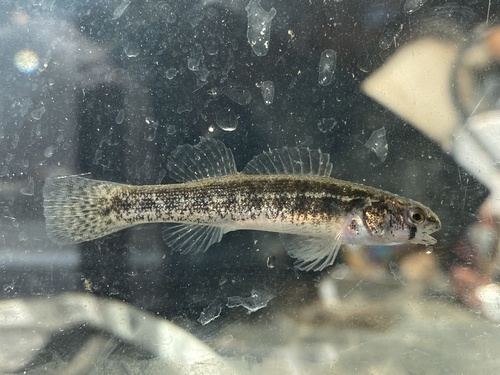
The goldstripe darter, scientifically named Etheostoma parvipinne Gilbert & Swain, 1887, is a species of freshwater ray-finned fish. It is a darter belonging to the subfamily Etheostomatinae, which is part of the family Percidae — a family that also includes perches, ruffes, and pikeperches. This species is endemic to the southeastern United States. Its range covers Gulf Slope streams from the Colorado River drainage in Texas to the Flint River in Georgia, the Ocmulgee River system on Georgia’s Atlantic Slope, and the Mississippi embayment north to southeastern Missouri and western Kentucky. It also occurs across the Gulf Coastal Plain, including parts of Alabama, Mississippi, Tennessee, Kentucky, Arkansas, Louisiana, and Oklahoma, and lower Mississippi drainages extending west to the Colorado River Basin in Texas. Confirmed modern populations exist in a wide set of drainages: Savannah River, Ogeechee-Altamaha River (covering drainages from south of the Savannah River to and including the Altamaha River), Apalachicola Basin (including the Chipola, Chattahoochee, Flint, and Apalachicola Rivers), St. Andrew-Choctawhatchee-Pensacola Bays, Coosa-Tallapoosa River, Alabama-Cahaba River, Tombigbee-Black Warrior River, Pascagoula-Biloxi-Bay St. Louis, Pearl River, Lake Pontchartrain, Minor Mississippi Tributaries South, Black-Yazoo River, Minor Mississippi Tributaries North, Lower Tennessee River, St. Francis River, White River, Ouachita River, Red River, Sabine Lake, Galveston Bay, San Jacinto River, Brazos River, and Colorado River. There are few historical records of the goldstripe darter’s distribution beyond occasional passing mentions, so it is difficult to determine if, or how, its distribution has changed over time. Current populations are believed to be stable. The goldstripe darter is typically found in small springs, streams, and creeks that have aquatic and marginal vegetation and detritus. It prefers habitats with vegetative cover, which can be aquatic vegetation, algae beds, or detritus, and its favored substrates are sand, small gravel, and rubble. It is not usually found in rivers or streams wider than 15 feet, nor in locations with large gravel or mud substrates. Its preferred pH range is between 6.1 and 6.5, though one population has been found that tolerates pH as low as 2.9. It prefers temperate climates, occurring between 31°N and 38°N in latitude. Spawning for the goldstripe darter occurs between roughly mid-March and June. When spawning begins, the male’s body color changes: it shifts from uniform olive-brown, or olive-brown with darker blotches, to brown with black vertical bars. The black teardrop marking darkens, and the eye becomes intensely red. The pelvic and anal fins darken from dusky to uniform black, while the dorsal fin becomes intensely black. During aggressive encounters with other males, males perform stationary, lateral displays with erect dorsal fins, but no elaborate courting displays have been observed between males and females. Males pursue females and wait for them to spawn. Goldstripe darters mate with multiple partners over the breeding season, provide no parental care, and females spawn multiple times each breeding season. The eggs are strongly adhesive, attached singly to spawning substrate, which is most often plants or gravel, and occasionally the sides of rocks. Goldstripe darters do not bury their eggs. Estimated clutch size is 66 eggs, and the average egg diameter is roughly 0.86 mm. The goldstripe darter is a common species with a wide range and numerous sub-populations, and the International Union for Conservation of Nature has assessed its conservation status as least concern.