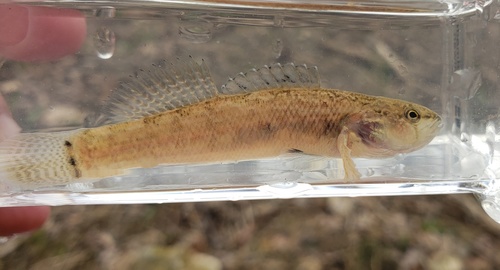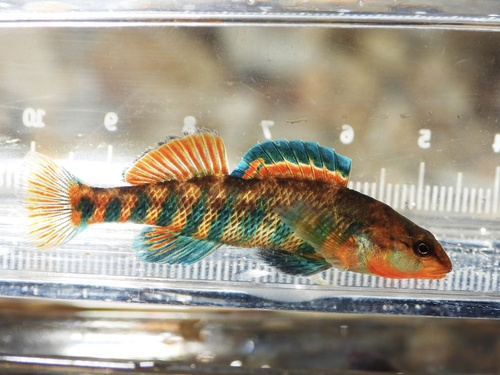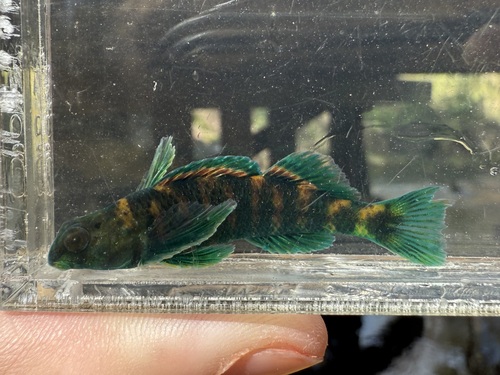
About Etheostoma lynceum Hay, 1885
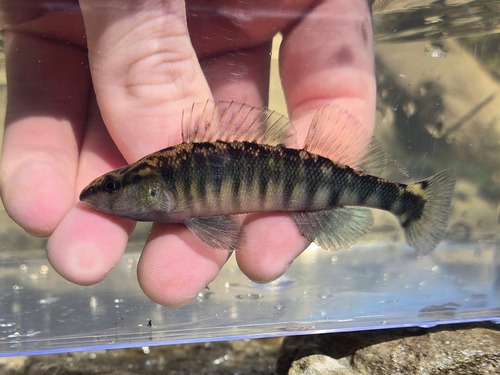
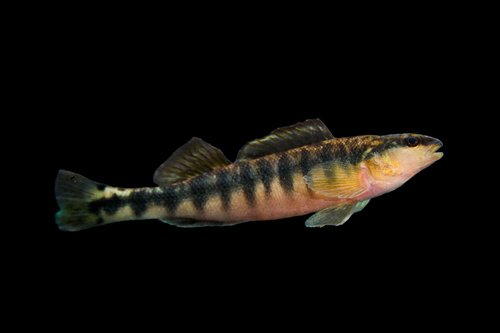
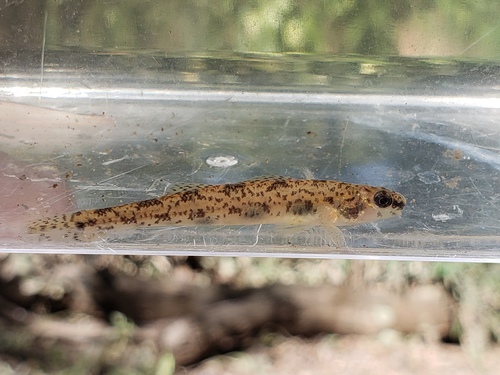
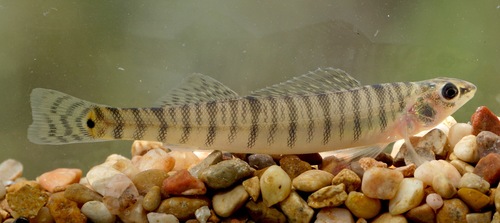
The brighteye darter, scientifically named Etheostoma lynceum Hay, 1885, is a species of freshwater ray-finned fish. It is a darter belonging to the subfamily Etheostomatinae, which is part of the family Percidae — a family that also includes perches, ruffes, and pikeperches. This species is endemic to the eastern United States. It was first formally described by Oliver Perry Hay in 1885, who noted that it is closely related to the banded darter (E. zonale). Until the 1970s, the brighteye darter was generally considered to be just a genetic variant of the banded darter.
The brighteye darter lives in the lower benthopelagic zones of freshwater streams and rivers. Its distribution covers eastern tributaries of the Mississippi River, ranging north from Louisiana to western Tennessee, and extending east along the Gulf Coast to the Escatawpa River system in Mobile County. It can also be found in the area of the former Mississippi embayment in western Kentucky, and in coastal drainages running from the Escatawpa River in Alabama to the Mississippi River in Louisiana. Rechannelization may have eliminated this species from some parts of its natural range in Alabama, but brighteye darters have been able to colonize more suitable streams as they move up the Mississippi River system.
The brighteye darter feeds primarily on invertebrates, mostly flies from the family Chironomidae. The larval stage of these flies makes up an important part of the benthic aquatic ecosystem that the brighteye darter inhabits. The darter waits for fly larvae to emerge from their egg casings, and eats them before they can swim away. These flies hatch year-round, and their larvae make up 75 to 80 percent of the brighteye darter's diet. Unlike other related darter species, the brighteye darter does not switch its food source between seasons. For comparison, other darter species such as the blackbanded darter (Percina nigrofasciata) change their diets with each season, resulting in much more diverse diets overall. The brighteye darter prefers clear, fast-flowing water with gravel riffles, a habitat type that occurs in multiple locations across the Mississippi River Basin.