About Etheostoma kennicotti (Putnam, 1863)
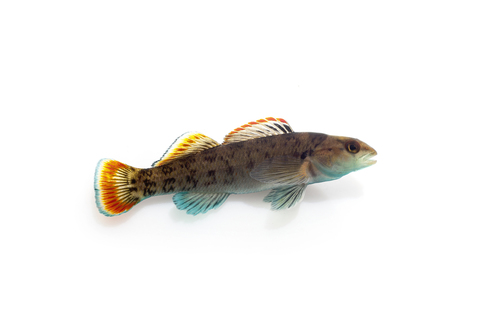
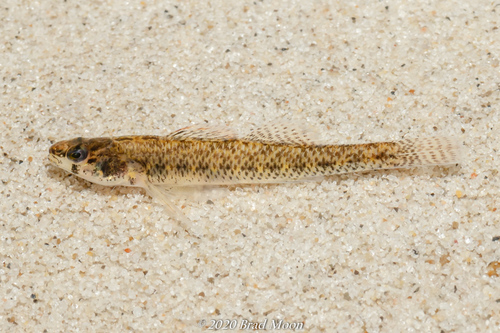
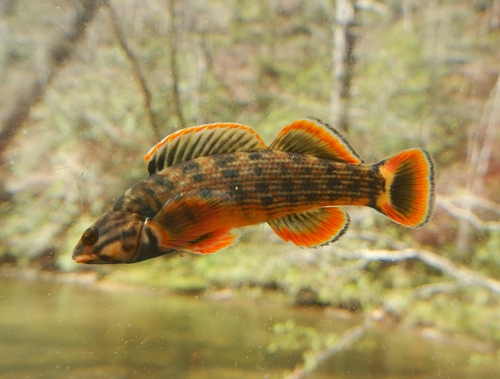
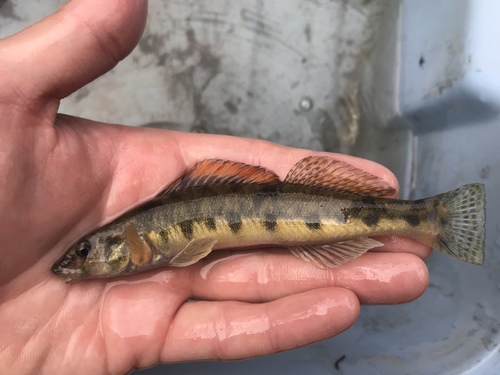
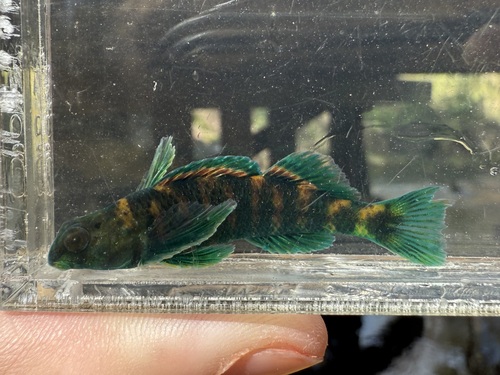
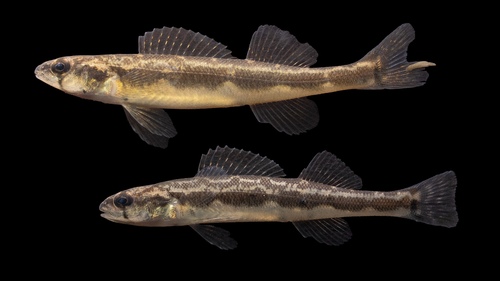
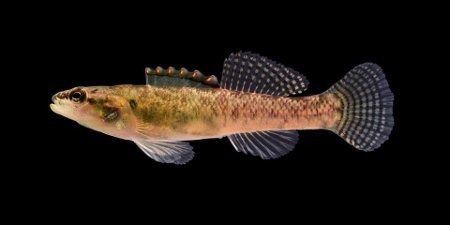
The stripetail darter, scientifically named Etheostoma kennicotti (Putnam, 1863), has adult males that are golden orange and grow up to 2.8 inches (7.1 cm) long. This species has black bands on its caudal fins and soft dorsal fins. The stripetail darter is a small, benthic freshwater fish that lives in river tributaries. Its historic native geographic range is likely similar to its current range. At present, the species lives in tributaries of the Ohio, Tennessee, Cumberland, and Paint Rock river systems. A population of stripetail darters also lives in the Green River drainage in Kentucky. The Paint Rock and Ohio River systems hold the species' largest populations, and it is less common across the Tennessee River system. Stripetail darters are found in the U.S. states of Tennessee, Ohio, Kentucky, Illinois, Alabama, Georgia, and Mississippi. Across its overall range, the species' distribution is typically spotty, with multiple separate subpopulations, but the species as a whole remains abundant. Page and Smith found that the species varies slightly between different subpopulations based on their location. This population isolation may be caused by climate-related factors including low temperatures and low water levels. The current estimated total population across the species' range is over 10,000 individuals, and the population is stable. The stripetail darter's diet consists of mayflies, fishflies, midge larvae, isopods, stoneflies, and cladocerans. This species can tolerate a wide range of water pH levels and temperatures. Stripetail darters typically live in slab pools in streams and headwaters, as well as creeks and small slow-flowing rivers with rocky substrate and rubble. They can also be found in riffles, under stones, and under overhanging banks in pools, and they often occur among emergent vegetation.