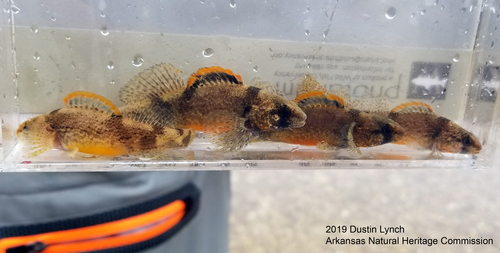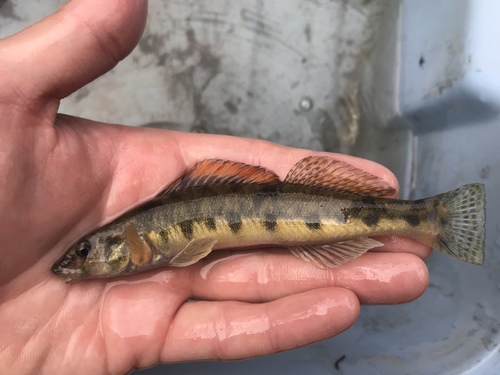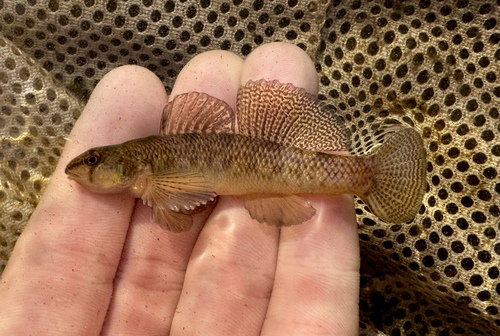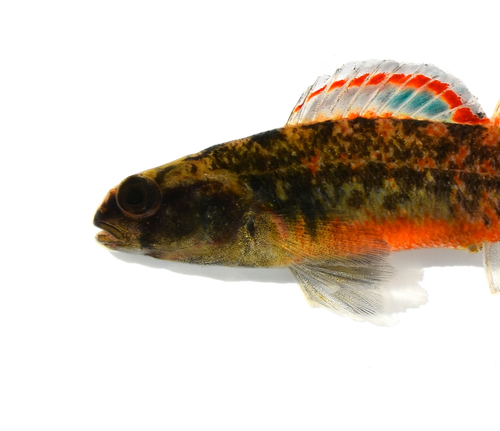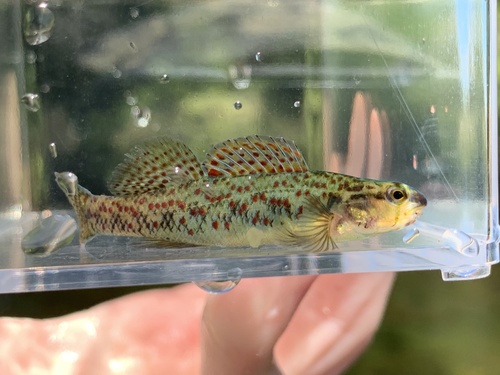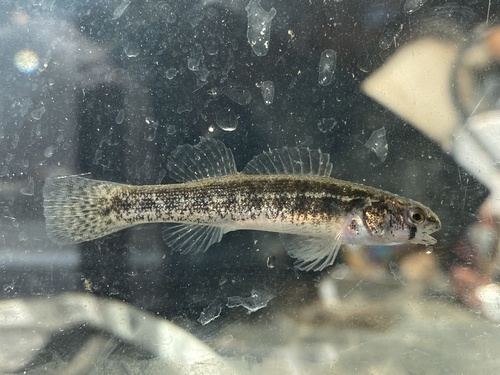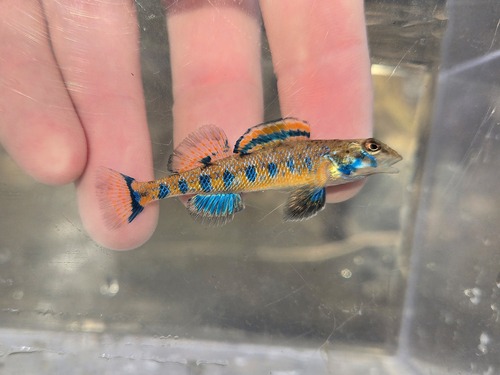
About Etheostoma jessiae (Jordan & Brayton, 1878)
The blueside darter, scientifically named Etheostoma jessiae, is primarily distributed in the Tennessee River drainage within the southeastern portion of North America. It is most commonly found in most of the middle and upper Tennessee River drainage across Tennessee, Alabama, Georgia, North Carolina, Virginia, and Mississippi. Scattered collections have also recorded the species in the Bear, Barren Fork, Second, and Shoal creek systems, all tributaries of the Tennessee River; it occurs less commonly in Bear Creek, Shoal Creek, and Barren Fork. The total extent of this species' occurrence is approximately 20,000 square kilometres (7,700 sq mi).
Blueside darters are benthopelagic freshwater fish. Their preferred habitat is rocky pools and adjacent riffles in clear creeks and small fast rivers with sand and gravel substrate and moderate gradient. They are commonly found in slow to moderate flow at the shallow margins of pools and runs, and also occur in streams that generally have moderate to swift flows. It is difficult to confirm whether substrate or water flow is a defining characteristic of their habitat choice, as substrate variation depends on both water depth and water movement. A 2009 study conducted by Schilling found that blueside darters generally stay in fairly shallow water, with a maximum recorded depth of 60 cm (24 in). In the regions the species occupies, seasonal temperature variation does not limit the fish's micro-habitat selection. Schilling's study also showed that the blueside darter can tolerate changes in conductivity, and the average pH of its micro-habitat sites is slightly basic, consistent with a limestone rock substrate.
Overall, blueside darter populations have remained relatively stable across most of the species' range. However, scientists have observed a downward population trend in a small number of areas. Anthropogenic factors that may contribute to this decline include water pollution, agricultural runoff, and siltation.