About Etheostoma flabellare Rafinesque, 1819
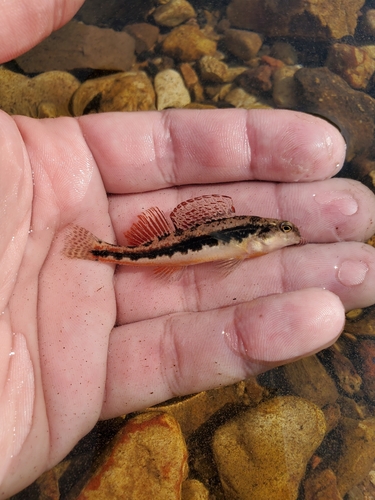
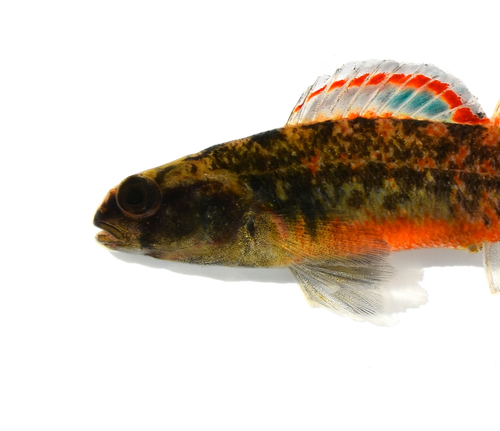
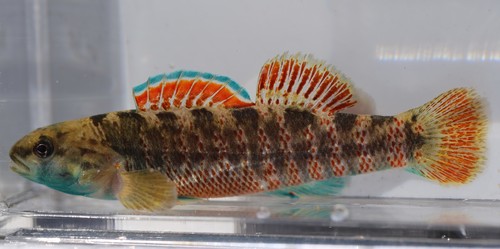
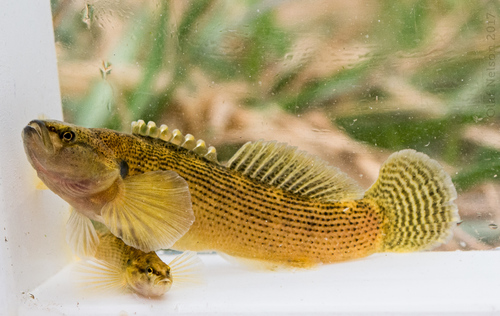
The fantail darter, with the scientific name Etheostoma flabellare Rafinesque, 1819, is a species of freshwater ray-finned fish. It is a darter belonging to the subfamily Etheostomatinae, which is part of the family Percidae — a family that also includes perches, ruffes, and pikeperches. It is widely distributed across streams in North America. The fantail darter ranges across most of eastern North America, extending from the Great Lakes and Mississippi River basins to South Carolina and northern Alabama, and reaches as far west as northeastern Oklahoma. All of these populations live in small streams. Like many other darters, they occur in areas of the stream with cobbles and flat stones due to their breeding habits, and are especially abundant near large slabs of limestone or shale. Partly because of their broad range of habitats, fantail darters have not been classified as endangered. The species is well adapted to life in streams, including seasonal environmental changes that naturally occur in these habitats. Such changes include the loss of microhabitats, which forces the fish to drift downstream to find new suitable habitat, as well as shifts in oxygen levels caused by pollution or weather. Like other darters, fantail darters have multiple predators. Their coloration provides good camouflage, allowing them to blend in easily with the surrounding stream bed and rocks. The size of an individual fantail darter determines what it can eat: smaller individuals eat tiny insects, while larger ones eat larger insects and larvae. Recorded food sources include mayflies, caddisflies, dipterans, copepods, cladocerans, amphipods, isopods, and gastropods. Larger fantail darters feed on larger insects, which includes mayfly and midge larvae. Fantail darters are primarily benthic invertivores, so they live in shallow, high-velocity stream microhabitats called riffles. If their microhabitat is destroyed or its resources are exhausted, the fantail darter will simply move to another microhabitat where more food is available. In summer, stream temperatures rise considerably, which lowers water oxygen levels. Fantail darters tolerate this temperature change and low oxygen levels well. When temperatures rise, stream water evaporates more quickly, and the fantail darter has adapted to this condition by leaving drying riffles. Even though the species has a relatively high tolerance for low oxygen conditions, extremely low oxygen levels are still harmful, and the fish will eventually die if oxygen levels drop too far. Low oxygen levels can also result from stream pollution. Pollution can also kill the small invertebrates that fantail darters eat.