About Etheostoma chlorobranchium Zorach, 1972
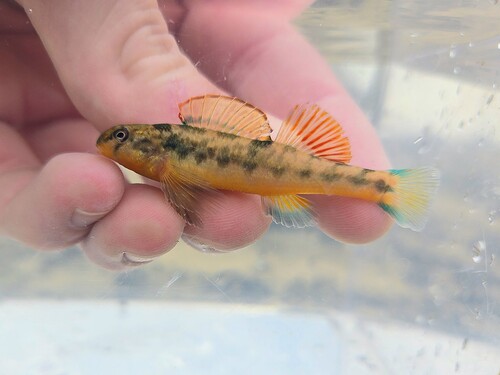
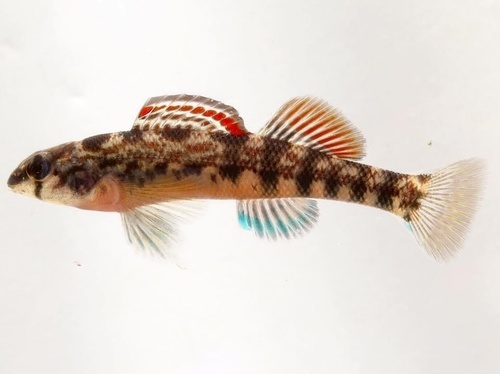
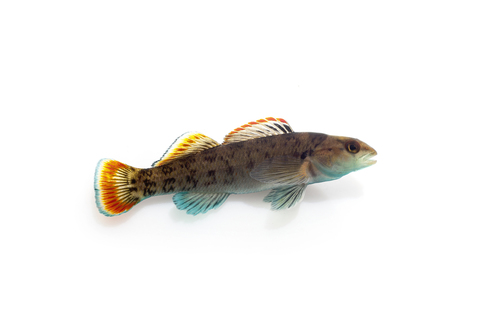
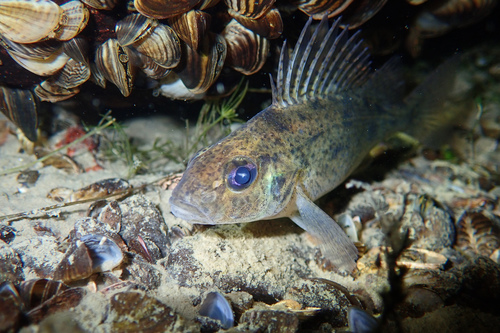
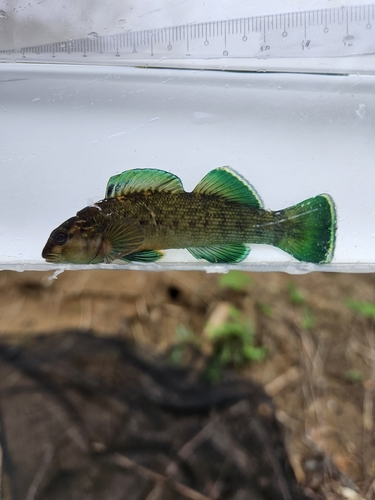
The greenfin darter, whose scientific name is Etheostoma chlorobranchium Zorach, 1972, is also sometimes referenced as Nothonotus chlorobranchius. This species is a freshwater ray-finned darter that belongs to the subfamily Etheostomatinae, part of the family Percidae. This family also includes perches, ruffes, and pikeperches, and the species is endemic to the eastern United States. Its geographic distribution is primarily restricted to fast-flowing, mountainous streams and rivers in the upper Tennessee River drainage area, covering North Carolina, Georgia, and Tennessee. The species' range extends from the upper Holston and Watauga Rivers, south through the French Broad and Little Tennessee Rivers, to its southern end at the Hiwassee River. The greenfin darter is a benthic insectivore, feeding mainly on insect larvae in cold, high-elevation creeks and rivers. A study by Bryant et al. found that the diet of the greenfin darter may be the most diverse within its genus, with the guts of some individuals containing up to 15 different insect species. Its main predators are larger freshwater fish, such as smallmouth bass (Micropterus dolomieu) and madtoms of the genus Noturus. Darters as a group are important food sources for many fish: freshwater eels commonly eat adult darters, and suckerfish prey on their eggs. This species is relatively abundant, and it has been recorded hybridizing with N. camurus and N. rufilineatus in areas where their ranges overlap. Like many other darter species, the greenfin darter has developed morphological adaptations that reduce drag, allowing it to stay stationary on the substrate even in fast-flowing riffles. Spawning for the greenfin darter takes place from late May to early August. Females bury themselves in the substrate in sheltered areas away from strong currents, and release eggs when a mate arrives. The male may stay at the spawning site for several hours to guard the eggs. Greenfin darter juveniles grow extremely rapidly, reaching 45 mm (1.8 in) in length in just one year. The mean adult length of the species is 62 mm (2.4 in), and some individuals can grow as large as 110 mm (4.3 in). Members of this species can live up to five years, and it is thought to be the largest species within the genus Nothonotus.