About Eterusia aedea (Clerck, 1759)
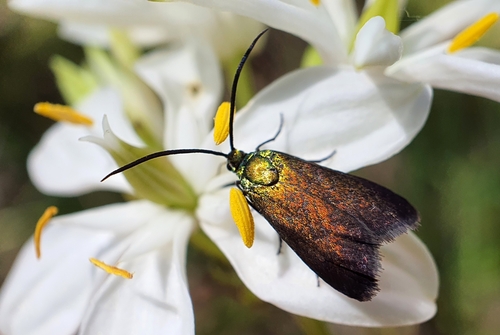
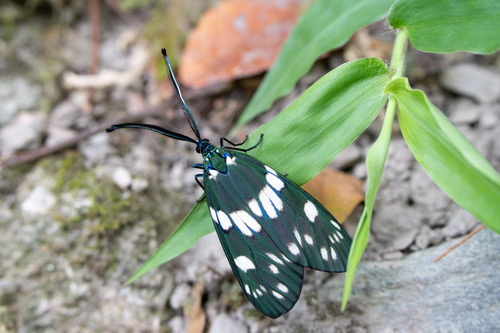
Eterusia aedea (Clerck, 1759) has an average wingspan of around 50 mm for males and 56 mm for females. Members of this species have a semi-diurnal activity pattern and a fairly elongated, narrow body. In males, the first two abdominal segments are black, there are no dorsal abdominal bands, and the tip of the abdomen is also black. Forewings are dark green. The basal black area on the hindwings is larger, which reduces the width of the very pale yellow band found on the hindwing. Larvae of Eterusia aedea have been documented feeding on a wide variety of host plants: these include Bischofia javanica, Aporosa lindleyana, Aporosa villosa, Cornus florida, Lagerstroemia, Melastoma candidum, Myrica rubra, Sloanea formosana, Rhododendron, Symplocos glauca, multiple Camellia species (C. japonica, C. sasanqua, C. sinensis, and C. oleifera), Eurya japonica, Eurya septata, Cleyera japonica, and Buddleja. Larvae of the subspecies aedea, sinica, formosana, cingala, and virescens have been reported to be pests of tea.