About Estrilda melpoda (Vieillot, 1817)
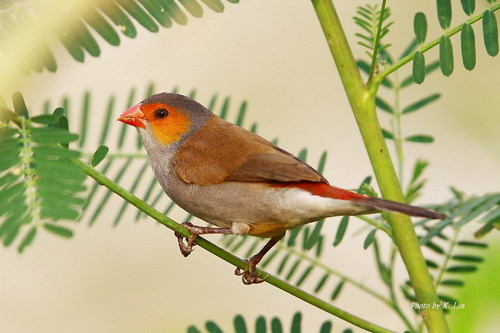
The orange-cheeked waxbill, with the scientific name Estrilda melpoda, is a common species of estrildid finch that is native to western and central Africa. Its estimated global extent of occurrence is 3,600,000 km2. Orange-cheeked waxbills favor habitats with abundant grass. In their environment, they feed on grass seed heads, forage at grass roots to find small insects, and build their nests directly within grass. When kept in enclosures, open tall shrubbery and dead, scraggly branches should be provided for roosting. The enclosure floor needs to be covered with a good, dry substrate. Enclosures should also contain stands of clump grass, runner grass, or both, plus reeds that reach 40 cm or taller in height. Walkways must be created through the grass when setting up the enclosure to allow for habitat maintenance without stepping on nests. For reproduction, this species prefers to nest close to the ground or directly on the ground, in tangled clumps of tall grass. They build their nests by gathering surrounding grass stems, and they often incorporate old grass seed heads called panicles to help camouflage the nest structure. The interior of the nest is lined with fine white feathers. The female lays three to six tiny white eggs, which are incubated for 13 days. Fledglings leave the nest approximately 23 days after hatching. Young fledglings resemble their adult parents, but their orange ear coverts are duller for the first few months after leaving the nest.