About Espostoa lanata (Kunth) Britton & Rose
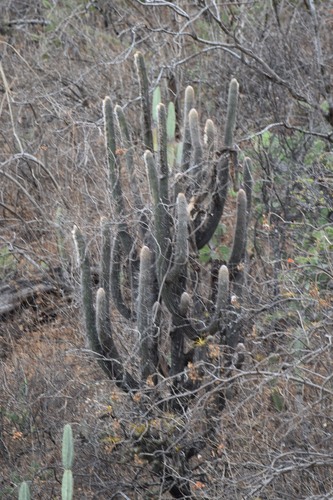
Espostoa lanata is a columnar cactus that visually resembles *Cephalocereus senilis*, commonly called the Old Man of Mexico. It is a densely hairy species covered in a thick warm woolly coat, and is well adapted to high altitude environments. It is widespread across its natural habitat, and shows considerable variability in size and spine characteristics; this variability has led to the species being given multiple different scientific names over time. In the wild, this cactus grows as a single column reaching up to 7 meters tall, while cultivated specimens only reach up to 3 meters tall. Column diameters range from 5 to 20 centimeters, and plants develop between 18 and 25 ribs. Both the ribs and sharp central spines are mostly hidden by the plant’s woolly radial spines. This species does not produce branches until it is several years old. It also does not flower until it is several years old, producing night-blooming flowers from a lateral cephalium. The woolly hairs of Espostoa lanata have traditionally been used as filling for pillows in Peru. The species’ native range extends along the western slopes of the Andes mountains, from southern Ecuador to northern Peru. Espostoa lanata is easy to grow in cultivation. It requires fertile, well-drained soil. During the summer, plants should be watered thoroughly, and allowed to dry completely between waterings. A cactus-specific fertilizer should be applied once a month through the growing season. In winter, plants must be kept dry. While it can tolerate temperatures as low as −12 °C, it is best grown where it will not be exposed to frost. It needs full sun exposure during the summer, and at minimum bright light during the winter. When given favorable growing conditions including ample sun, sufficient water, and growing space, it can add up to 20 centimeters of new growth per year.