About Erythronium dens-canis L.
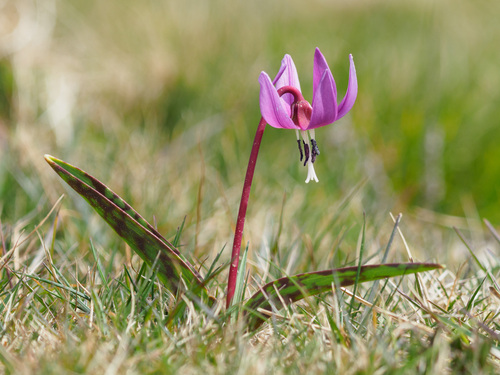
Erythronium dens-canis L. produces a single white, pink, or lilac flower in early spring. Its petals reach approximately 3 centimeters in length, are reflexed at the tip, and have a yellow tint at the base. This plant produces a pair of brown-spotted leaves that range in shape from ovate to lanceolate. It grows from an oblong white bulb that resembles a dog's tooth; this resemblance gives the species its common name "dog's tooth violet" and its Latin specific epithet dens-canis, which translates to "dog's tooth".
In ecology, Erythronium dens-canis grows in damp, lightly shaded environments such as deciduous woodland.
The leaves of Erythronium dens-canis can be eaten raw in salads, or boiled and eaten as a leaf vegetable. Its bulb provides starch that is used to make vermicelli.
Many botanical varieties have previously been described within Erythronium dens-canis. None of the formerly recognized European varieties are currently considered taxonomically distinct. However, some taxa once treated as varieties of this species from Asia are now classified as separate full species. These reclassified taxa include Erythronium dens-canis var. japonicum, now renamed Erythronium japonicum, and Erythronium dens-canis var. parviflorum and Erythronium dens-canis var. sibiricum, both now classified as Erythronium sibiricum.