About Erythemis simplicicollis (Say, 1840)
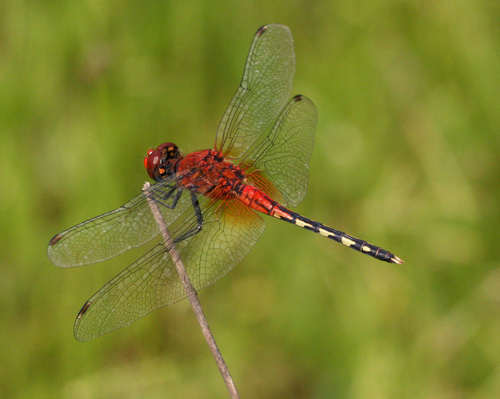
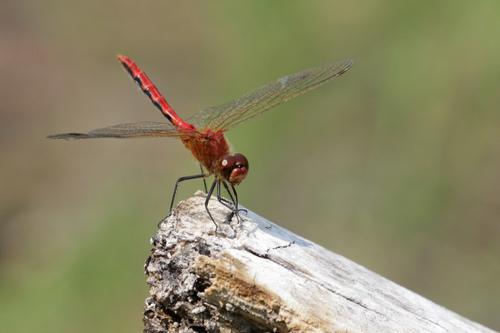
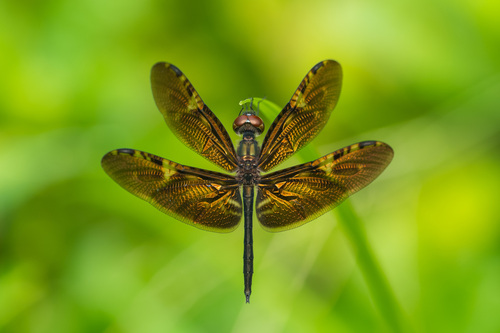
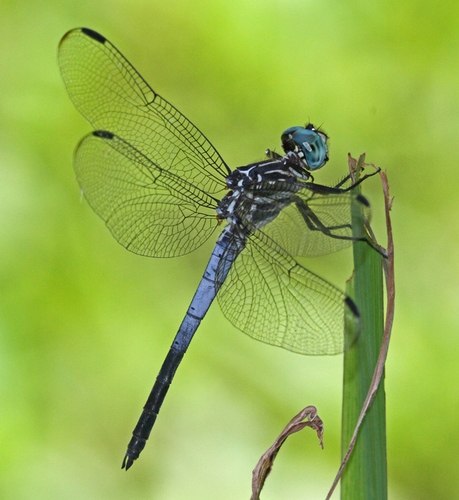
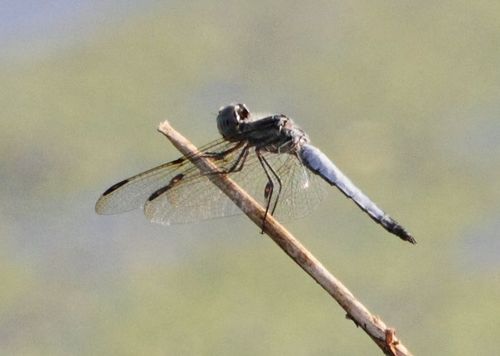
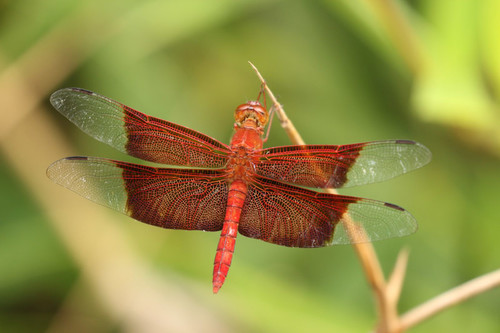
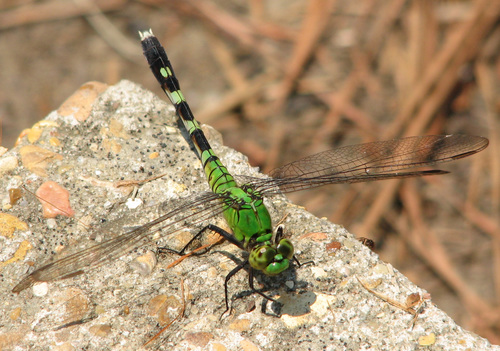
This dragonfly species, Erythemis simplicicollis, is commonly known as the eastern pondhawk. Nymphs of the eastern pondhawk can be identified by their green eyes. When nymphs leave the water and moult for the final time, the newly emerged immature adult is dull olive green. Over a few hours, its abdomen becomes bright green, it develops dark brown banding, and its head gains a metallic green sheen. Over the course of an adult male’s life, its green colouring gradually changes to a duller shade of blue, and finally becomes a powdery bluish-grey. The species has distinctively veined wings, with dark margins near the wing apices. Eastern pondhawk dragonflies measure 36 to 48 mm (1.4 to 1.9 in) in length. The eastern pondhawk is native to parts of North America and Central America. Its range covers the Canadian provinces of Ontario and Quebec, most of the eastern United States, the Bahamas, the West Indies, Mexico, and Central America extending south to Costa Rica. It is a widespread and abundant species, and the International Union for Conservation of Nature has assessed its conservation status as least concern. The eastern pondhawk is an athletic, swift-flying predator that can catch damselflies and other insect prey while in flight. Between hunts, it rests on vegetation, prepared to take flight when prey comes into view. Newly emerged eastern pondhawks hunt away from water at first. After around two weeks, they return to ponds. Males establish territories and chase away rival males. Males guard floating algal mats, which are suitable sites for females to lay eggs. Satellite males stay near these territories, waiting for a chance to intercept females or take over a territory. Mating occurs while the dragonflies are perched on vegetation near the water. Within one minute after mating, the female begins laying eggs, with the male hovering nearby to guard her. She flies low over the pond, dipping her abdomen into the water to deposit her eggs at intervals. Some females mate multiple times in a single day. In Florida, new groups of adult eastern pondhawks emerge throughout the summer, and reproductive adults have a lifespan of around ten days.