About Erysiphe alphitoides (Griffon & Maubl.) U.Braun & S.Takam.
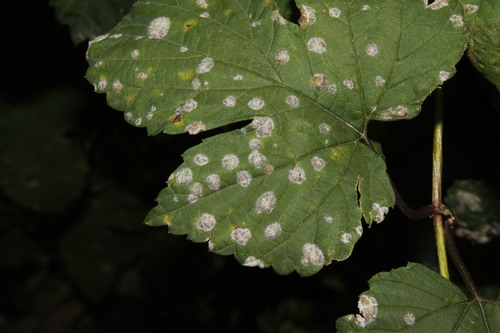
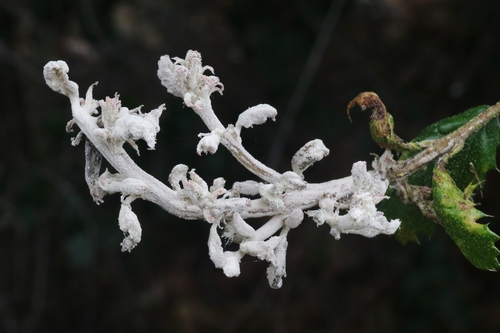
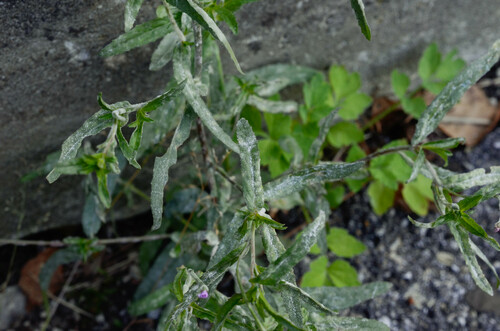
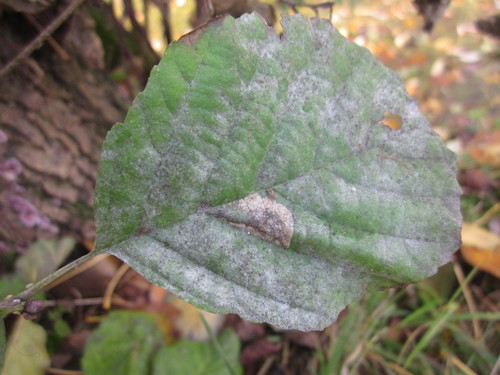
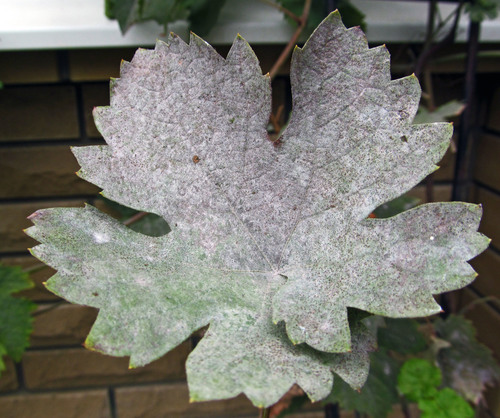
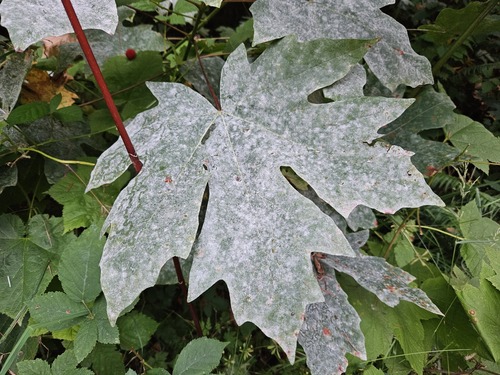
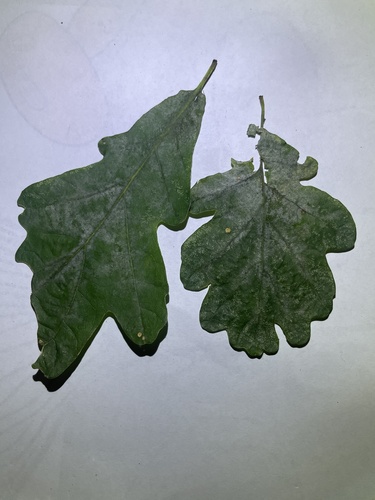
Erysiphe alphitoides (Griffon & Maubl.) U.Braun & S.Takam. is a powdery mildew fungus that forms white mycelial growth on both sides of host leaves. Infected leaves may sometimes become distorted from the pathogen. When chasmothecia develop, they can be scattered or clustered. The pathogen develops late in spring, after the first leaves of oak seedlings emerge, so it is most prevalent on the second and third flushes of leaves that grow in July and August. Especially in Europe, the disease this fungus causes can be very severe on Quercus robur and Quercus petraea in particular, and is often most damaging to young oak trees. In mature trees, infection is generally less damaging, but can contribute to declining tree health. A study of the effects of E. alphitoides on Quercus robur found that infection decreased stomatal conductance by 15–30%, lowered leaf nitrogen content, and increased dark respiration. Carbon fixation is also reduced in infected leaves, dropping by about 40–50% in fully infected leaves. Heavily infected leaves also tend to fall earlier than less infected leaves. Even though the fungus reduces leaf photosynthesis ability, the overall impact on the plant is relatively low; this is thought to explain why the disease only causes moderate consequences for oak tree health even when infections are heavy. Like most members of the Erysiphaceae family, Erysiphe alphitoides is fairly host-specific, occurring mostly on Quercus (oak) species. The Quercus genus is also a host for many other powdery mildew species across the world. In the Americas, E. alphitoides is fairly rare and found almost exclusively on Quercus robur. In Eurasia, this species cannot be distinguished from Erysiphe quercicola without genetic sequencing. Erysiphe alphitoides can be found worldwide, wherever its host oak species occur.
The mycelium of Erysiphe alphitoides is white or greyish, and commonly grows on either the upper leaf surface or both leaf surfaces. Its hyphal appressoria are lobed, and occur both solitarily and in opposite pairs. Conidiophores arise centrally or slightly laterally from their mother cell. They are erect, with cylindrical foot cells that are straight or occasionally curved. Conidiophores produce single conidia. Primary conidia are roughly ellipsoid with a rounded apex, while secondary conidia are barrel-shaped. Germ tubes range from short to very long in length. Conidial appressoria vary in form, but are typically lobed. Chasmothecia (the species' fruiting bodies) have 4–28 stiff appendages around their equator; these appendages are fairly densely dichotomously branched 4–6 times towards the tip, and may be pigmented at the base. The peridium of the chasmothecium contains irregularly shaped cells. Erysiphe alphitoides produces six to eight spores per ascus; the spores are roughly ellipsoid and colourless. The asci themselves are typically clavate or saccate, and are either sessile or short-stalked.