About Erysimum franciscanum Rossbach
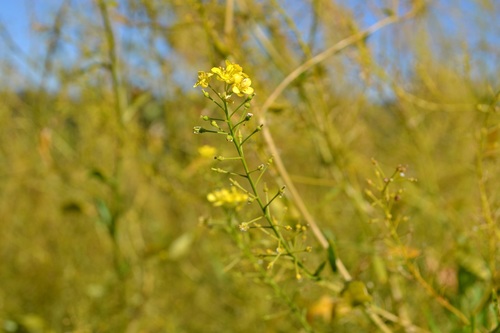
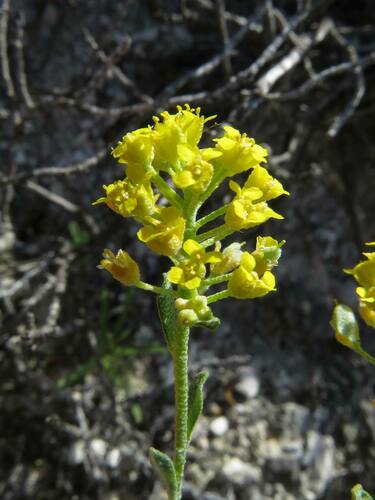
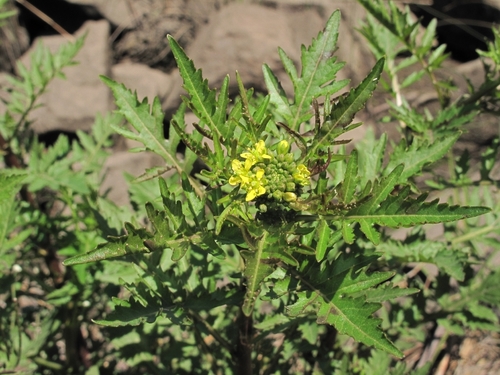
Erysimum franciscanum, commonly called the Franciscan wallflower or San Francisco wallflower, is a plant species endemic to the northern California coast, ranging from Sonoma County to Santa Cruz County. It belongs to the genus Erysimum in the mustard family, Brassicaceae. This species is either a biennial or a short-lived perennial. Its flowers range in color from cream to yellow, and have four sepals and four petals arranged in a cross shape, a characteristic trait of the Brassicaceae family. It flowers from late winter through late spring. The Franciscan wallflower prefers open scrubby areas that get a good amount of sunlight, but it can grow well in a variety of soil types including disintegrating serpentine, gravelly, and sandy soils. It is relatively easy to cultivate in home gardens. While it has not been formally recognized as an endangered species, the Franciscan wallflower has a limited, discontinuous distribution. It is monitored at the Presidio of San Francisco, which is also this species' type locality. Plants are propagated in a nursery at the Presidio, then planted back into their native habitat.