About Erodium acaule (L.) Bech. & Thell.
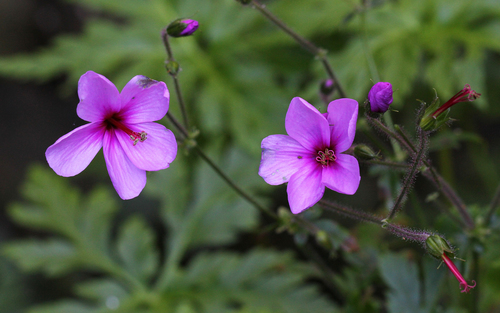
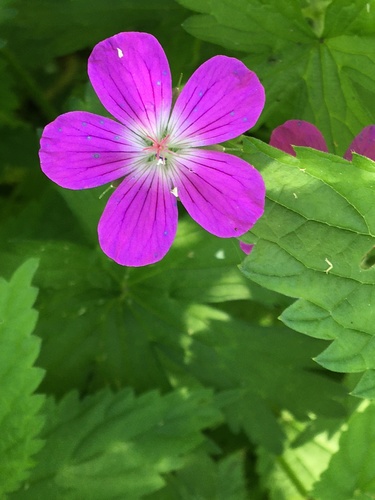
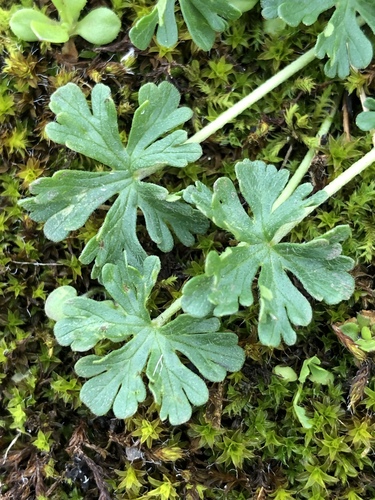
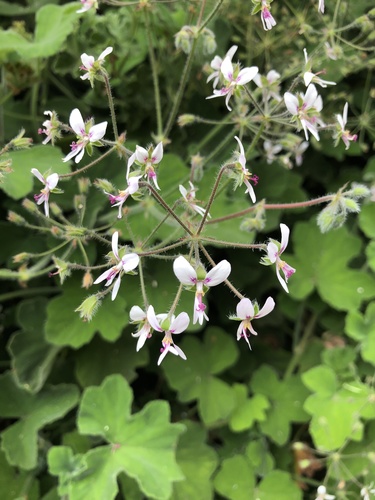
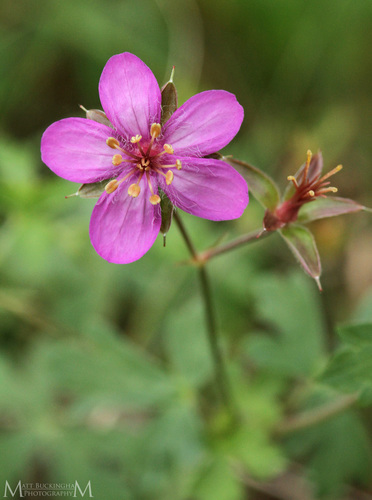
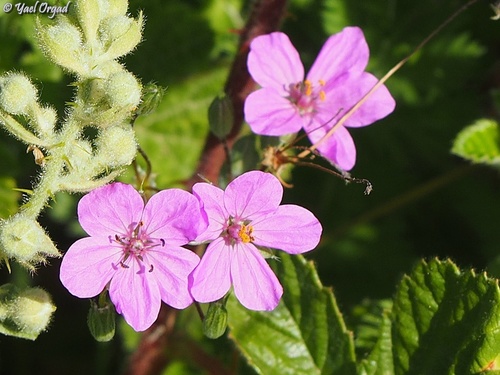
Erodium acaule (L.) Bech. & Thell. is a perennial stemless plant that reaches 15 to 25 centimeters in height. It has sparse, appressed hairs, a vertical, lignified root, and rosulate leaves that are lanceolate-oblong, spreading over the soil surface, and pinnatisect. Its leaf segments are sessile, oblong-ovate, pinnatilobed, and form short, acute strips. The flowers are 1.5 centimeters in diameter and bright pink. Its petals are equal in size, 2 to 3 times longer than the calyx, and rounded at the apex. The fruit beak of this species is 4 to 5 centimeters long. This plant grows in fields and waste ground. In Lebanon, it is distributed across the coast, lower and middle mountains, and the Beqaa valley. Its broader geographic range includes Syria, Lebanon, the Palestine region, the Eastern Mediterranean, and southern Europe. The generic name Erodium comes from the Greek word erôdios, meaning heron, because the plant's fruit ends in a long bill that resembles a heron's bill. The specific epithet acaule, which refers to the plant's stemless growth habit, is formed from the Greek privative prefix a- and the Greek word kaulos, meaning stem.