About Erithacus rubecula (Linnaeus, 1758)
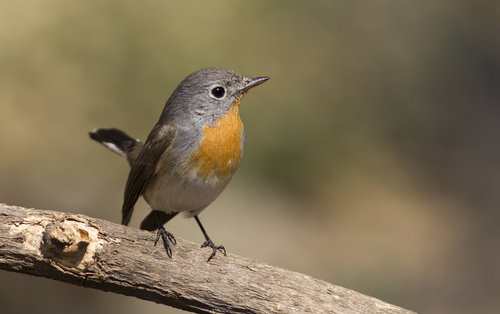
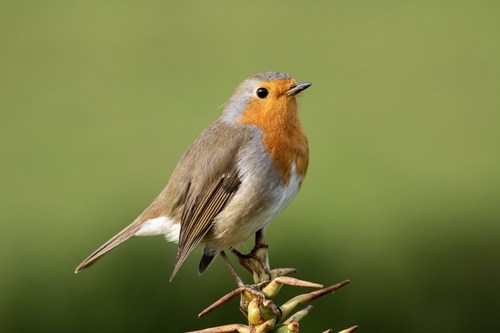
Description: Adult European robins (Erithacus rubecula) measure 12.5–14.0 cm (4.9–5.5 in) in length, weigh 16–22 g (0.56–0.78 oz), and have a wingspan of 20–22 cm (8–8.5 in). Males and females have similar plumage: both have an orange breast and face, with stronger orange colouring in the British subspecies E. r. melophilus. This orange area is bordered by bluish grey along the sides of the neck and chest. Upperparts are brown, with an olive tinge in British birds; the belly is whitish, and legs and feet are brown. The bill and eyes are black. Juveniles have a spotted brown and white colour pattern, and orange patches gradually develop as they mature. Distribution and habitat: This species is found across Eurasia, ranging east to Western Siberia, south to Algeria, and west to the Central Group of the Azores and Madeira in the Atlantic islands. It occurs as a vagrant in Iceland, and its southeastern range extends to Iran and the Caucasus mountain range. Most Irish and British robins stay in their range year-round, but a small minority (usually females) migrate to southern Europe for winter, with some travelling as far as Spain. Scandinavian and Russian robins migrate to Britain and western Europe to avoid harsh winters. These migrating individuals can be identified by their greyish upperparts and duller orange breasts. Winter-migrating Continental European robins prefer spruce woods in northern Europe, unlike their preference for parks and gardens in Great Britain. In southern Iberia, resident and migrant robins occupy separate habitats, with resident robins staying in the same woodlands where they breed. Attempts to introduce the European robin to Australia and New Zealand in the late 19th century failed. Acclimatisation societies released birds around Melbourne, Auckland, Christchurch, Wellington, and Dunedin, but no populations became established. Introduction attempts in North America also failed: released birds did not become established after releases in Long Island, New York (1852), Oregon (1889–1892), and the Saanich Peninsula in British Columbia (1908–1910). Behaviour and ecology: European robins are diurnal, though they have been observed hunting insects on moonlit nights or near artificial light. Well known to British and Irish gardeners, robins are relatively unafraid of people, and are attracted to human digging activities like gardening to seek out earthworms and other freshly exposed food. British and Irish people have long viewed robins as a gardener's friend and traditionally avoid harming them, in part because the orange breast colour is associated with the blood of Christ. In continental Europe, robins were hunted alongside most other small birds, so they are much warier of people. Robins will also approach large wild animals such as wild boar that disturb the ground to find food brought to the surface. In autumn and winter, robins supplement their primary diet of terrestrial invertebrates (including spiders, worms, and insects) with berries, fruit, and seeds. They will also eat seed mixtures, suet, and leftovers placed on bird tables. Robins have even been recorded feeding on small vertebrates (including fish and lizards) and carrion. Male robins are highly territorial and will aggressively attack other males and intruders that enter their territory. They have been known to attack other small birds with no apparent cause, and there are recorded cases of robins attacking their own reflection. Territorial disputes sometimes result in fatalities, which account for up to 10% of adult robin deaths in some areas. Due to high mortality during the first year of life, the average life expectancy of a robin is 1.1 years. Life expectancy increases for individuals that survive their first year, and one recorded robin lived to 19 years of age. Severe low winter temperatures can cause increased mortality rates. The species is parasitised by the moorhen flea (Dasypsyllus gallinulae) and the acanthocephalan Apororhynchus silesiacus.