About Eristalinus megacephalus (Rossi, 1794)
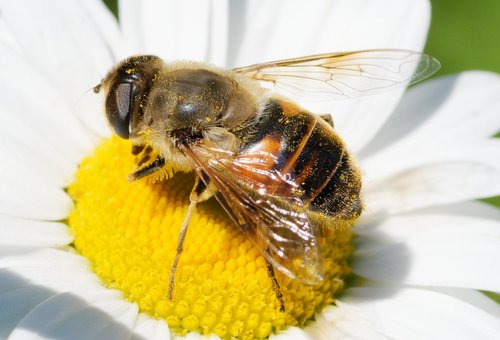
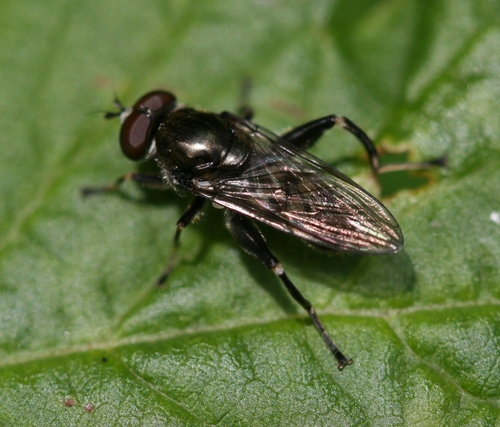
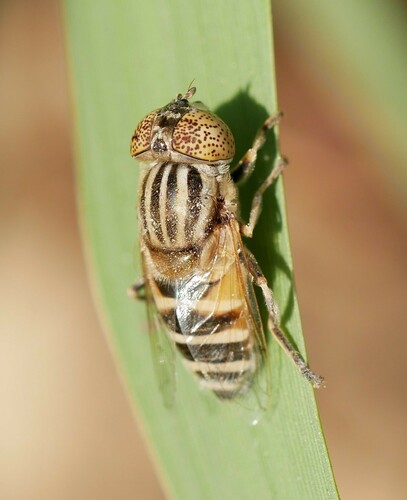
Eristalinus megacephalus is a hoverfly species with a black abdomen marked by golden horizontal stripes that are larger in males. It has a black thorax, legs with black tips, transparent flexible wings, a large head, and golden compound eyes that bear pale purple spots. Adults of this species reach a length of 8–11 mm. This species is an effective pollinator. It uses Batesian mimicry, resembling hymenopteran bees to deter predators, and it also looks similar to bee flies of the family Bombyliidae. The species was published as part of page 63 in the second volume of Mantissa insectorum by Rossi. It has no recognized subspecies. It is the rarest species in the genus Eristalinus, and while it is widespread, it is not abundant across its range. Its flight season runs from May to October, and it reaches peak abundance in June and July. This species can be found across a wide range of locations including South Africa, Egypt, North Africa, Iran, Turkey, Southern Spain, coastal Italy, Sri Lanka, India, China, Taiwan, Java, and Guam.