About Eriosoma ulmi (Linnaeus, 1758)
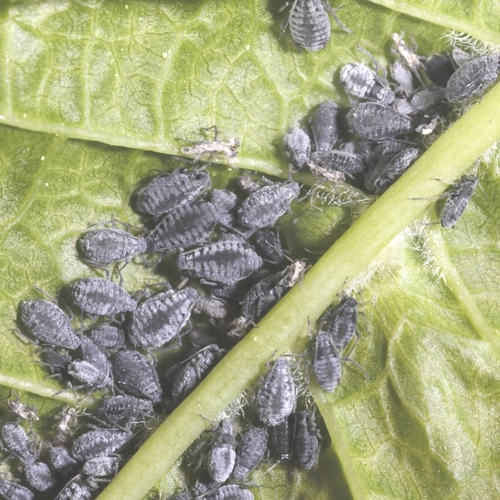
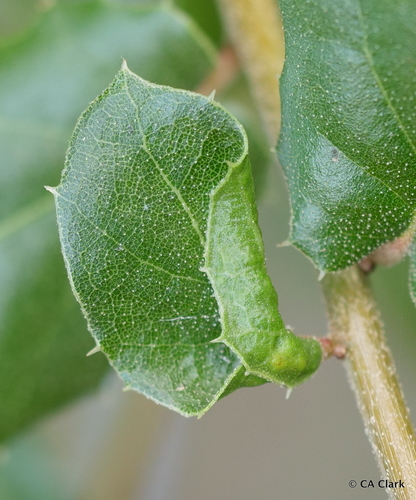
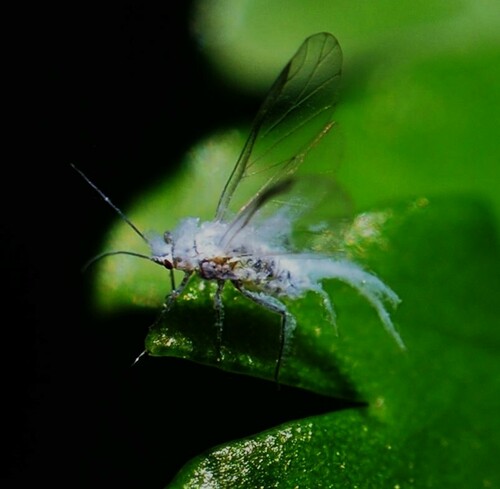
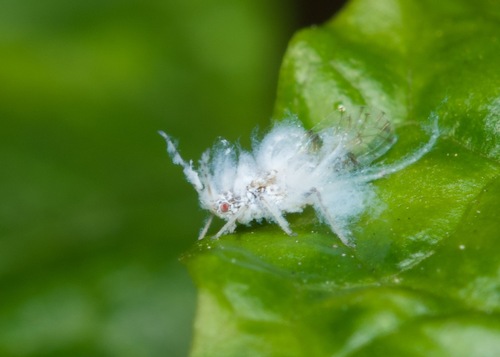
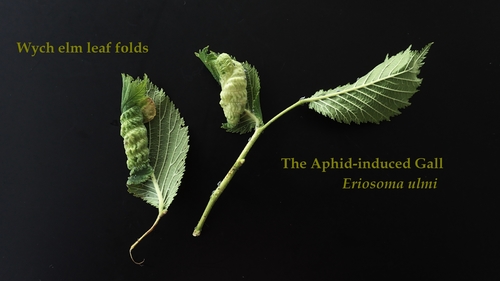
This section describes the galls formed by Eriosoma ulmi and the species' life cycle, along with its distribution. Galls created by this aphid are yellowish-green or pinkish, contain wax, and form when one half of a host leaf becomes crinkled and rolls inward to create a tubular pouch. These galls develop on the primary host plants, which are multiple elm species: American elm (Ulmus americana), wych elm (Ulmus glabra), field elm (Ulmus minor), English elm (Ulmus procera), Siberian elm (Ulmus pumila) and rock elm (Ulmus thomasii). In spring and early summer, numerous brownish to dull green aphids covered in wax live inside these galls. All winged aphids of this species are female; they leave the galls in June and July to move to and mate on the secondary host, currant bushes. The aphids live and reproduce on the roots of currant bushes. Male and female offspring of these aphids fly back to elm trees in autumn, where mated females lay eggs that remain over winter. Eriosoma ulmi is distributed across Asia and most of Europe. In Asia, it occurs in the Oriental Region and the Near East. In Europe, its range extends from Russia to Ireland, and from the Iberian Peninsula to Scandinavia. It is common and widespread across Great Britain.