About Eriosoma lanigerum (Hausmann, 1802)
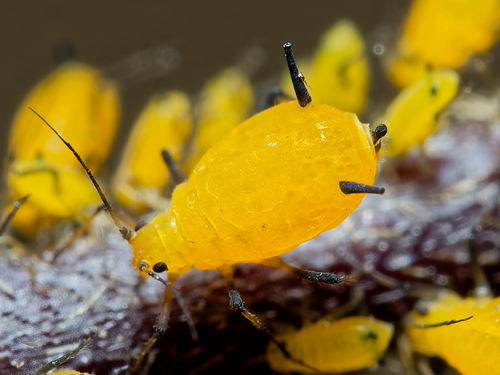
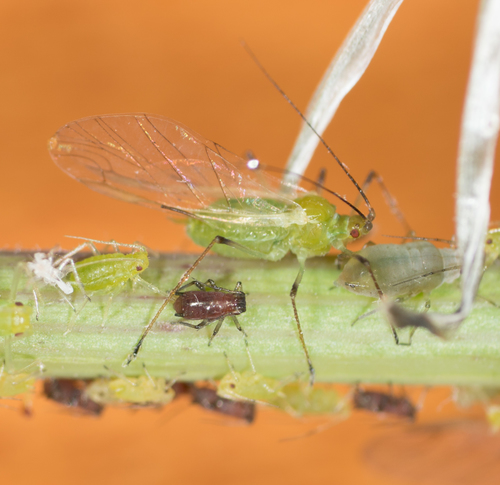
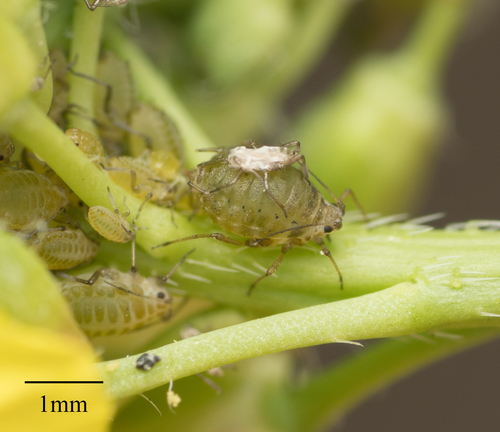
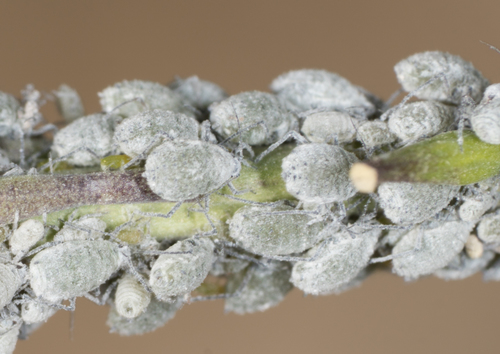
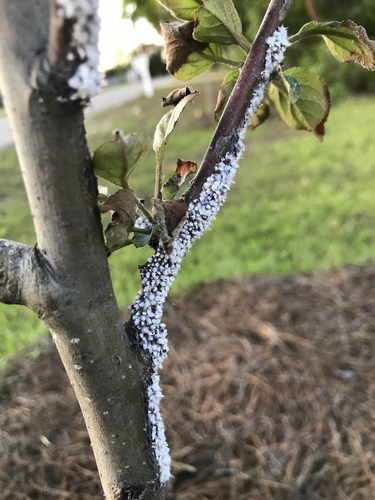
Eriosoma lanigerum, commonly called woolly apple aphid, are small to medium-sized aphids growing up to 2 mm long with an elliptical shape. Adult individuals have six-segmented sooty-brown antennae, and their tibiae range in color from dark brown to yellowish. When crushed, adults leave a blood-red stain. Their body colour is typically reddish brown to purple, but this is usually hidden by a white cotton-like secretion produced by specialized glands in the aphid’s abdomen, which gives the species its common name. This waxy coating is produced after each moult, so newly moulted individuals do not have a waxy coating. The coating is thought to protect the aphids from contamination by their own honeydew secretions, and may also provide shelter from weather, parasites, and predators. This characteristic woolly secretion distinguishes E. lanigerum from all other aphids that live on apple trees. In most populations, reproduction occurs entirely asexually, with nymphs produced via parthenogenesis. Nymphs are salmon pink with dark eyes, and have circular cornicles that are slightly raised from the abdominal surface. Nymphs go through four instar moults before reaching the adult imago stage. The earliest nymph stage is called crawlers, which do not produce waxy filaments until they settle to feed. Hibernating nymphs are very dark green, almost black, though some are paler, ranging to dingy yellowish-brown, and they lack the secreted white waxy covering. Eriosoma lanigerum is native to North America, but it is now found in all apple-growing regions of the world. It was first recorded in Great Britain in 1787. In cooler climates, E. lanigerum overwinters as a nymph on the roots of its host plant, or in sheltered above-ground parts of the host such as under bark on the trunk or main branches. Where sexual reproduction occurs (which happens when elms are common), E. lanigerum also overwinters as eggs laid in bark crevices. These eggs hatch into wingless "stem mothers" that begin producing nymphs via parthenogenesis. Nymph colonies that overwinter above ground can be killed off by severe winter weather. In spring (April in Great Britain), colonies start producing young that infest the host tree. If there are no existing above-ground colonies, nymphs move up the tree, until nearly the entire tree hosts aphid colonies. Colonies prefer to settle at the leaf axils of terminal shoots, and at high population levels, almost every leaf will have a colony at its base. The third generation of young develops into winged adult females capable of sexual reproduction, each producing a single egg that can only develop on American elm (Ulmus americana). Males are wingless. Each adult aphid can give birth to up to five live nymphs per day, allowing colonies to grow rapidly, and a single aphid can produce over 100 nymphs over its lifetime. Aphids feed on plant sap by piercing the thin outer integument of the host, and excrete a sugar-rich substance called honeydew. Depending on summer temperatures, there can be between 8 and 12 generations per year. In its native range in northeastern North America, winged adult alates migrate at the end of summer to overwinter on elms. In regions with no elms, the fate of these alates is unknown, and all observed reproduction is through parthenogenesis. Elm is the primary host species; egg laying on other species like apple trees is rare, and any eggs laid on apple always fail to hatch.