About Eriophyes tiliae (H.A.Pagenstecher, 1857)
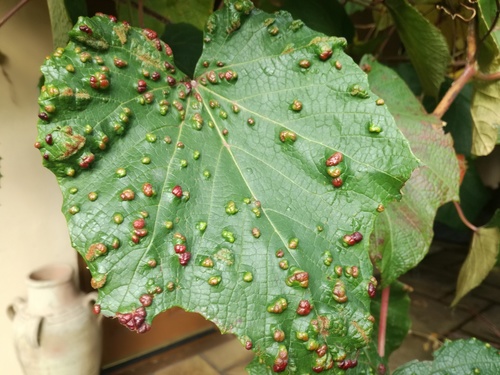
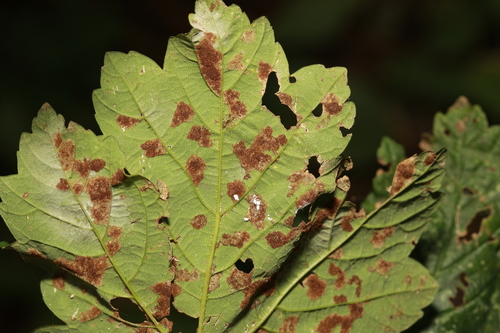
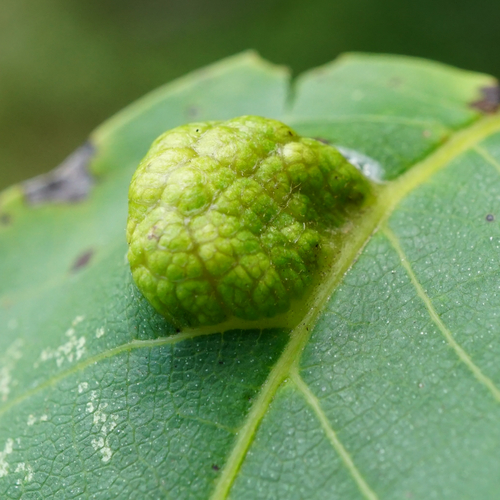
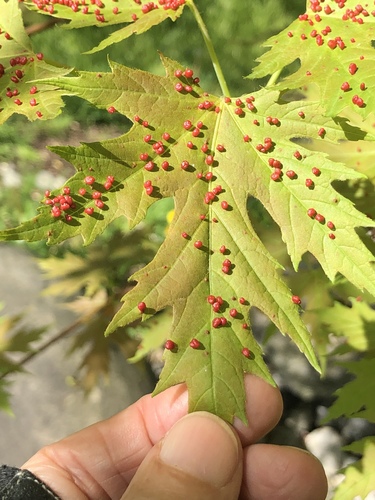
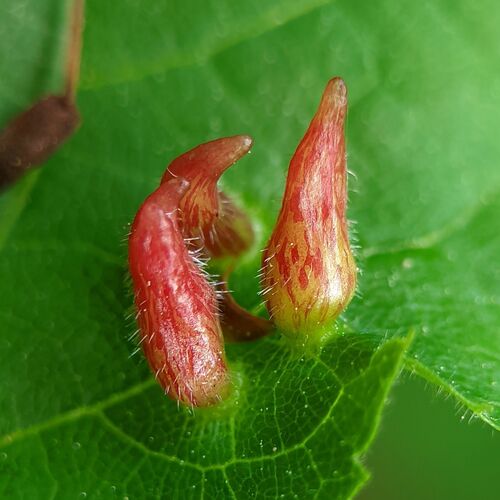
Eriophyes tiliae, first described by H.A. Pagenstecher in 1857, induces distinct galls on the leaves of Tilia species, commonly called lime trees. From late spring through summer, tubular galls up to 5 millimetres (0.20 in) long develop at the apex of host leaves. These galls are yellow-green or red, may appear in very large numbers, and are predominantly found on lower leaves for some subspecies. The galls do not negatively affect the overall health of the host tree, and currently no methods are available to control or prevent their formation. Individual Eriophyes tiliae mites are less than 0.2 mm long. The mites overwinter in protected spots on host trees, including bark crevices and areas around buds. In spring, they move out onto tree foliage. When the mites feed on sap from the lower leaf epidermis, they release chemicals that trigger the growth of distinctive galls: an upright, hollow, red, finger-like leaf extension forms around each individual mite. The mites feed and develop inside these galls throughout the growing season. Before autumn arrives, they leave the galls to seek out protected overwintering sites on the tree, where they stay until the following spring to repeat the life cycle. Eriophyes tiliae is one of several different gall-forming species that can look superficially similar to one another; the subspecies Eriophyes tiliae tiliae is restricted to lime trees.