About Eriophorum virginicum L.
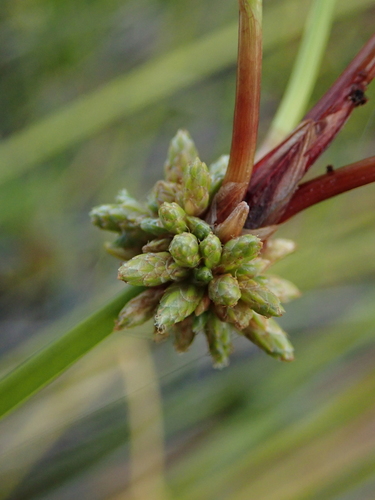
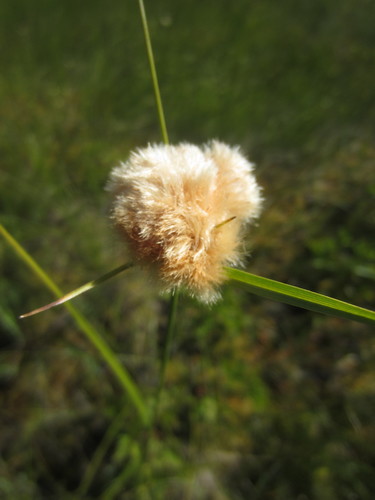
Eriophorum virginicum L. is a perennial herbaceous plant that forms colonies via long-creeping rhizomes. Each culm (stem) in a colony can grow up to 120 cm (47 in) long. Its terminal inflorescence holds 2 to 10 spikelets, each borne on a peduncle between 2 and 10 mm long. The inflorescence is subtended by 2 to 5 leaf-like bracts, with the longest bract measuring 4 to 12 cm (2 to 5 in) in length. Each individual flower has 10 or more perianth bristles that are brown, at least at the base; entirely white bristles occur only rarely. Its fruiting heads are typically densely packed, which usually obscures the individual spikelets. Even so, Eriophorum virginicum is fairly easy to distinguish from other cottongrass species thanks to its late fruiting time and distinctive color. This species is native to eastern North America, ranging from Newfoundland and Labrador in Canada south to South Carolina in the United States, and extending west as far as Minnesota. It has been introduced to bog habitat in the Fraser Valley of British Columbia, western Canada, and to similar habitat in Skagit County, Washington, United States. Within the United States, it is most common in New England and the Great Lakes region. It is the only North American Eriophorum species found in the southeastern United States, where it is also the least common. Disjunct populations are scattered across southeastern states, with the southernmost known population located in Taylor County, Georgia. Eriophorum virginicum is classified as an obligate wetland (OBL) species. In New England, it grows most often in bogs, acidic fens, and wet meadows. As a perennial flowering plant, it blooms in early summer. After pollination, cotton-like fruiting heads develop between mid-summer and early autumn; for example, fruiting occurs from July to September in Minnesota.