About Eriogaster catax (Linnaeus, 1767)
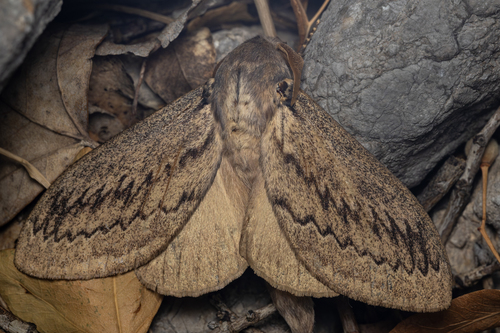
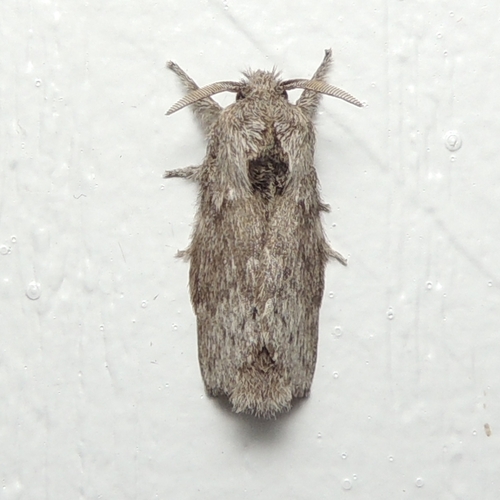
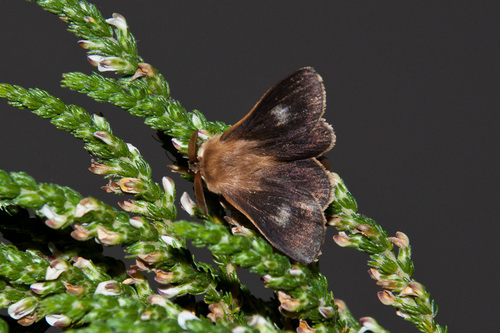
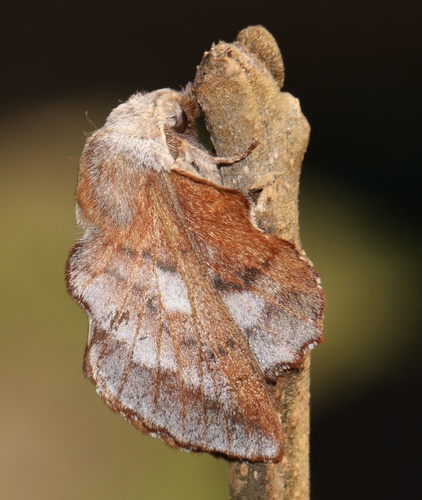
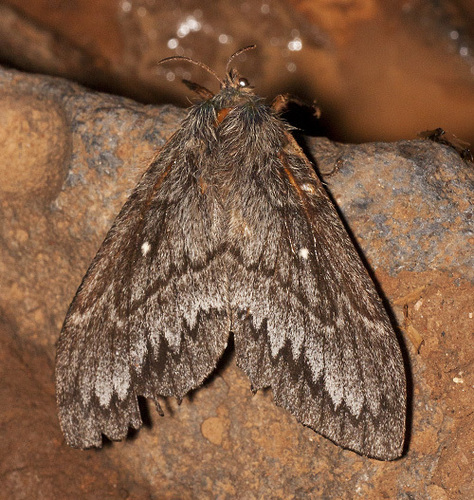
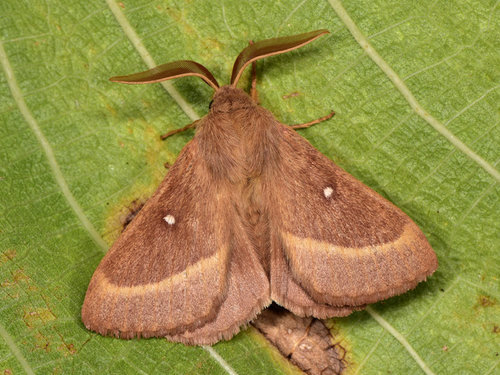
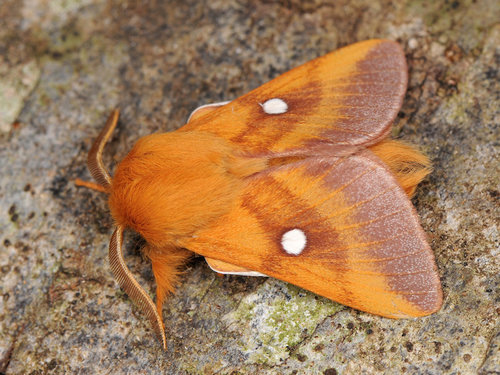
Eriogaster catax is a moth species that exhibits strong sexual dimorphism. Males have a wingspan of 27–35 millimetres (1.1–1.4 inches), while females have a larger wingspan ranging from 35–45 millimetres (1.4–1.8 inches). Males are smaller and have feathery antennae; the basal area of their forewings is yellow-orange, and the outer section is pinkish-brown. Females have browner forewings, and they are larger, with a tuft of dense gray-black hairs at the tip of the abdomen. Both sexes have a transverse line and a white discal spot within a dark border on the forewings, while the hindwings have no markings. Eggs of this species hatch in April. The larvae feed on species of Crataegus, Quercus, Betula, Populus, Prunus, and Berberis. Eriogaster catax is an univoltine species, and adults fly at night during September and October. It has been recorded in Austria, Belgium, Bulgaria, the Czech Republic, Germany, Hungary, Italy, the Netherlands, Poland, Serbia and Montenegro, Slovakia, and Spain.