About Eriodictyon californicum (Hook. & Arn.) Greene
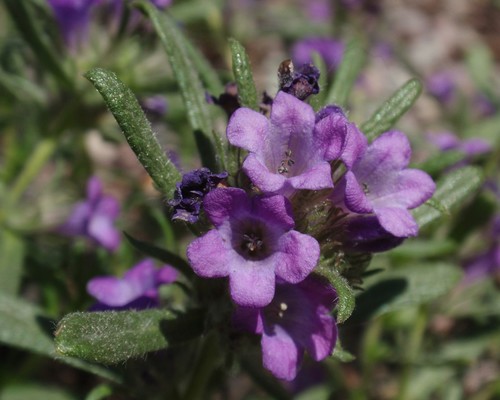
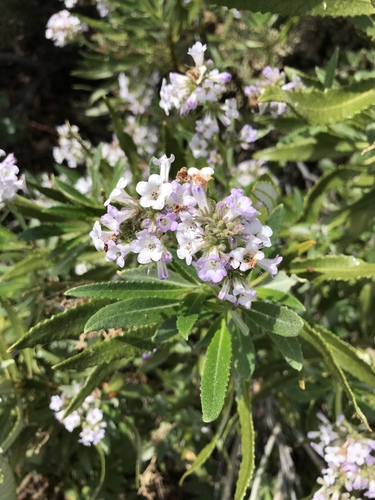
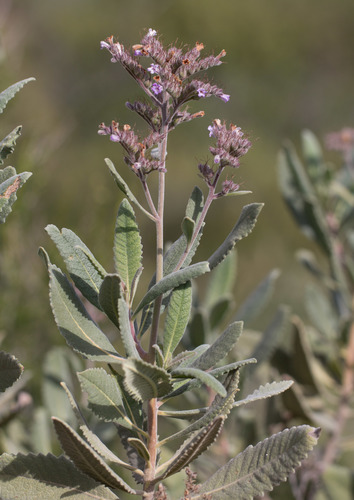
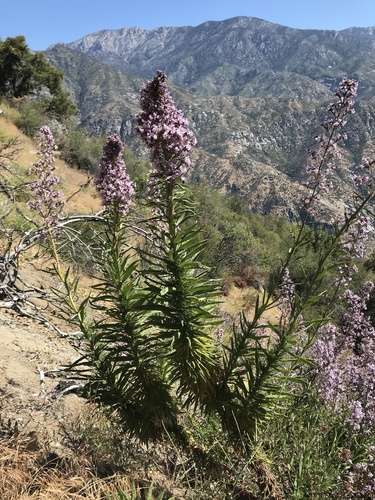
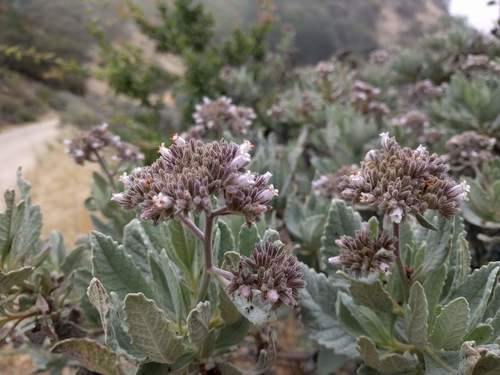
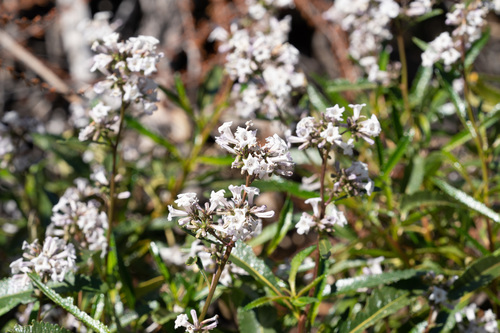
Eriodictyon californicum is an evergreen aromatic shrub with woody rhizomes, typically growing in clonal stands to a height of 3 to 4 feet (0.91 to 1.22 m). Its dark green, leathery leaves are narrow, shaped oblong to lanceolate, and can grow up to 15 centimeters (5.9 in) in length. Foliage and twigs are covered in shiny resin, and are often dusted with the black fungus Heterosporium californicum. This species is similar to its Southern California relative E. crassifolium. The shrub occasionally acts as a source of nutrition for wildlife and livestock. Its bitter taste makes it unpalatable to most animals, though it hosts multiple insect herbivores, including butterflies. Its inflorescence is a cluster of bell-shaped white to purplish flowers, each measuring between one and two centimeters in length. It is native to California and Oregon, where it grows in several habitat types, including chaparral and coast redwood forests. Ecologically, E. californicum is a specific food and habitat plant for the butterfly Papilio eurymedon. It is the primary nectar source for variable checkerspot butterflies in the Jasper Ridge Biological Preserve in California. Symrise Corporation has identified four flavanones with taste-modifying properties in this plant: eriodictyol, homoeriodictyol, the sodium salt of homoeriodictyol, and sterubin. These compounds have potential applications in the food and pharmaceutical industries for masking bitter taste. This shrub species is used for revegetating damaged or disturbed lands, such as overgrazed rangeland. It is strongly adapted to fire: it sprouts from rhizomes after wildfire, and develops a waxy film of flammable resins on its foliage. Historically, its leaves have been used to treat asthma, upper respiratory infections and allergic rhinitis. The Concow (Konkow language) tribe calls the plant wä-sä-got'-ō. The Chumash used it as a poultice for wounds, insect bites, broken bones, and sores. It was also used in steam baths to treat hemorrhoids. The flavonoid sterubin is the main active component of Yerba santa, and is neuroprotective against multiple age-related brain toxicities, possibly including those linked to Alzheimer's disease.