About Eriocampa juglandis
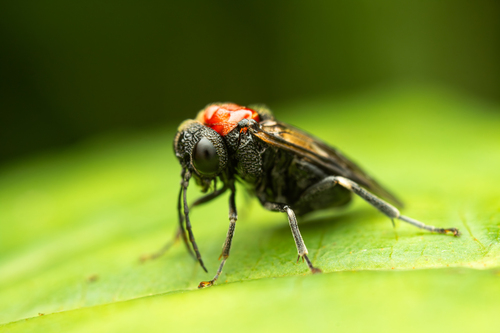
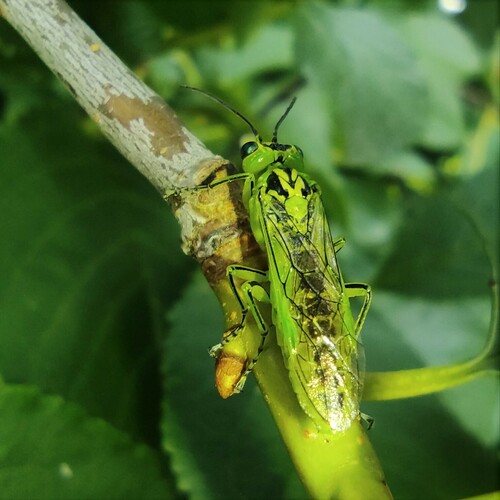
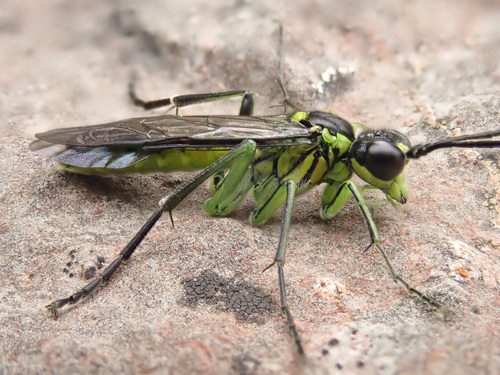
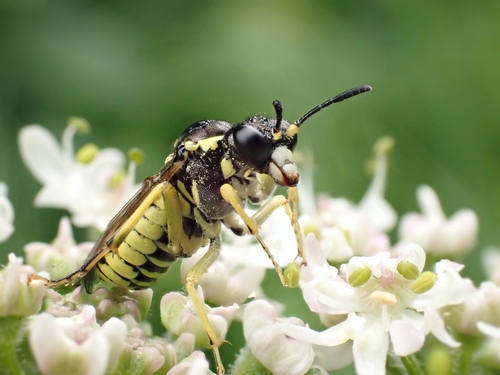
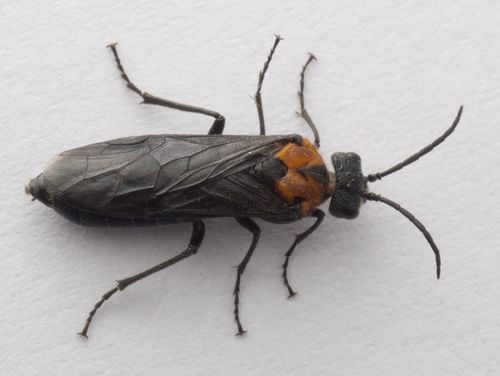
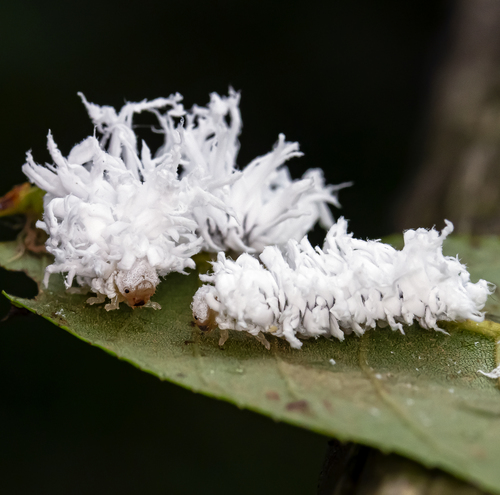
The larvae of Eriocampa juglandis grow to 0.87 inches (22 mm) long, while adult sawflies reach 0.47 inches (12 mm) long. Young individuals are covered in white wool, which is thought to protect them from predators. Although the larva looks like a caterpillar, sawfly larvae have one pair of legs on every body segment, while caterpillars have a gap between some of their legs. Sawflies often curl up their bodies when disturbed. Adults are flying insects with a saw-toothed ovipositor, a feature that gives the genus its common name.
The range of Eriocampa juglandis matches the historical range of butternut trees across the northeast quadrant of North America. This includes the US states of Maryland, Michigan, North Carolina, and Wisconsin, as well as Canada's eastern provinces. A small population of this species, commonly called the butternut woollyworm, is also present in Milwaukee.
Populations of this species can change drastically from year to year, and adults appear in mid-summer. They cause temporary cosmetic damage to their host trees, but damage is limited. This is because woollyworms do not emerge until host trees are fully leafed out, and the species only produces one generation per year. Pest control for this species is generally not required.
For reproduction, females saw into the mid-rib of leaflets and deposit 20 to 30 eggs one at a time. This egg-laying eventually causes the affected leaflet to droop or fold, and turns the midrib pale. Small larvae chew irregular holes in leaves, while larger larvae may consume almost the entire leaf, leaving only fragments of the larger leaf veins behind. Once fully grown, larvae pupate in the soil over winter. They emerge as adults in spring, then mate.