About Erimyzon oblongus (Mitchill, 1814)
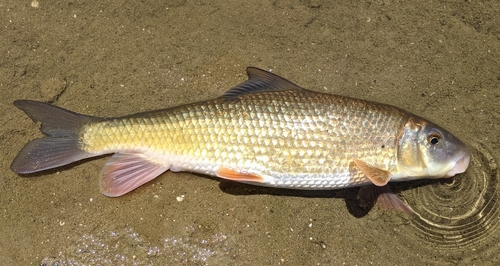
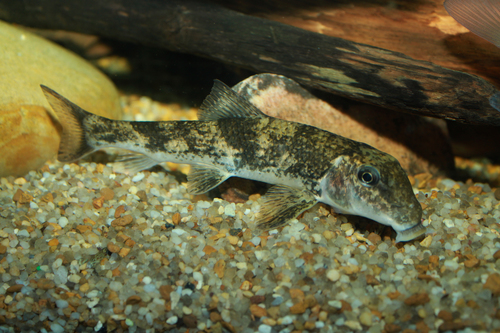
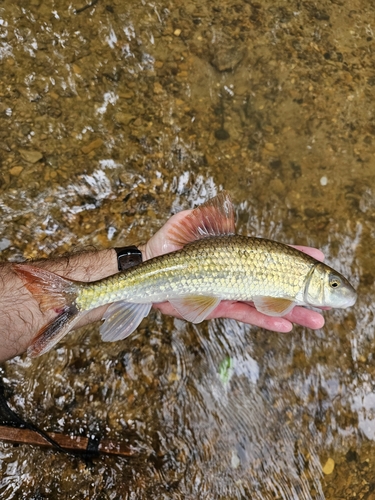
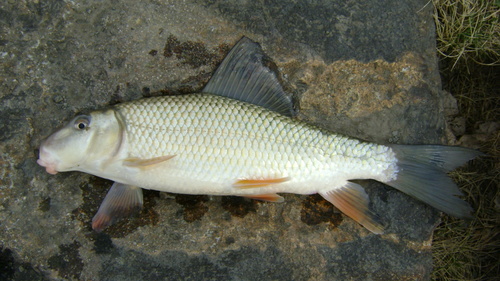
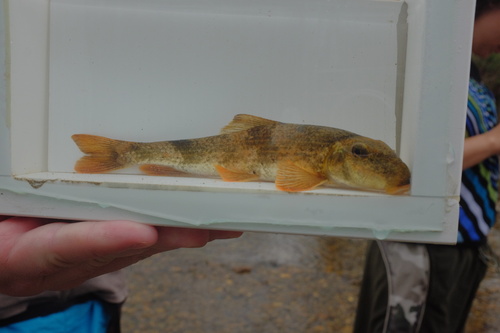
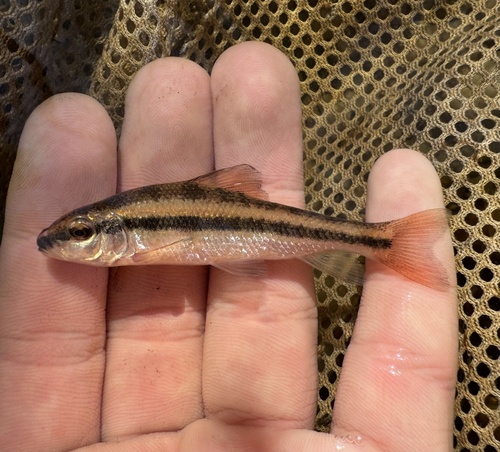
Erimyzon oblongus, commonly known as the creek chubsucker, is one of three species in the genus Erimyzon from the family Catostomidae found in eastern North America. This species has two primary disjunct populations: one in eastern Coastal Plain streams, and the other in mid-western streams east of the Central Plains. Creek chubsuckers typically live in vegetated rocky riffles, runs, and pools of clear freshwater. Adults are most commonly found in pools of sluggish streams, spring pools, and backwater areas, while juveniles inhabit headwater rivulets. They are generally small, usually measuring less than 10 inches (25 cm) and weighing slightly under a pound. Their typical lifespan ranges from five to seven years. Generally, there is no sexual dimorphism between adult males and females. However, dimorphism does exist between juveniles and adults: juveniles have a uniform, dark lateral stripe running down their sides. Both sexes share consistent traits: they have longitudinal scale rows, 4–18 dorsal fin rays, a two-chambered air bladder, a dorsal fin base that is less than one-fourth of the fish's standard length, and no lateral line. During the breeding season, males grow horn-like tubercles, become more brightly colored, and defend territories over gravel substrates in shallow water. Breeding groups migrate upstream to spawn, and gather on clean rubble or gravel beds, less commonly on sandy or vegetated shallow water beds. Creek chubsuckers are bottom feeders. When foraging, they often turn over rocks to feed on microcrustacea, aquatic insects, and some algae. Their full diet also includes organic detritus, diatoms, small clams, and chironomid and dipteran larvae. Adults are generally solitary, and forage near the substrate of slowly flowing streams. Juveniles spend most of their early life in mixed schools with other Cyprinidae in midwater areas. It is thought that creek chubsuckers and other members of Catostomidae diverged from carps (Cyprinidae) at least fifty million years ago. The species is not considered a game fish, and has no commercial importance to humans. However, the young and eggs of creek chubsuckers are an important food source for piscivorous game fishes, so they support the sustainability of these game fishes for recreational sports enthusiasts. Juveniles are also key forage for game fish genera such as Esox and Centrarchidae; their rapid growth rate usually allows them to escape predation, ensuring annual recruitment of new young individuals. Across its full range, the creek chubsucker can be found in many freshwater tributaries of Atlantic slope streams from Maine to Georgia's Altamaha River drainage. On the Gulf slope, it occurs east to Alabama's Escambia River drainage, where there is a single population, and west to the San Jacinto River system in Texas. It is also found in the Mississippi Valley in Louisiana, Arkansas, and southeastern Oklahoma, in the uplands of Missouri, Mississippi, western Tennessee, and western Kentucky, and in southern tributaries to Lakes Michigan, Erie, and Ontario, south of the Great Lakes drainage. No populations have been recorded in the waterways running north from Florida along the Appalachian Mountain corridor, creating a gap between the species' eastern and western populations. The family Catostomidae contains approximately 62 species total; all but two of these species are endemic to North America. As of 2004, the creek chubsucker's conservation status is ranked as least concern. However, the species is negatively impacted by human-caused threats including dams, pollution, and siltation. Many populations are already declining in areas affected by siltation pollution. Creek chubsuckers share habitat and required spawning sites with white suckers (Catostomus commersoni) and northern hogsuckers (Hypentelium nigracans), which leads to competition for space and resources.