About Erica erigena R.Ross
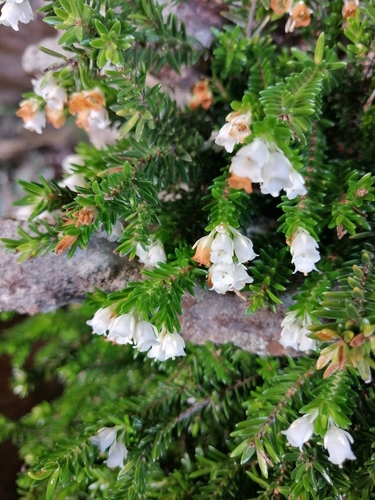
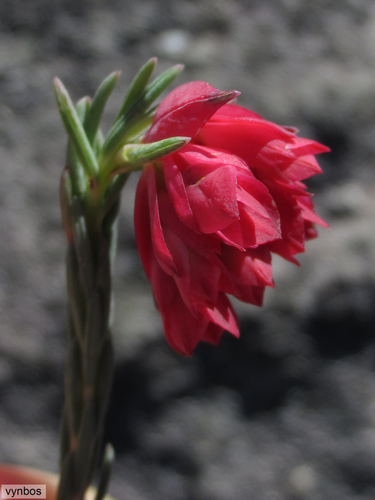
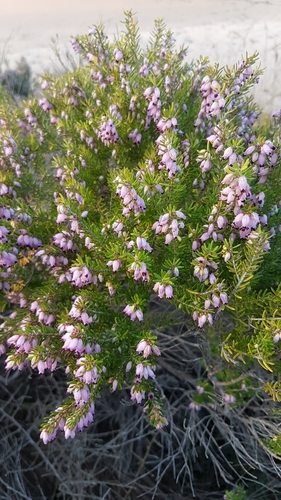
Erica erigena R.Ross is a compact evergreen shrub that grows up to 75 centimetres (30 inches) tall. It has somewhat brittle foliage and produces deep pink, honey-scented flowers during winter and spring. Its leaves grow in whorls of four, measure 5–8 millimetres (1⁄4–3⁄8 in) long, and turn dark green when mature. Originally described under the name Erica mediterranea, this species was renamed Erica erigena by R. Ross in 1969. The specific epithet erigena derives from Erin, the Irish word for Ireland, meaning "one applicable to something of Irish origin". The name Erica mediterranea is now most often used to refer to the species Erica carnea. This plant is native to Ireland, southwestern France, Spain, Portugal, and Tangier. Its isolated occurrence in far western Ireland, far from its main Mediterranean populations, is thought to be the result of an escape from cultivation. It naturally grows on cliffs and in heathland habitats. In cultivation, it is frequently used as groundcover planted among dwarf conifers. Like other related heaths, it is a calcifuge that grows best in an open, sunny location with well-drained acid soil. Many cultivars have been developed for ornamental garden use; two of these cultivars have received the Royal Horticultural Society's Award of Garden Merit: Erica erigena 'Irish Dusk', and the white-flowered form Erica erigena f. alba 'W.T. Rackliff'.