About Eremophila bilopha (Temminck, 1823)
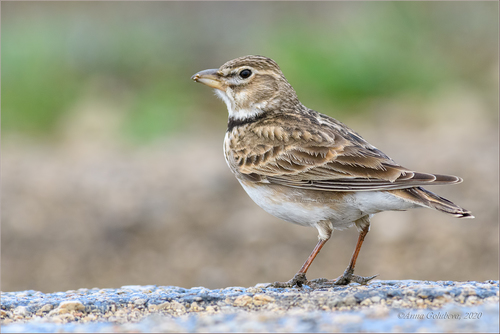
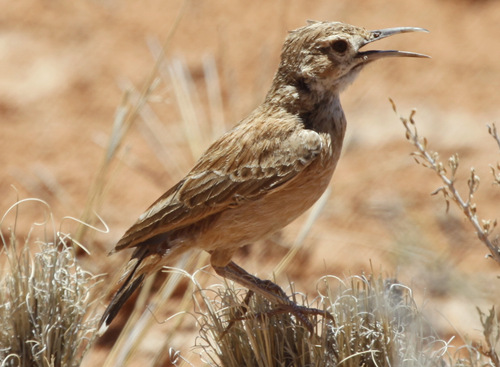
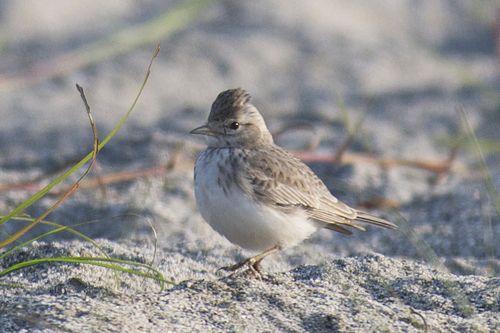
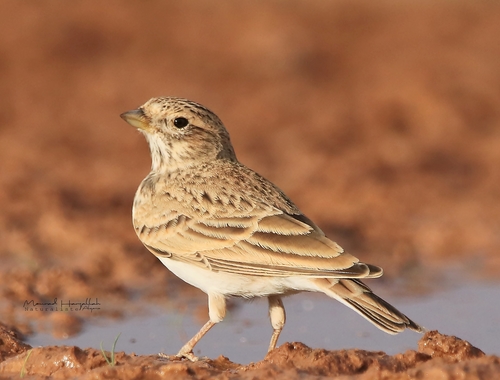
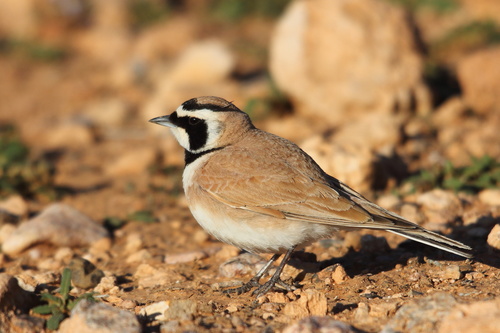
Temminck's lark, with the scientific name Eremophila bilopha (Temminck, 1823), differs in appearance from most other larks when viewed on the ground, and looks similar to the larger related species, the horned lark. Adult individuals measure 14 to 15 cm (5.5 to 5.9 in) in length. Their upperparts are mainly reddish brown-grey, underparts are pale, they have a bold black and white face pattern, and a distinct black patch on the breast. Summer males have black "horns", which are the source of the species' alternative name. Juvenile Temminck's larks have reddish upperparts and pale underparts, and look quite different from juvenile horned larks. Adult Temminck's lark differs from the horned lark by having reddish plumage instead of brown-grey, and no yellow coloring in its face pattern. Its call is a metallic sound that is similar to the horned lark's, but less harsh. Temminck's lark is native to North Africa and the Middle East. Its documented range covers Algeria, Egypt, Iraq, Israel, Jordan, Kuwait, Libya, Mauritania, Morocco, Saudi Arabia, Syria, Tunisia and Western Sahara. This lark lives in open stony semi-desert habitat. It builds its nest on the ground, and lays a clutch of two to four eggs. It feeds primarily on seeds, and supplements its diet with insects during the breeding season.