About Erechtites hieraciifolius (L.) Raf. ex DC.
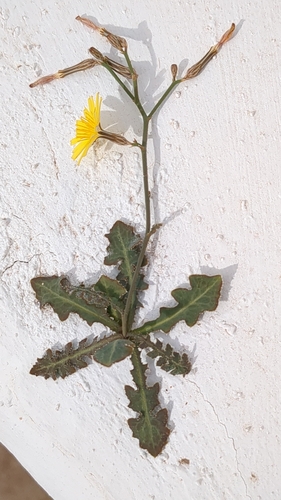
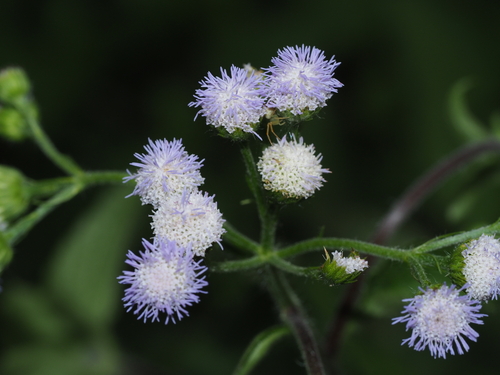
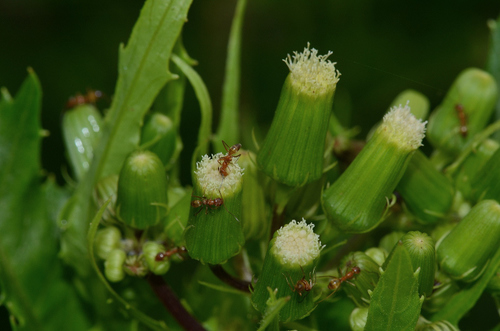
Erechtites hieraciifolius (L.) Raf. ex DC. is an annual herb that grows 0.4 to 3 meters or more in height. It has thick green stems, with alternate, simple leaves. The leaves are serrated, 5 to 20 centimeters long, and 0.5 to 6.5 centimeters wide. They range from unlobed to deeply lobed; the lobe pattern looks similar to that of wild lettuces, which belong to the same family but are not closely related to this species. All parts of Erechtites hieraciifolius smell aromatic when crushed. Its flower heads are yellow or pink, and they bloom in fall. After flowering, clusters of small, wispy achenes develop. The plant often branches and forms clumps with multiple stems. This species ranges from Newfoundland west to Saskatchewan, south to southern Florida and eastern Texas. It can also be found in the West Indies and throughout tropical America. It grows in disturbed soil in nearly any habitat, except extremely dry, xeric habitats. It responds to even small disturbances such as tree tip-up mounds, and is most abundant in areas that have seen extensive disturbance, such as sites affected by severe fire, timber harvest, or bulldozing. Erechtites hieraciifolius benefits from fire, and is often one of the first pioneer species to colonize recently burned areas, which is the origin of some of its common names. It can germinate in response to fire, and removing surface leaf litter has been shown to improve its germination success. The species increases in population opportunistically after fire, but returns to its original pre-fire abundance in the years following the fire disturbance. It prefers moist sites, but can tolerate gravelly soil and some level of dry conditions. It also grows well in urban areas and in areas near human settlement. It is resistant to the herbicide imazypyr, and to the combined herbicide imazypyr-glyphosate. Its flowers are primarily pollinated by wasps and honey bees (Apis mellifera). Its seeds are dispersed by wind, and the seeds serve as a minor food source for birds.