About Erechthias simulans (Butler, 1882)
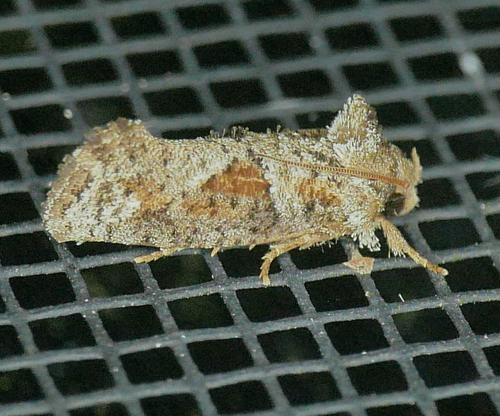
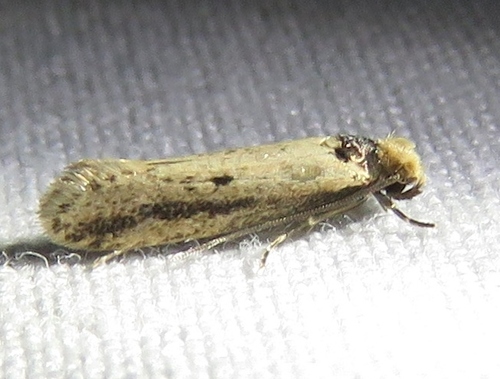
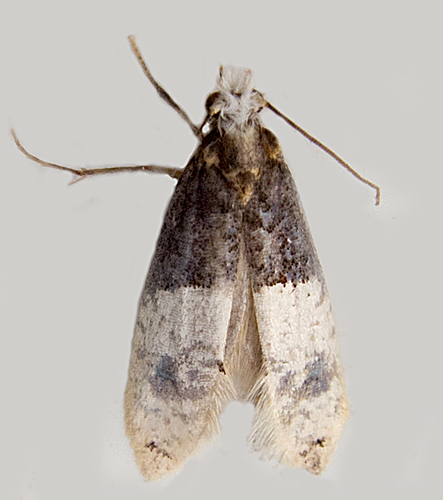
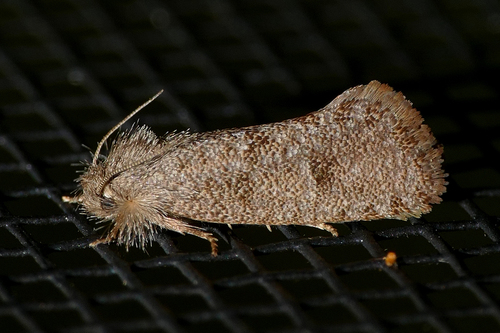
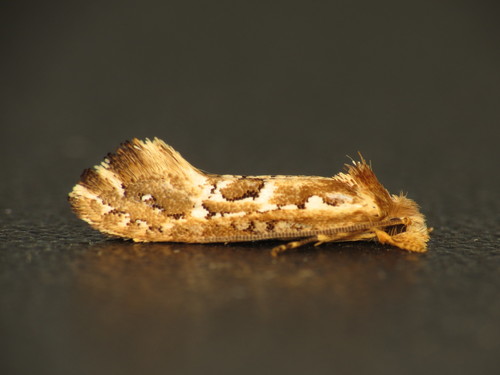
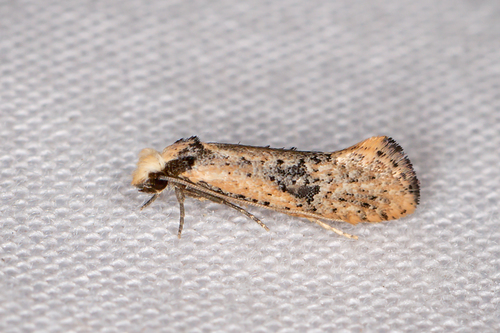
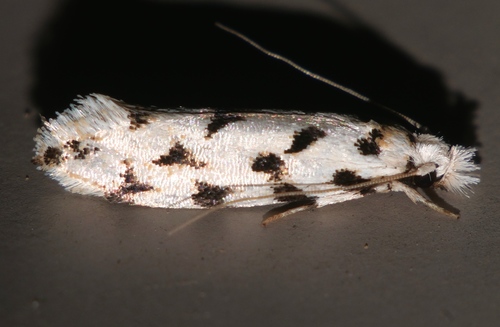
Erechthias simulans has a wingspan of 15–20 mm, which is roughly 2⁄3 of an inch. In the male genitalia of this species, the harpe of the clasper is broad and stubby, with a large swelling covered in bristles emerging from the center of the costa, while the outer edge of the cucullus is toothed. The uncus is slightly hardened (sclerotized) along its sides and split at its tip. The vinculum is very broad and distinctly flattened in its rear section, and the tegumen forms a narrow ring. The front portion of the anellus is cup-shaped, while the aedeagus is long and slender, with an equally elongated, slender cornutus. In the female genitalia, the ostium is narrow and U-shaped. The antrum is tubular and sclerotized, with the ductus seminalis attaching at its upper base. The forward section of the ductus bursae is sclerotized, its hind section is a delicate membrane, and the ductus bursae forms a broad loop where it connects to the bursa copulatrix. The bursa copulatrix has a mesh structure made of fine ridges; the signum is sickle-shaped and the capitulum is well developed. The caterpillar larvae of Erechthias simulans feed on dead and decaying plant stems, particularly the bark and outer wood. They are polyphagous and likely eat very indiscriminately. They are thought to feed on most core eudicots, as larvae have been recorded across this clade. Confirmed known food plants include sea hibiscus (Hibiscus tiliaceus), lonomea (Sapindus oahuensis), saman (Albizia saman), and coffee trees (Coffea). The last two of these are not native to the Pacific region, which demonstrates this species' adaptability. Pupation occurs inside a tough cocoon, within the tunnel the caterpillar inhabited. The pupa is approximately 10 mm long.