About Erebia oeme Hübner, 1803
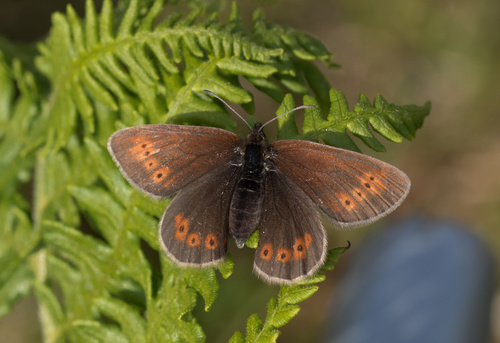
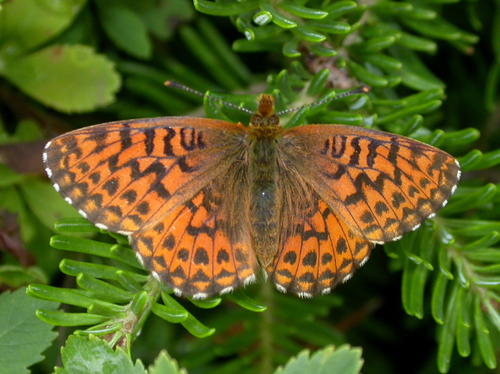
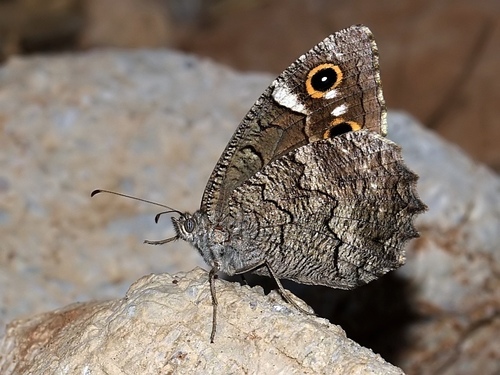
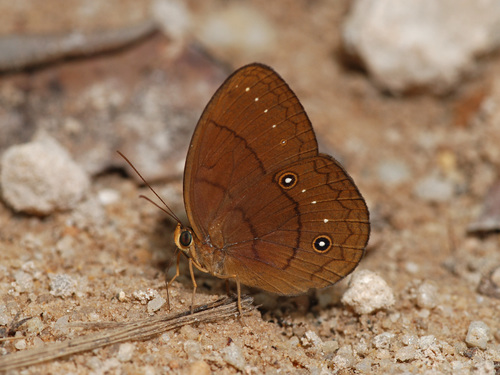
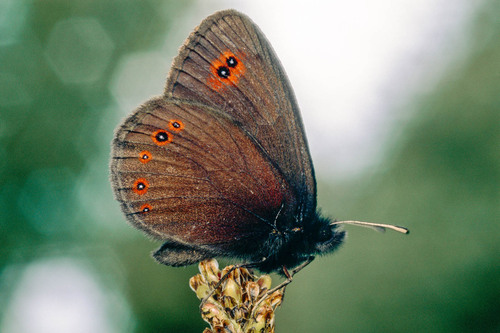
Erebia oeme Hübner, 1803 (treated as E. oeme Hbn. in Seitz) is a variable species in size. Individuals are usually somewhat smaller than Erebia medusa, with more elongated wings. Near the apex of the forewing sits a russet-yellow spot, which is sometimes divided; this spot holds two black ocelli with white centers. Distally on the hindwing, there are 2 to 4 white-centred ocelli, edged with russet-yellow. The underside of the wings is grey-brown, with the same markings found on the upper side. Females are usually somewhat larger than males, paler in overall colour, and have larger, more prominent ocelli than males; the underside of the female hindwing is yellowish grey. This species is widely distributed across the Alps, but occurs sporadically, especially on limestone, and is usually not uncommon at its flight sites. The aberration lugens Stgr. is a smaller form, with uniformly black-brown colouration on the upper side of the forewing; on the underside, the ocelli below the costa are always separated. This aberration is found in the Gadmen Valley of Western Switzerland. The subspecies or form spodia Stgr. is mostly somewhat larger than the typical Erebia oeme, with a complete distal band on both the fore- and hindwings, larger ocelli that have distinctly visible white centers. Transitions between this form and the typical named form of Erebia oeme are not rare. This form occurs in the Eastern Alps and the Balkans. Eggs of the spodia form are round, glabrous, and glossy white. The larva is similar in shape and markings to the larva of Erebia medusa, but it is not green, instead being pale clay-coloured, with brownish longitudinal lines. Each body segment is crossed by a transverse line made up of 4 connected black spots; above the larva's legs runs a chocolate-brown side stripe. Larvae can develop on Luzula species. The pupa is pale yellow, with brown edging along the sheaths covering the eyes, tongue, and wings, as recorded by Rogenhofer. The butterfly flight period is recorded as June and July; adult butterflies are on wing from June to August in a single generation per year. Larvae feed on a variety of grasses and grass-like plants, including Poa alpina, Poa pratensis, Poa nemoralis, Festuca rubra, Carex flacca, Carex sempervirens, Briza media and Molinia caerulea.