About Eratigena atrica (C.L.Koch, 1843)
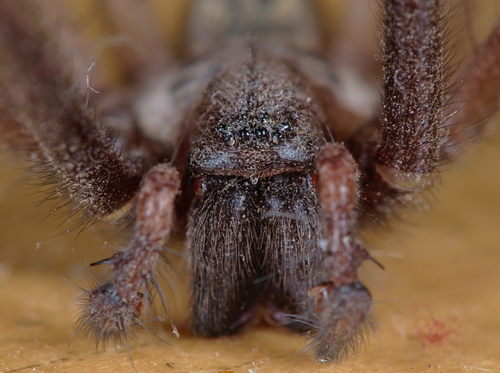
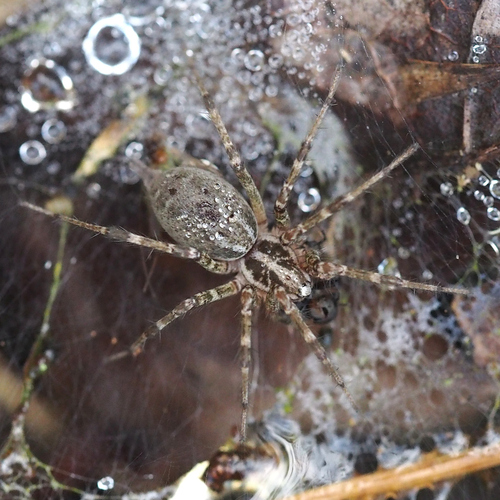
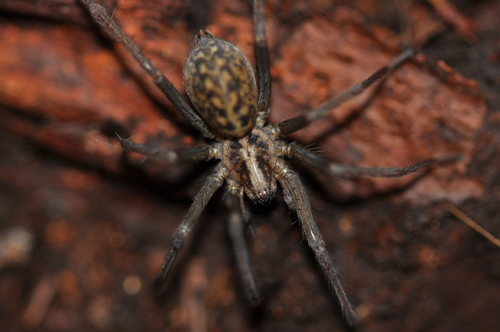
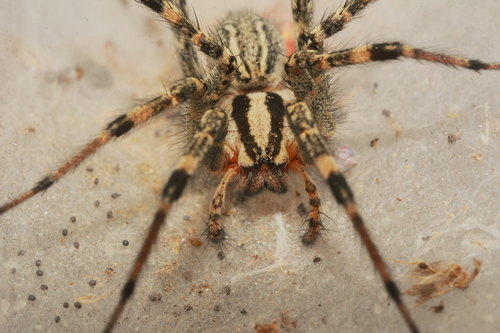
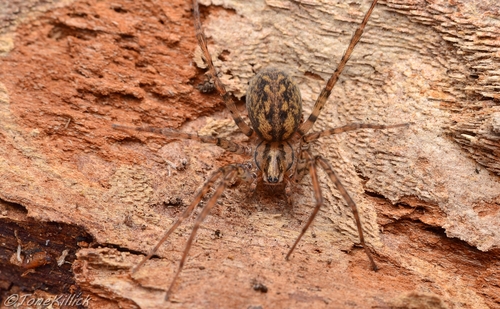
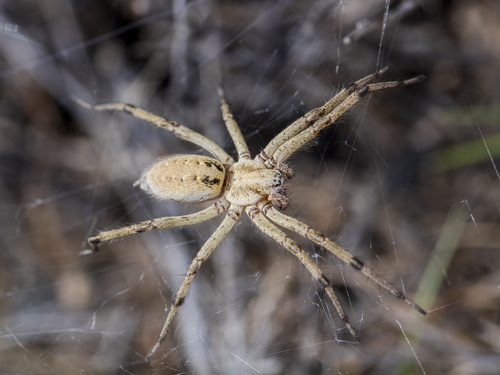
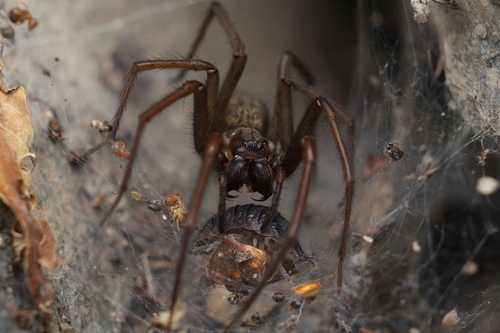
Males and females of Eratigena atrica do not differ in coloration or markings. The species is primarily dark brown, with a lighter arrow-shaped marking on the sternum that has three light spots on each side and points toward the spider's head. The opisthosoma has a lighter middle line, with six spots on each side. Giant house spiders share the same coloration as domestic house spiders (Tegenaria domestica), featuring earthy tones of brown, muddy red, or yellow. Their legs, palps, and abdomen are noticeably hairy. Female body length can reach up to 18.5 mm (0.73 in), while males have slightly smaller bodies, ranging from 12 to 15 mm (0.47 to 0.59 in) in length. Female leg span is typically around 45 mm (1.8 in), and male leg span is highly variable, with common measurements between 25 and 75 mm (0.98 and 2.95 in). The species has eight equal-sized eyes arranged in two rows. Because its eyes contain fewer than 400 visual cells, E. atrica can probably only distinguish between light and dark. E. atrica is naturally found in Europe, Central Asia, and Northern Africa. It was accidentally introduced to the Pacific Northwest of North America around 1900 through human activity, and its population has increased substantially over the last century. It has also been found in several European countries where it was not previously recorded, including Estonia, Latvia, and Lithuania. It is included on the checklist of Danish spider species, and is also found in Iceland. The species' original habitat is most commonly caves or dry forests, where it lives under rocks, but it is also a common spider found in human homes.