About Eragrostis refracta (Muhl.) Scribn.
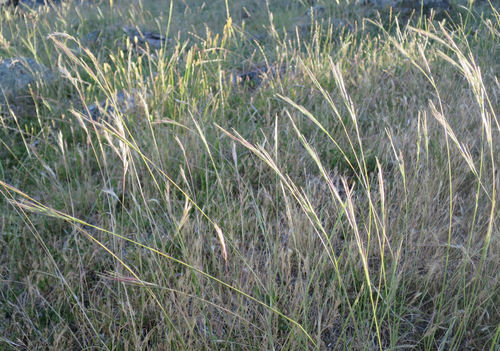
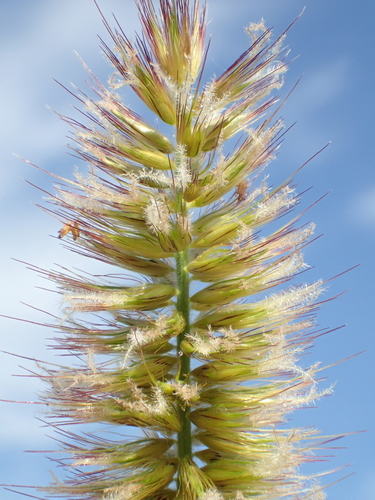
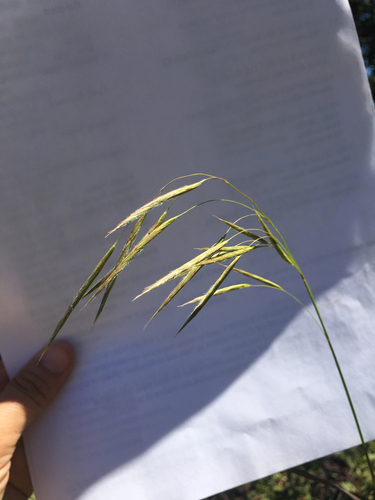
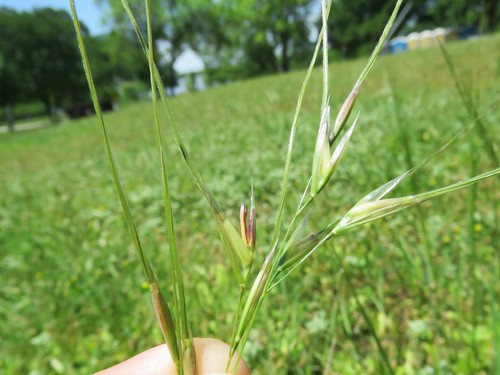
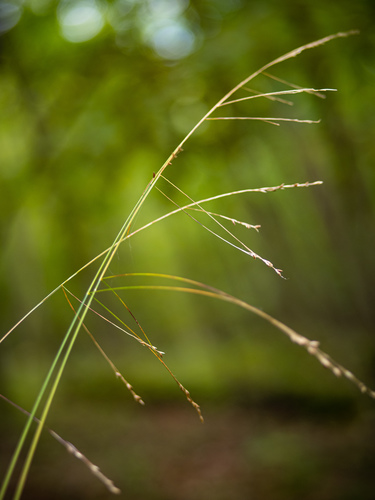
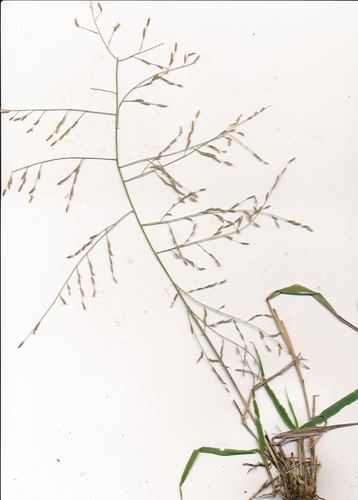
Eragrostis refracta, commonly known as coastal lovegrass, is a tufted perennial grass that grows from a hardened base. Its culms reach 30–100 cm in height, and both the nodes and internodes are glabrous. Most leaves are borne low on the stem; leaf blades are elongated, growing up to 25 cm long and 1.5–4 mm wide. Blades are pilose on the upper surface, glabrous on the lower surface, and scaberulous along the margins. Leaf sheaths are glabrous; ligules are short, measuring 0.1–0.2 mm, membranous, and have long trichomes at the throat. The panicle is loose and open, taking up half to three-quarters of the plant's total height, and ranges from half as wide to nearly as wide as it is long. Panicle branches are flexuous and scaberulous. Spikelets are appressed, with dark margins and light-colored centers. They hold 4–22 flowers each, measure 8–13 mm long and 1.5–1.8 mm wide, and lateral spikelets are longer than their pedicels. Glumes are 1-nerved, scabrous along the keel, and acuminate. The first glume is 0.8–1.3 mm long, while the second is 1.5–2 mm long. Lemmas are 3-nerved, scabrous along the keel, acuminate, and 1.5–1.8 mm long. Paleas are persistent, 1–1.5 mm long, and ciliate. Grains are reddish, oblong, and 0.5–0.7 mm long. This species is distributed from Delaware south to southern Florida, and west to Texas. It grows in pine savannas, woodlands, pinelands, marshes, bogs, seeps, and maritime grasslands. Ecologically, coastal lovegrass is a fire follower: it occurs in burned areas, and its frequency does not change significantly with the number of years since the last fire disturbance. It has good foraging value, providing food for cattle in early spring, and tends to increase in abundance under grazing. Coastal lovegrass is pollinated via hydrophily, with its pollen dispersed by water flow in streams and rivers.