About Eragrostis hirsuta (Michx.) Nees
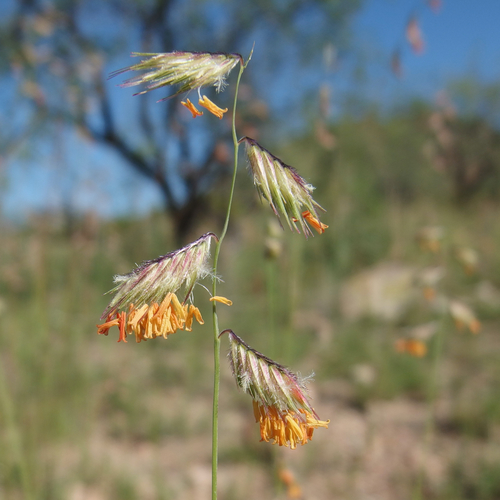
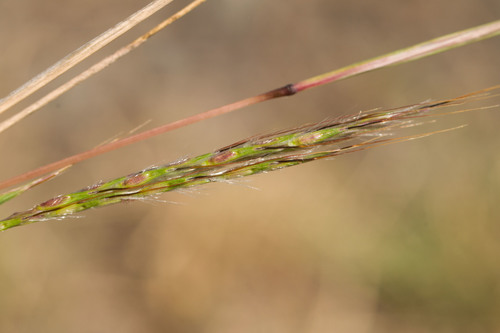
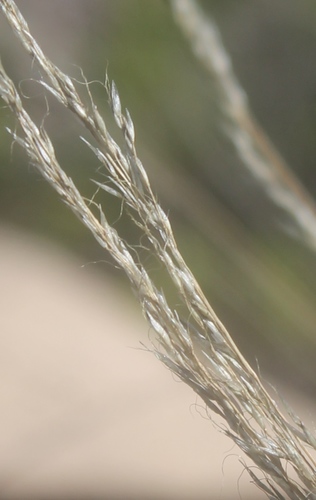
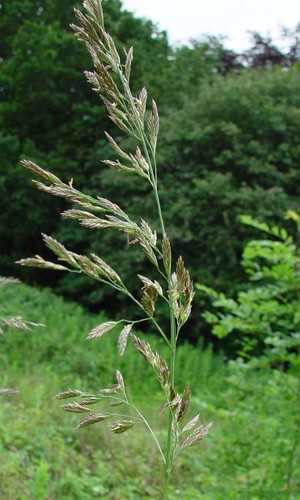
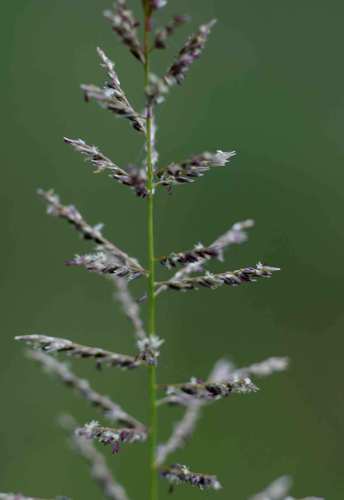
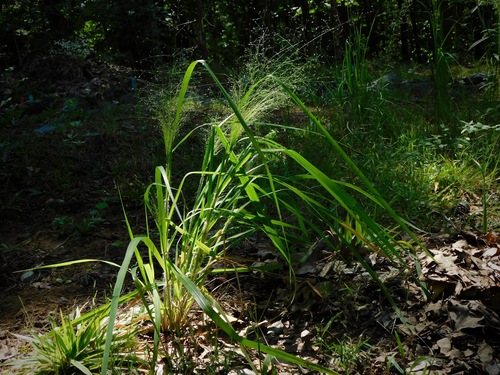
Eragrostis hirsuta, commonly called bigtop lovegrass, does not have rhizomes or glandular structures. Its culms are erect and smooth, growing between 30 and 100 cm tall. Leaf sheaths are typically hairy, particularly near their apex and margins. Leaf blades are mostly hairless, and range from flat to loosely rolled. The ligules are very short, measuring 0.2–0.4 mm long. This species produces a large, open, ovate panicle that is 25–85 cm long, with slender, widely spreading branches. Its spikelets are 2 to 5 mm long, greenish with purplish tinges, and hold 2 to 6 florets that disarticulate from top to bottom. Glumes and lemmas are thin and lance-shaped, while paleas are translucent with acute to obtuse tips. Each floret has three small purplish anthers. The fruit is a small, reddish-brown, slightly compressed grain. In the United States, bigtop lovegrass occurs from Maryland south to Florida, west to Texas, and extends north inland to Tennessee, Arkansas, and Missouri. It is also found in Central America. It grows in fields, clearings, roadsides, and disturbed areas.