About Equisetum sylvaticum L.
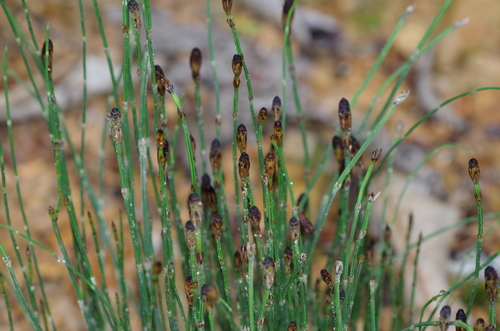
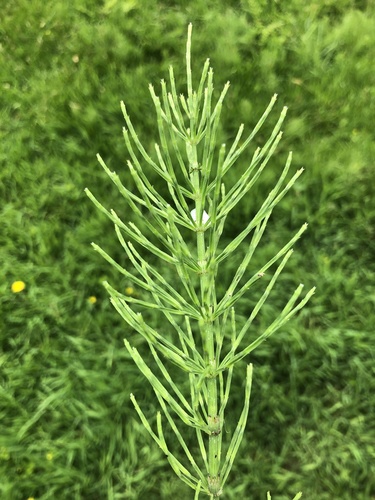
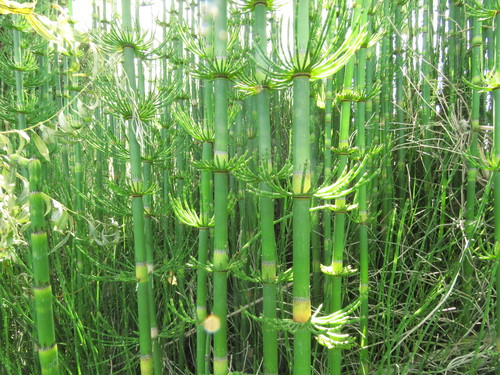
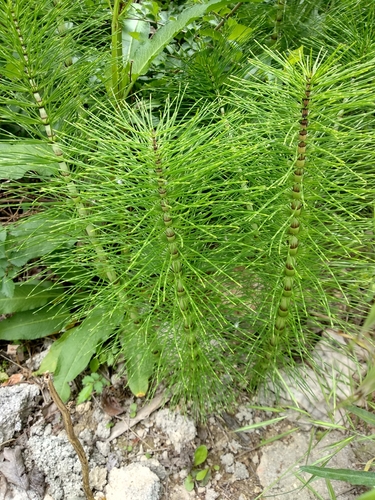
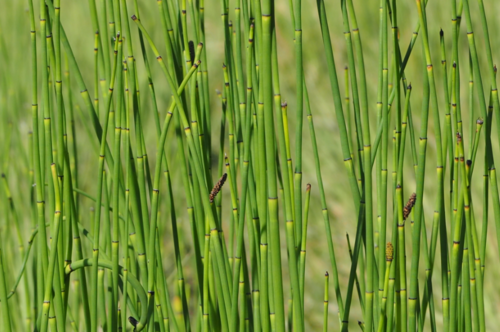
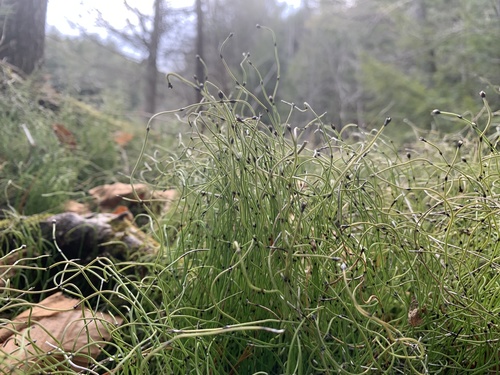
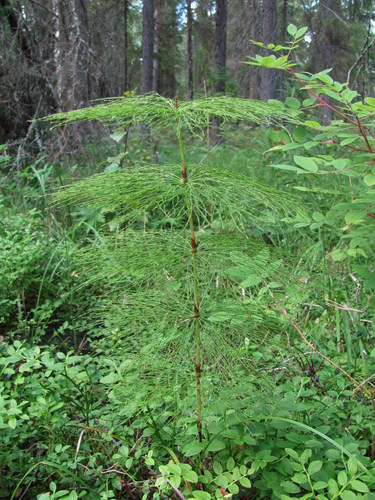
Equisetum sylvaticum L. is a perennial pteridophyte. It produces erect, hollow stems 30 to 50 cm long and 1–4 mm thick. Its compound, delicate branches grow in whorls that droop downward, with generally 12 or more branches per whorl. Fertile stems are initially tan-to-brown and unbranched, but later develop the same appearance as the highly branched, green sterile stems. All stems have 10–18 spiny vertical ridges that hold silica spicules. Its leaves are scales fused into sheaths that cover the stems and branches. These spiny leaves are larger and looser on fertile stems. The species is easily identifiable by its 3-6 reddish brown leaf sheath teeth. Fertile stems are shorter than other stems, and bear spore-bearing strobili (cones) on their structure. After leaves develop on the fertile stems and the stems lengthen, the cones open to release their spores, then drop off; this whole process takes a few weeks. All stems can continue growing until fall, and generally die back over winter.
Wood horsetail, the common name for this species, is most commonly found in wet or swampy forest, open woodlands, and meadow areas. Its species epithet sylvaticum is Latin for "of the forests", which reflects its preference for forested habitats. This plant is an indicator of boreal and cool-temperate climates, and very moist to wet, nitrogen-poor soils. It grows particularly well in areas disturbed by human activity, including ditches, pastures, clear-felled areas, cleared meadows, and even fields. Plants growing in more open habitats are less lacy in appearance than those growing in shady swamp areas, instead taking on a bushier form with shorter branches. In Finland, a specific coniferous swamp habitat type is named after this species: metsäkortekorpi, which translates literally to wood horsetail coniferous swamp.
This species reproduces via spores, but its primary method of reproduction is vegetative growth through rhizomes. Its rhizome systems are deep, extensive, and extremely long-lived. These creeping rhizomes occasionally produce tubers, and the total weight of the underground rhizome system is often 100 times greater than the weight of above-ground growth.