About Equisetum pratense Ehrh.
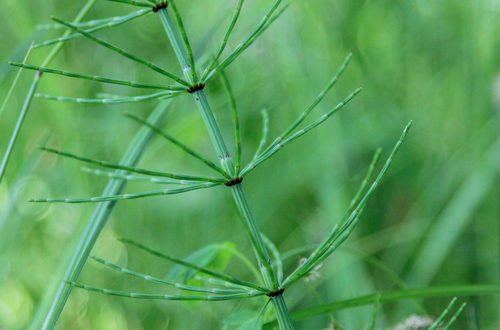
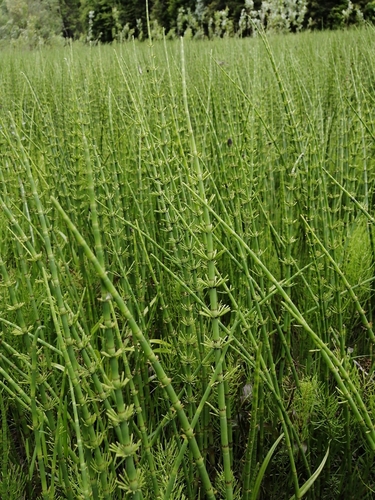
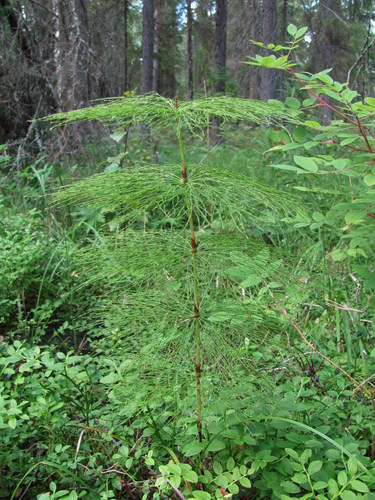
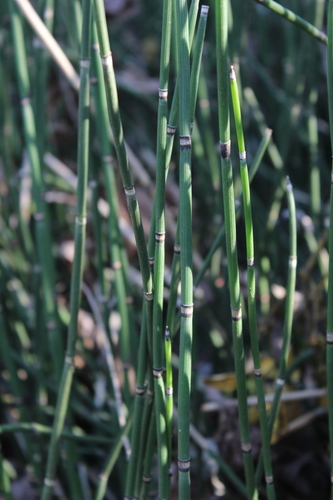
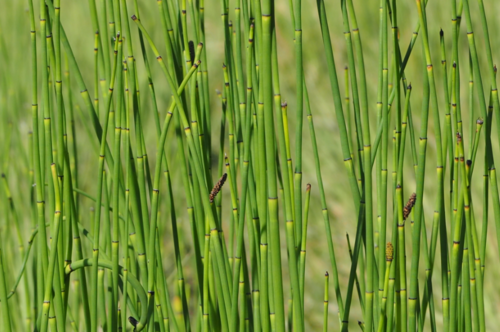
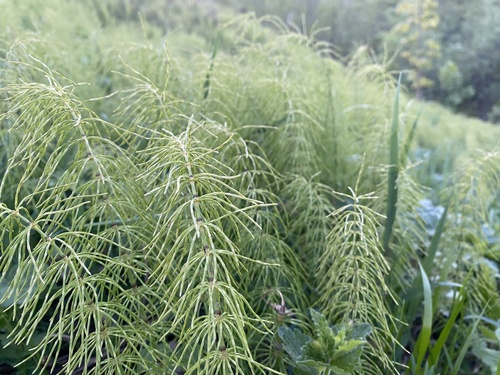
Equisetum pratense produces whitish-green, slender sterile stems that reach 15–52.5 cm (5.9–20.7 in) in height. These stems have 8 to 20 ridges that bear three rows of flat spinules. The stem centrum makes up approximately one sixth of the stem's total diameter. The plant's pale stem sheaths hold slender brown teeth with white margins. Strobili, which contain spore-bearing sporangia, reach maturity in late spring. These cone-shaped strobili only develop on spring shoots, which otherwise grow to look similar to the coneless shoots produced in summer. This species grows in alluvial woods, thickets, mossy glades, and calcareous meadows. It is a common pioneer species, most often found growing on open ground exposed by instability or water erosion, or in areas where sandy alluvium accumulates alongside streams. In locations with more abundant surrounding vegetation, Equisetum pratense only grows as sparse, small shoots, because it loses out to competition in later seral communities. The species is widespread: its distribution ranges from Iceland, northern Britain and Northern Ireland through northern and central Europe, reaching as far south as the Alps. It grows across most of northern Asia extending to Japan, and also grows throughout northern parts of North America from Alaska to Labrador. Equisetum pratense contains the enzyme thiaminase, which breaks down thiamine, also called vitamin B1. When consumed in sufficient quantities, the plant is toxic.