About Equisetum palustre L.
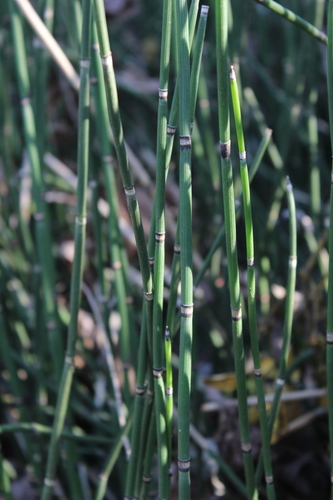
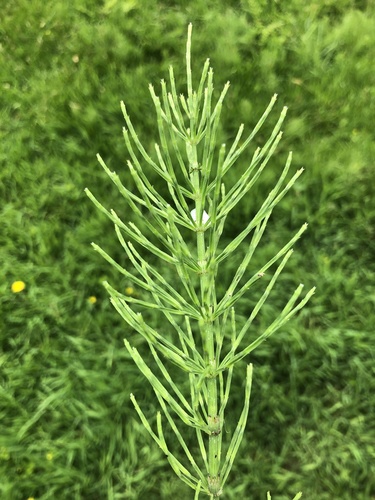
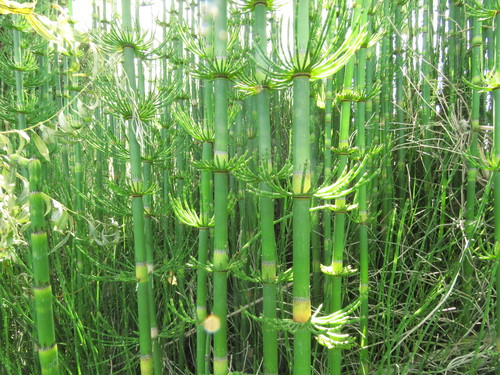
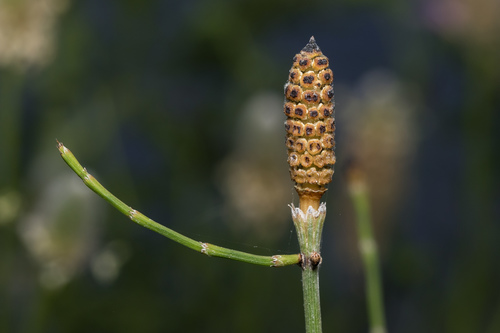
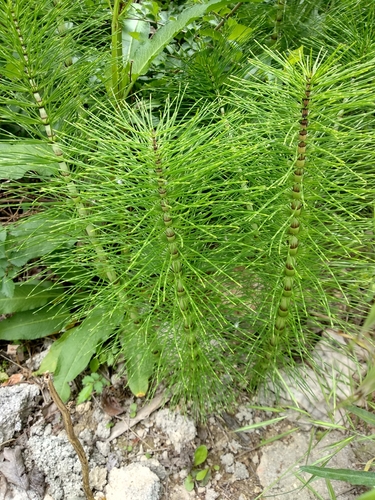
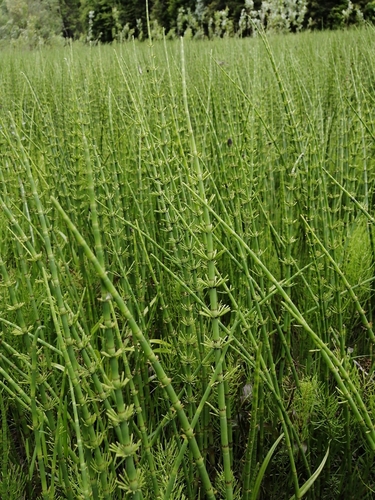
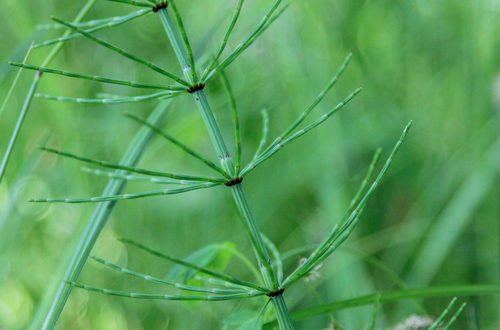
Equisetum palustre L., commonly known as marsh horsetail, produces upright stems that reach 10 to 60 cm in height. These stems are usually lightly branched, and have loose green leaf sheaths holding 5 to 10 narrow dark teeth with light-colored edges. The lowest internode of its upright branches is much shorter than the stem’s leaf sheath. Its rough, furrowed stems measure 1 to 3 mm in diameter, and typically have 8 to 10 ribs, though this number can range from 4 to 12 in rare cases. Stems carry a variable number of whorled branches. Its spores, which are dispersed by wind via anemochory, have four long ribbon-like structures attached, and develop in rounded-tipped strobili. Marsh horsetail often forms runners, which it uses for vegetative propagation. Ecologically, Equisetum palustre stays green from spring through autumn, and produces spores from June to September. It grows primarily in nutrient-rich wet meadows, and is found across Europe and the circumpolar region up to mountain elevations. Its overall distribution is currently declining. In Finland, the species has benefited from human activity, and commonly grows along roads and tracks, in ditches, and especially on peat-based fields and pastures. It is a characteristic species of the Juncus subnodulosus-Cirsium palustre fen-meadow plant association. Equisetum palustre is toxic to mammals. Poisoning is most frequently reported as potentially fatal in horses, because the species contains the alkaloids palustrine and palustridiene, which break down vitamin B1. According to researcher Wink, Equisetum palustre also contains thiaminase enzymes, and it additionally carries small amounts of nicotine. Most thiaminases are denatured by heat, so some sources state that properly cooked Equisetum palustre is safe for human consumption in moderate amounts. Historically in Finland, when cows ate this horsetail instead of more suitable forage, it reduced dairy production.