About Equisetum bogotense Kunth
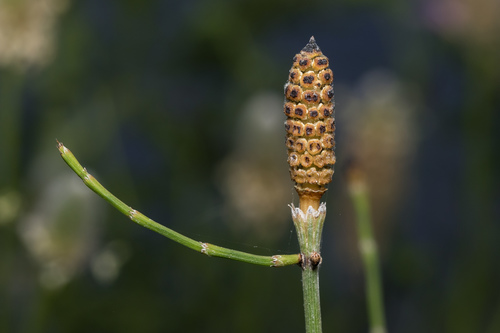
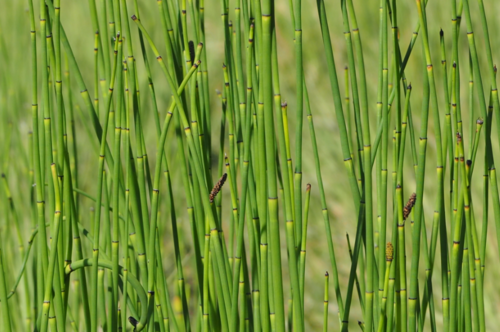
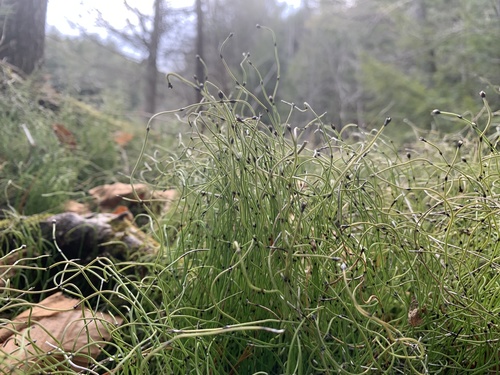
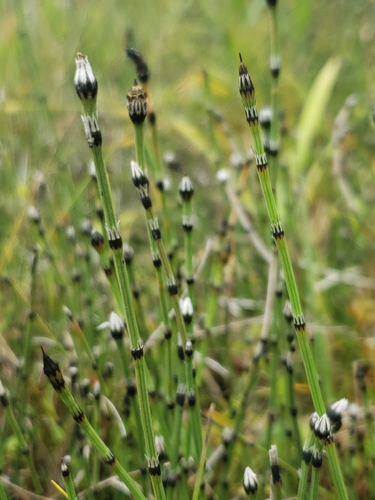
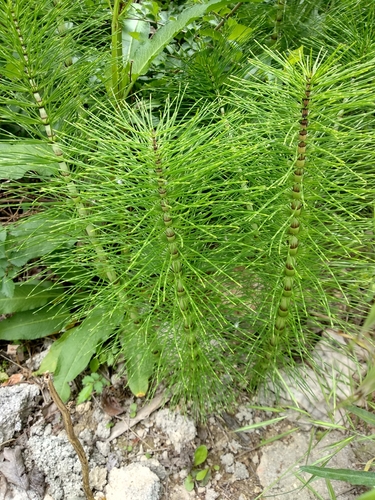
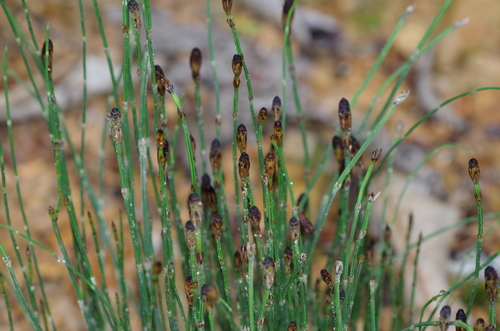
Equisetum bogotense, commonly known as the Andean horsetail, is a herbaceous perennial plant that reproduces via spores. It features thicker, less bushy whorled branches, and a silica-rich, rhizomatous stem that grows underground, with roots emerging from it. The rhizomatous stem is dull dark brown, and has glabrous growth except for its sheathed segments. This plant has a history of use as a traditional herbal remedy. A human study of its diuretic effects found significant increases in urinary sodium, potassium, and chloride. Human and animal trials indicate that E. bogotense has high efficacy as a diuretic, and it is currently used in several modern herbal supplements. Its species epithet refers to Bogotá, the capital of Colombia. A segregate species, Equisetum rinihuense, has been described from this group. According to a recent study, this species may be the most genetically isolated species in the entire Equisetum genus, as it is more closely related to fossil Equisetum species than to living ones. The estimated split between Equisetum bogotense and all other living Equisetum species occurred no later than the Early Jurassic, around 170 million years ago.