About Epthianura aurifrons Gould, 1838
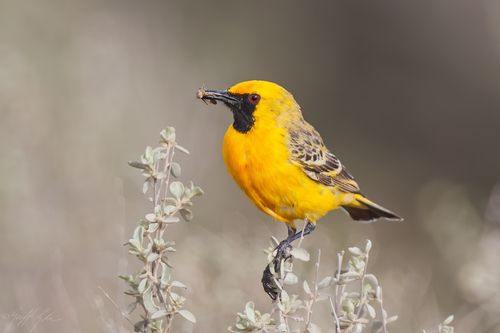
The orange chat, Epthianura aurifrons, is a species of small ground-dwelling songbird endemic to Australia. Adults of this species typically measure 10–12 cm (3.9–4.7 in) in length, weigh 10–12 g (0.35–0.42 oz), and have an average wingspan of 19 cm (7.5 in). The species has a distinct potbellied shape, with relatively long, broad, rounded wings, a short, square-ended tail, long thin legs, a short slender straight bill, and a brush-tipped tongue. Male orange chats have mostly deep, warm cadmium yellow plumage with an orange overtone, and this orange-yellow colour is most intense on the crown and breast. Males have black lores and throat, a golden orange rump, and a tail that is finely tipped with white. Female orange chats have grey-brown mottled plumage, with softer fawny yellow underparts. This species shows no seasonal changes to its plumage. Orange chats are strongly nomadic within the arid and semi-arid zones of Australia that they inhabit. They are found primarily in Australia’s interior, with occasional sightings in the northern tropics, and very rarely reach the coastal areas of South and Western Australia. The orange chat mostly occurs in dry, low-lying, saline environments that are rarely flooded, such as sparsely vegetated gibber plains, salt pans, salt lakes, or claypans. They mainly live in low, treeless chenopod shrublands dominated by saltbush, bluebush or samphire, which can have either open or continuous shrub cover. They are sometimes recorded in other open or shrubby habitats, often located near wetlands: low mulga, low buloke woodland; open acacia scrubland; dongas (steep-sided gullies) vegetated with tall shrubs or small trees including mulga, dead finish, belah or sugarwood; grassland; or sedgeland. The orange chat has occasionally been recorded in mallee woodlands and on farmlands, including areas that have been overrun by Scotch thistle.