About Episyrphus balteatus (De Geer, 1776)
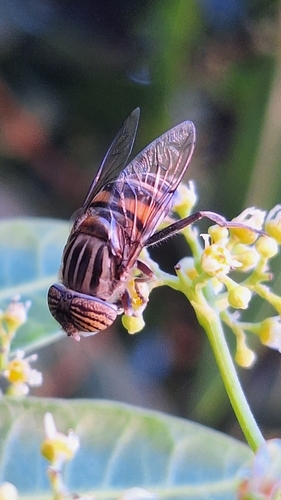
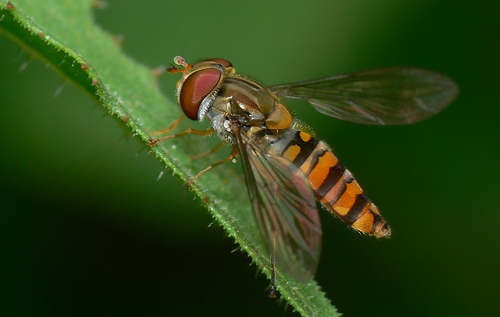
Episyrphus balteatus (De Geer, 1776) has distinctive morphological features. The upper surface of its abdomen is marked with orange and black bands. These color patterns look similar to wasp markings to other animals like birds, which protects the insect from predation; this is an example of Batesian mimicry. The proportion of black and yellow coloring varies between individuals, and this variation is shaped by the length and temperature of the species' pupal period. Females of this species are typically darker than males. Two additional traits used to identify Episyrphus balteatus are secondary black bands on the third and fourth dorsal abdominal plates, and faint greyish longitudinal stripes on the thorax. Like most other hoverflies, males can be easily recognized by their holoptic eyes, where the left and right compound eyes meet at the top of the head. Episyrphus balteatus occurs in a wide range of habitats including urban gardens, and can be found year-round. Adults visit flowers to feed on pollen and nectar. This species often forms dense migratory swarms, and their resemblance to wasps can cause alarm among people who encounter them. In controlled experiments, adult Episyrphus balteatus consistently prefer smaller yellow flowers that have high nectar concentrations. While they are less efficient pollinators than honey bees, adult Episyrphus balteatus are abundant and ecologically important pollinators. The larvae are terrestrial and feed on aphids. Because of this feeding habit, Episyrphus balteatus is classified as one of the primary natural enemies of cereal aphids. In natural conditions, a single Episyrphus balteatus larva can eat up to around 400 aphids before it enters the pupal stage of development.