About Epistrophe grossulariae (Meigen, 1822)
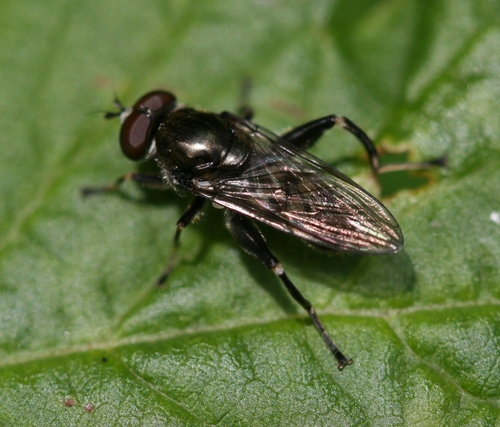
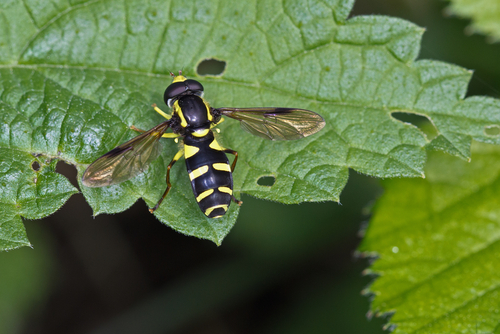
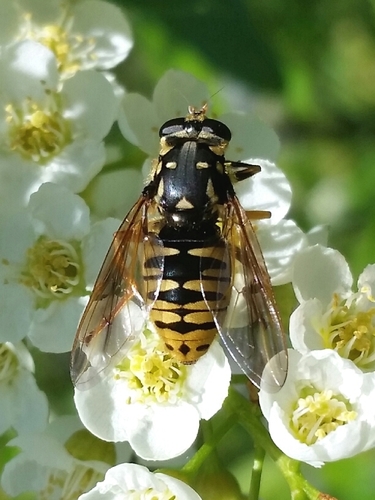
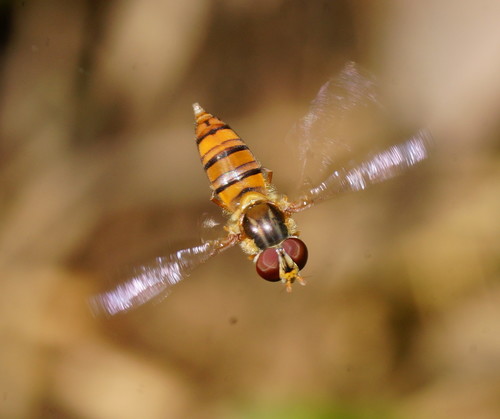
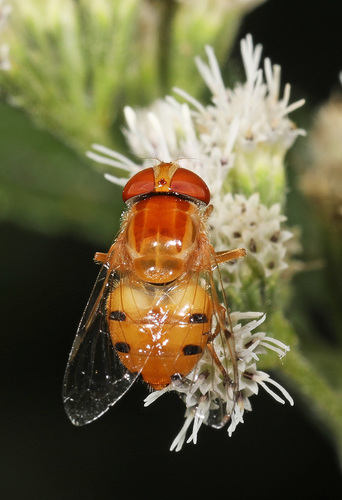
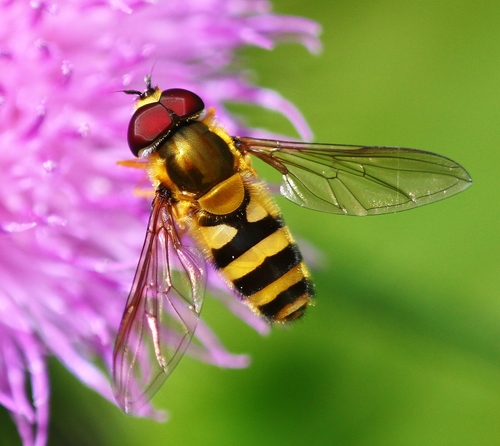
Epistrophe grossulariae (Meigen, 1822) has a wing length between 9 and 12.25 mm. Its thorax is dull greenish. Tergite 4 bears a complete yellow band, while tergite 5 has a black band. The yellow bands on tergites 3 and 4 are straight. At minimum, the anterior femora are dark at their base; the hind femora may also be dark at the base. Above the lunule, the frons is black, and at least half of the frons is covered in black hairs. Female individuals have a bronzy-green area on the upper section of the frons. Illustrations of the male genitalia for this species were published by Hippa in 1968, and the larva was illustrated by Rotheray in 1993. This species is found in both the Palaearctic and Nearctic realms. Its range extends from Fennoscandia south to Spain, Italy, and Yugoslavia, and from Ireland eastwards through Turkey and Russia to Kamchatka. In North America, it occurs from Alaska to Quebec, and south to California.