About Epioblasma brevidens (I.Lea, 1831)
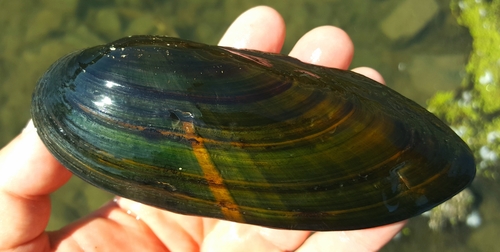
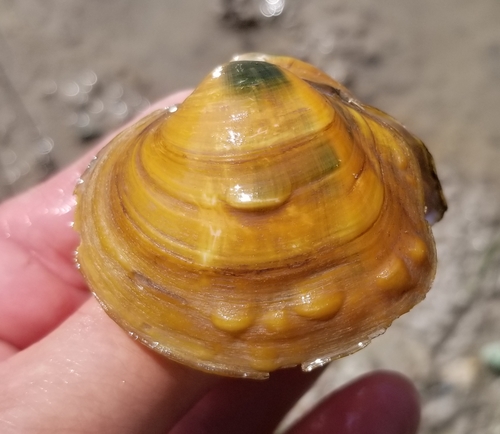
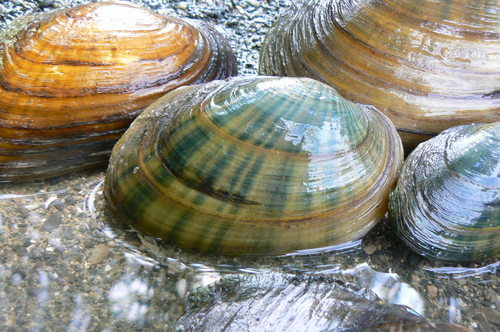
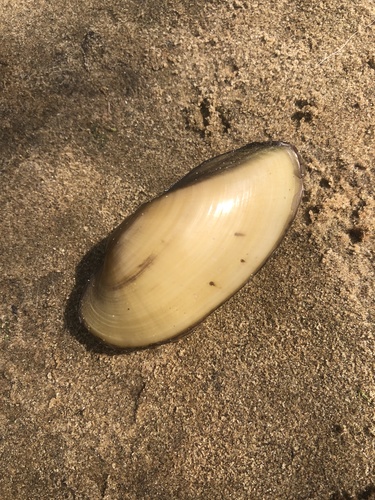
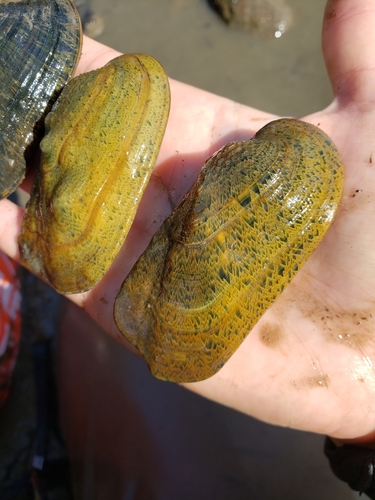
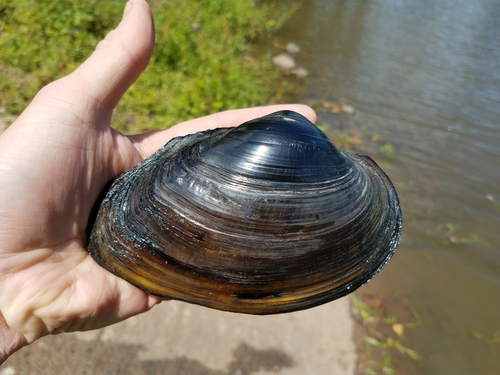
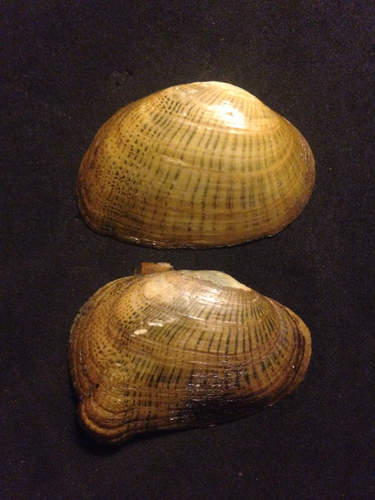
The Cumberlandian combshell, with the scientific name Epioblasma brevidens (I.Lea, 1831), is a mussel that grows to around two inches (5.1 cm) in length. Its outer shell has a yellow and brown film-like coating, marked by numerous green rays, and the interior of the shell is pearl-white. Female Cumberlandian combshells have inflated shells with serrated, tooth-like structures along the shell edge. This species is a filter feeder, and its diet consists of bacteria, diatoms, phytoplankton, zooplankton, some protozoans, and detritus. Cumberlandian combshells inhabit shoals, and areas with coarse sand and boulders in medium streams through large rivers. Most individuals live at depths of less than three feet (0.91 m), but they can also be found in greater depths, such as in the Old Hickory Reservoir on the Cumberland River. The species prefers habitats in medium-sized streams to large rivers, and it is rarely found in small streams or tributaries. Within these waterways, it occurs in substrates of coarse sand, gravel, cobble, and boulders, and prefers areas with strong water flow even when located at greater depths. Under the U.S. Endangered Species Act, the designated critical habitat for this species includes three streams in the Cumberland River watershed: Buck Creek in Pulaski County, Kentucky; Big South Fork in Scott County, Tennessee and McCreary County, Kentucky. It also includes seven streams in the Tennessee River watershed: Clinch River in Scott County, Virginia, where the species is most prevalent, and Hancock County, Tennessee; Powell River in Lee County, Virginia, and Claiborne County and Hancock County, Tennessee; Bear Creek in Colbert County, Alabama, and Tishomingo County, Mississippi. Historically, the Cumberlandian combshell was found across Alabama, Kentucky, Mississippi, Tennessee, and Virginia, occurring across three geographic regions: the Interior Low Plateau, the Cumberlandian Plateau, and the Ridge and Valley. In the late 1940s, the species was recorded as very common in the upper Cumberland River below Cumberland Falls. Ortmann reported that it was prominent in the upper Tennessee River system, but rare in the lower Tennessee and lower Cumberland River systems. By 1980, the species was considered extremely rare across its historical range. Currently, only small populations exist in northeast Mississippi and southwest Virginia. The majority of the global population is found in Tennessee and Kentucky, within the Cumberland and Tennessee River basins. For reproduction, the species' larvae (called glochidia) must attach to the gills or fins of a fish host to complete their development. Glochidia use several native fish species as hosts, including multiple types of darter fish and sculpins. After attaching to a host fish, glochidia transform into juvenile mussels. Female mussels produce large numbers of larvae, but only a small number of juveniles successfully find a fish host, and even fewer survive to reach maturity. Because of this dependency, the Cumberlandian combshell requires a healthy fish population to persist.