About Epinotia solandriana (Linnaeus, 1758)
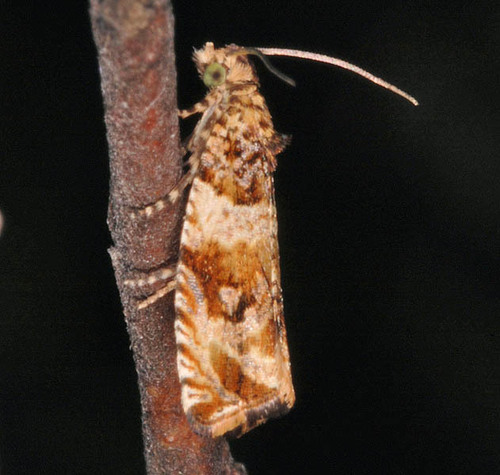
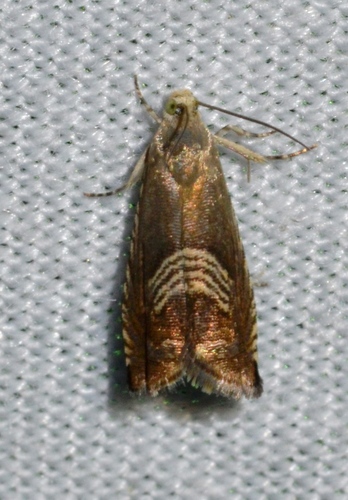
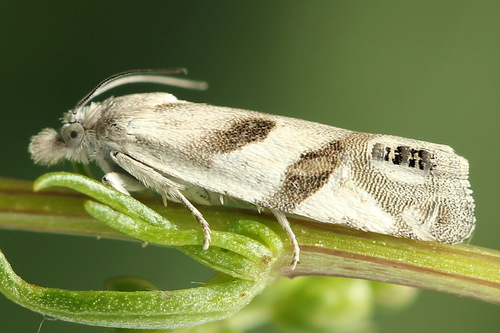
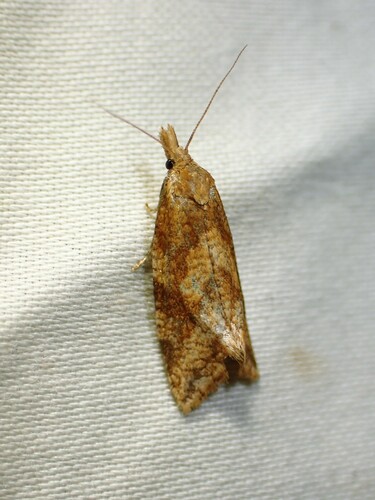
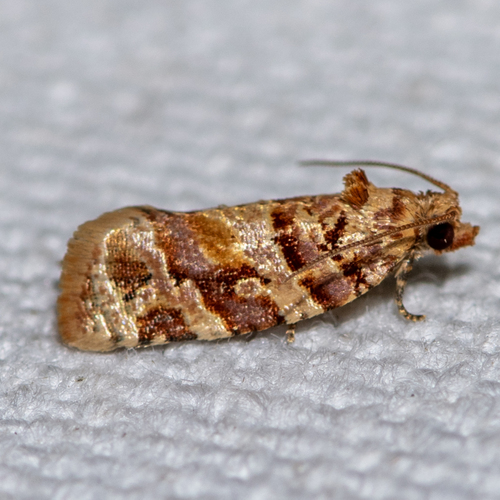
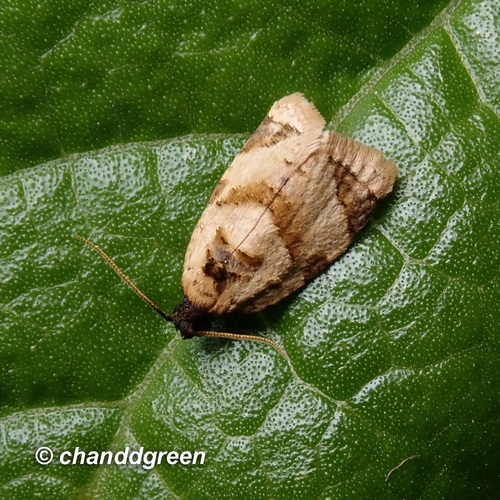
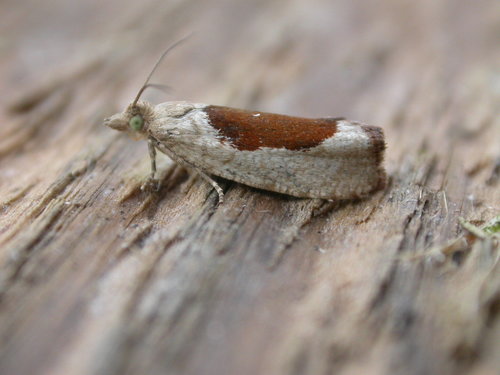
This species is Epinotia solandriana, originally described by Linnaeus in 1758. Adults have a wingspan of 16 to 21 mm. Their forewings are elongated with a moderately arched costa, and the forewing fold extends to one-third of the wing length. The forewing ground colour ranges from whitish ochreous or brownish to ferruginous, and it may bear fine dark streaks, sometimes with mixed whitish colouration. The basal patch of the forewing has an angled edge, and the central fascia narrows toward both of its ends; both structures are sometimes darker in colour than the surrounding ground. A rounded triangular white or pale median dorsal blotch is present on the forewing, and this blotch may sometimes be replaced by a longer, semi-oval dark reddish-brown blotch. The forewing termen is quite oblique. The hindwings are light grey. Fully grown larvae are grey-whitish or dull greenish, with a pale brown or partially black head, and the second thoracic plate is whitish or brown. In terms of ecology, this moth produces one generation per year, and adults fly from July to September, with flight timing varying by location. The larvae feed primarily on Betula species (birch), Corylus avellana (hazel), and Salix species (willow).