About Epinephelus malabaricus (Bloch & Schneider, 1801)
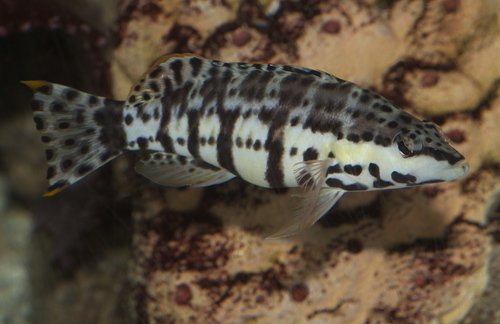
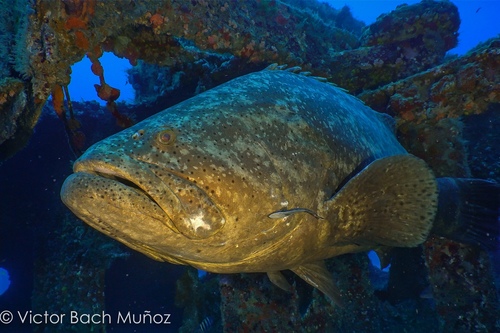
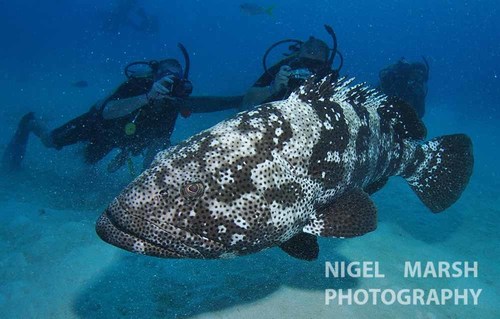
Epinephelus malabaricus, commonly known as the Malabar grouper, can reach a maximum total length of 234 cm (92 in), while the average adult size is typically around 100 cm (39 in). Its body has a light grey to light brownish base color, covered with a variable number of randomly scattered dark brown spots; the number of these spots increases as the fish ages. The body also displays a number of brown diagonal stripes. Younger individuals have several wide, broken dark vertical bands across their bodies, but mature fish tend to develop a more uniform darker overall color. All young Malabar groupers have numerous brown spots, and their tail fin has a rounded shape. This species is widely distributed across tropical waters of the Indo-West Pacific region, ranging from the eastern coast of Africa to the Tonga Islands, and including the Red Sea. It was first recorded in the eastern Mediterranean Sea in 1969, where it still remains extremely rare, and mariculture and shipping are considered possible introduction vectors. Malabar groupers occupy a wide variety of habitats, including lagoons, mangroves, coral reefs, rocky reefs, and areas with sandy or muddy bottoms, at depths between 2 and 150 meters. Juvenile Malabar groupers prefer lagoon or brackish habitats. The species is harvested commercially, for food, and for sport, and some individuals are raised in aquaculture operations.