About Epinecrophylla fulviventris (Lawrence, 1862)
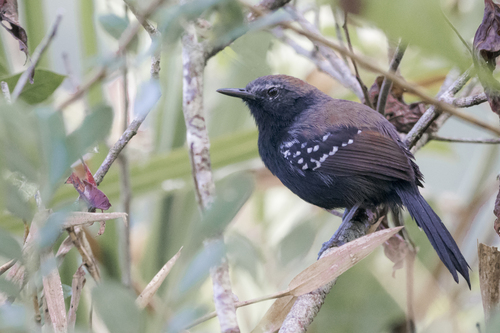
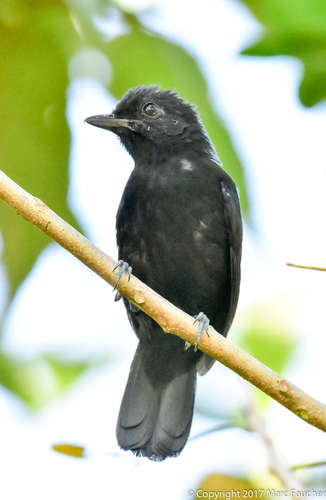
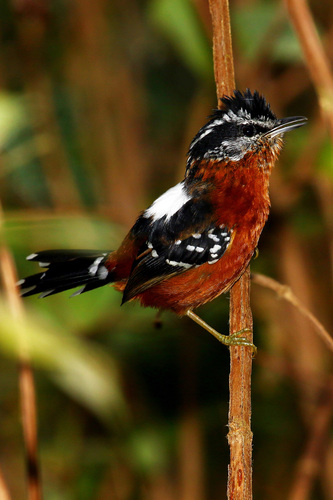
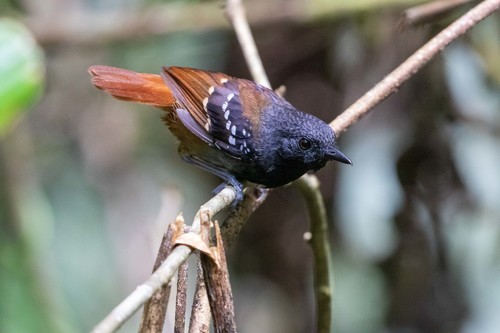
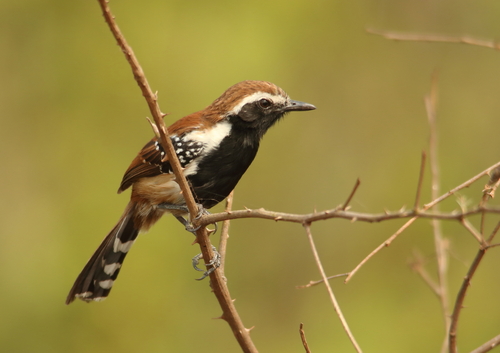
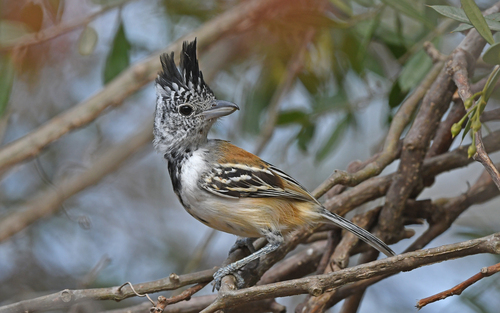
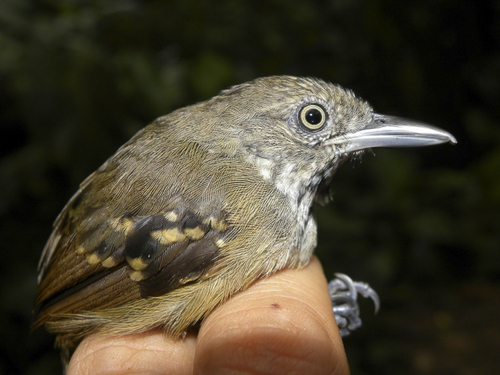
The checker-throated stipplethroat, with the scientific name Epinecrophylla fulviventris (Lawrence, 1862), measures 10 to 11 cm (3.9 to 4.3 in) long and weighs 8.5 to 11.5 g (0.30 to 0.41 oz). Males and females have nearly identical plumage aside from facial and throat markings: males have a mostly gray face and a black throat with large white spots, while females have mostly brownish buff face and throat. Adults of both sexes have a gray-brown crown and upperparts, a reddish tail, blackish brown to olive-brown wing coverts with yellow-ochre tips, and reddish flight feathers. Their breast is gray, and the rest of their underparts are brownish buff, darkening towards the vent. Their iris is golden and darkens with age; juveniles have a gray iris that yellows as they mature. The checker-throated stipplethroat is distributed from far southeastern Honduras, continuing along the Caribbean slope through Nicaragua and Costa Rica into western Panama. From western Panama into Colombia, it is found on both the Caribbean and Pacific slopes, extending east into Colombia's Magdalena River valley and south through western Colombia and Ecuador almost to Peru. It inhabits lowland and foothill evergreen forest and adjacent mature secondary forest, and favors areas with dense vine tangles that collect debris. In elevation, it mostly occurs up to around 750 m (2,500 ft) in Central America, 1,200 m (3,900 ft) in Colombia, and 900 m (3,000 ft) in Ecuador, and has been recorded as high as 900 m (3,000 ft) in Costa Rica and 2,000 m (6,600 ft) in Colombia.