About Epilobium pseudorubescens A.K.Skvortsov
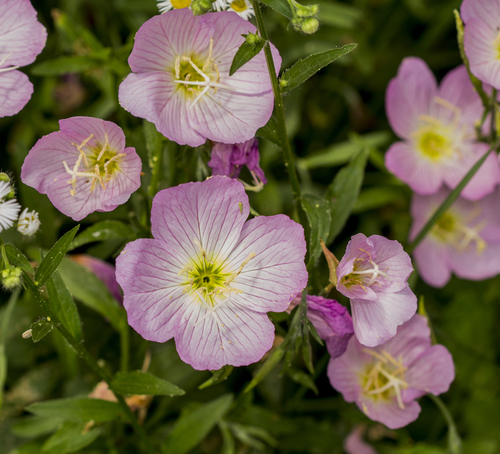
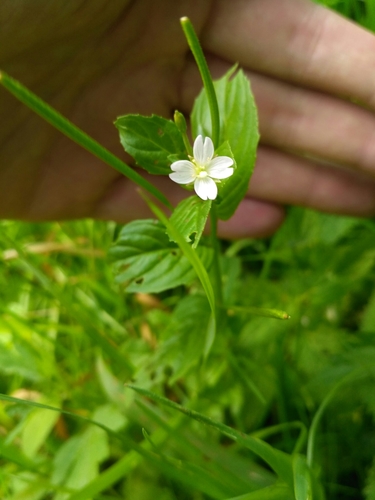
This species is Epilobium pseudorubescens A.K.Skvortsov, a member of the Epilobium genus, commonly called willowherbs. Most plants in the Epilobium genus are herbaceous annual or perennial plants, with a small number growing as subshrubs. Their leaves are opposite, or rarely whorled, simple in structure, and shaped from ovate to lanceolate. The flowers are radially symmetrical (actinomorphic) and have four petals that may be notched. In most species, flowers are small and pink, while a small number of species have red, orange, or yellow flowers. The fruit is a slender cylindrical capsule that holds many seeds; the seeds are embedded in fine, soft silky fluff that allows very effective wind dispersal of seeds. The genus name Epilobium comes from the Greek words "epi" (meaning "upon") and "lobos" (meaning "lobe"), referring to the position of the petals above the ovary. Some Epilobium species with slightly asymmetrical (zygomorphic) magenta flowers and alternate leaves have been placed in the genus Chamaenerion, and some authorities further separate this group into the genus Chamerion. However, the genus Chamerion is not universally accepted. Willowherbs, in the broad sense, are typically very quick to grow and carpet large swathes of ground, and may become key or dominant species in local ecosystems. For example, in the United Kingdom, rosebay willowherb (Chamaenerion angustifolium) is widely found on mesotrophic soils dominated by false oat-grass (Arrhenatherum elatius), cock's-foot grass (Dactylis glomerata), and red fescue (Festuca rubra), while great willowherb (Epilobium hirsutum) grows in mesotrophic grassland alongside stinging nettle (Urtica dioica). These two willowherb species also dominate open habitats during the early stages of ecological succession, often growing to the virtual exclusion of other plant life. Broad-leaved willowherb (Epilobium montanum) is characteristically found, though not in large abundance, in mesotrophic grasslands with meadowsweet (Filipendula ulmaria) and sometimes the uncommon Greek valerian (Polemonium caeruleum). Most willowherbs cannot tolerate shade from trees, so they are limited to more recently disturbed patches of ground, and are outcompeted by other plants over time. As a result, while the genus contains many pioneer plant species, rather few of them are major invasive weeds. Epilobium species are used as food plants by the caterpillars of certain moth and butterfly (Lepidoptera) species, including members of the Geometridae family: the Grey pug (Eupithecia subfuscata), which has been recorded feeding on several Epilobium species; members of the Noctuidae family: the Mouse moth (Amphipyra tragopoginis), recorded on several species; the Small angle shades (Euplexia lucipara), recorded on several species; and the Australian grapevine moth (Phalaenoides glycinae), recorded on fringed willowherb (E. ciliatum); plus members of the Sphingidae family: the Elephant hawk-moth (Deilephila elpenor), recorded on several species; the Small elephant hawk-moth (Deilephila porcellus), recorded on several species; and the White-lined sphinx (Hyles lineata), recorded on several species. Humans primarily use Epilobium as a herbal supplement to treat prostate, bladder (incontinence), and hormone disorders. Many small willowherb species are considered nuisance weeds in gardens. While few species are regularly grown as ornamental plants, larger willowherbs can be attractive in disturbed, uncultivated ruderal areas. One of the most widely recognized members of the genus is the circumboreal fireweed (E. angustifolium), which is called rosebay willowherb in the United Kingdom. It rapidly colonizes burnt ground; during the bombing of London in World War II, many derelict bomb sites were soon covered by these plants, bringing a splash of color to an otherwise grim landscape. It is the floral emblem of Yukon in Canada, Hedmark in Norway, and Southern Ostrobothnia in Finland. In north-western North America, fireweed is used as a sweetener, added to candy, jellies, ice cream, syrup, and sxusem (also called "Indian ice cream"). In late summer, its flowers produce pollen and abundant nectar that makes a rich, spicy honey. Its young leaves, roots, and shoots are edible, though they are somewhat bitter, and are rich in provitamin A and vitamin C. The Dena'ina people also used these plant parts as a food supplement for dogs, and applied stem sap to wounds, believing it has anti-inflammatory properties. Multiple researchers have studied the Epilobium taxon. Heinrich Carl Haussknecht in the late 19th century, and Peter H. Raven around a century later, researched the phylogeny, systematics, and taxonomy of willowherbs. Peter Michaelis' studies of this genus laid the groundwork for the scientific understanding of extranuclear inheritance in plants.