About Epilobium parviflorum Schreb.
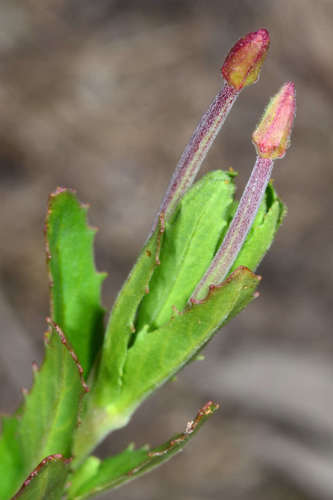
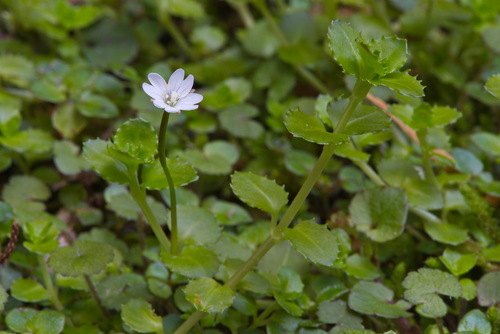
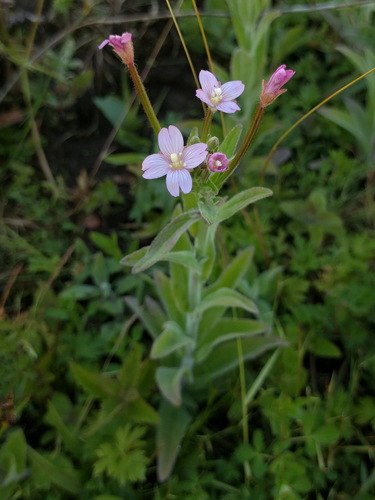
Epilobium parviflorum Schreb. is a hemicryptophyte scapose plant. Its overwintering buds sit just below the soil surface, and its floral axis is more or less erect with a small number of leaves. On average, this species grows to a height of 30–80 centimetres (12–31 in). Its stem is erect and densely covered in hairs, particularly on the lower portion. The leaves are opposite, unstalked but not amplexicaul, lanceolate and toothed, with a rounded base, and measure 4–10 centimetres (1.6–3.9 in) long. The tiny flowers are pale pink or pale purple, 6–7 millimetres (0.24–0.28 in) in diameter, with four petals, eight stamens, and a 4-lobed stigma. Flowering takes place from June to August in the Northern Hemisphere. The hermaphroditic flowers are either self-fertilized (autogamy) or pollinated by insects (entomogamy). The fruit is a capsule 3 to 7 centimetres long that contains very small black seeds, about 1 mm long. The seeds have white fibres that enable wind dispersal. This species is very similar to Epilobium hirsutum, but its flowers are much smaller. It is sometimes mistaken for Epilobium roseum; E. roseum has a clavate stigma, which contrasts with the 4-lobed stigma of E. parviflorum. A clearer distinguishing trait is that the undersides and fully developed leaves of E. parviflorum are covered in unglandular trichomes up to 0.5 millimetres (0.020 in) long, while trichomes of E. roseum are always shorter, reaching a maximum of 0.3 millimetres (0.012 in). E. parviflorum is one of the most widespread species in its genus. It occurs across most of Europe, including Britain, ranging from Sweden south to Northern Africa and east through Western Asia up to Kashmir, and is also found in the United States and Canada. In Croatia, it grows everywhere except at subalpine and altimontane altitudes. It inhabits areas with very moist to wet conditions. It prefers marshes and swamps, moist mountain meadows and slopes, growing at an average altitude of 0–1,400 metres (0–4,593 ft) above sea level, with a maximum recorded altitude of 2,500 metres (8,200 ft). Extracts of Epilobium parviflorum have been used in traditional medicine to treat disorders of the prostate gland, bladder, and kidney, and they have antioxidant and anti-inflammatory effects. In traditional Austrian medicine, the herb of this species has been prescribed internally as tea to treat disorders of the prostate, kidneys, and urinary tract. Studies show that Epilobium extracts inhibit the proliferation of human prostate cells in vitro by affecting the progression of the cell cycle.