About Epilobium montanum L.
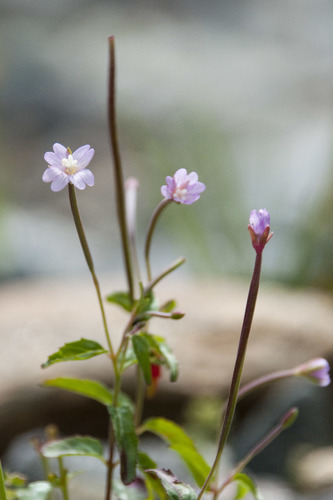
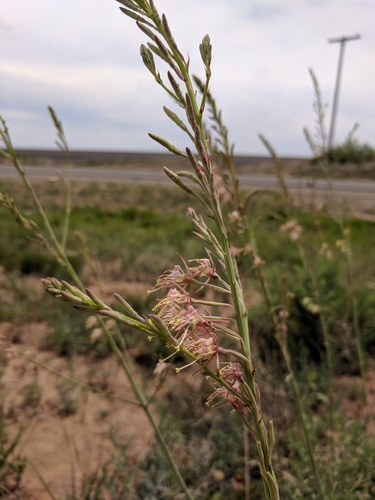
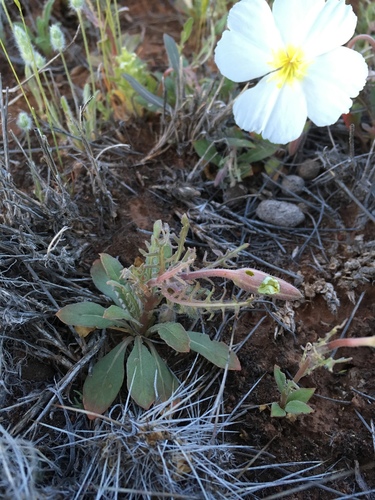
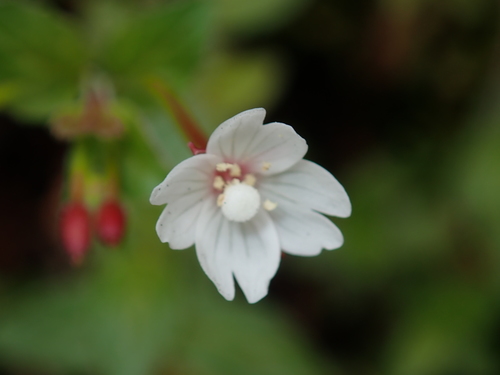
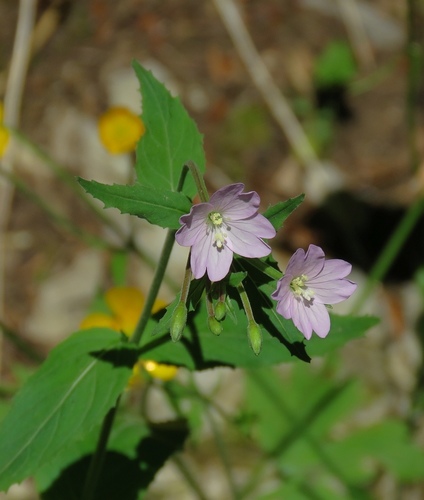
Epilobium montanum L. reaches up to 60 centimeters in height. Its leaves are hairless, serrated, and ovate-lanceolate in shape; most are arranged oppositely on short stalks. The pale mauve flowers are roughly 8 millimeters across, have a four-lobed stigma, and grow in terminal racemes. This species is common across Britain, Ireland, and most of Europe. Its presence in the Pannonian macroregion is confirmed by herbarium specimens. It is also native to central and eastern Asia, and has been introduced to North America, Japan, and New Zealand. It typically grows on disturbed ground, base-rich soils, in hedgerows, and occurs as a garden weed. In traditional Austrian medicine, the herb of Epilobium montanum is used internally as a tea to treat prostate, kidney, and urinary tract disorders. A review of studies on extracts from Epilobium species found some evidence supporting the traditional use of these plants for digestive disorders. Extracts from the species contain mixtures of flavonoids, phenolic acids, and tannins; the tannin oenothein B may be the main component driving biological activity. There is currently insufficient evidence to confirm that the plant is effective for treating prostate disorders.