About Epidalea calamita (Laurenti, 1768)
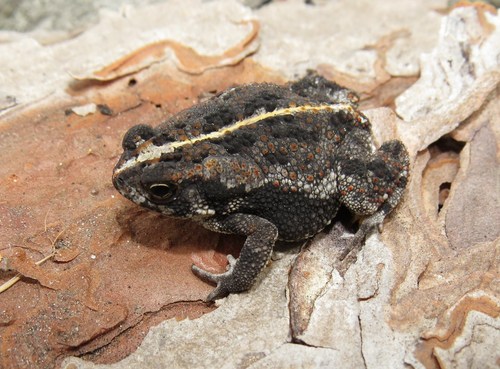
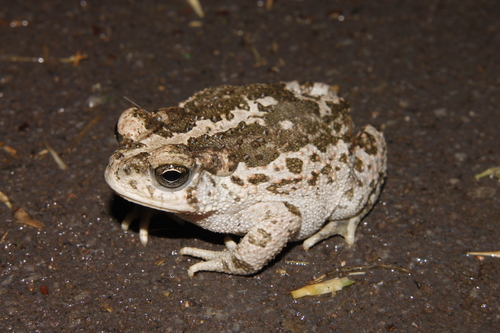
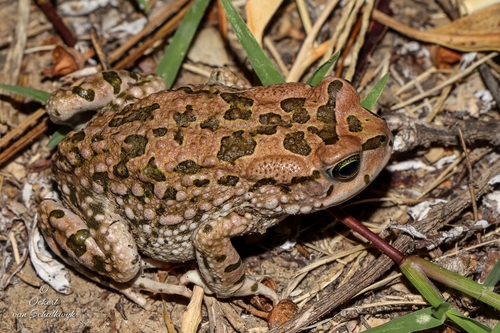
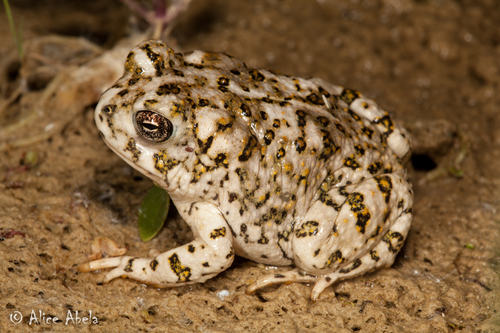
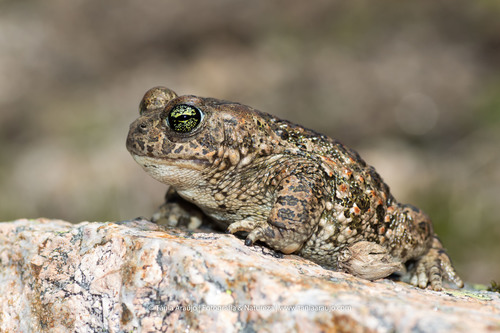
The natterjack toad, scientifically named Epidalea calamita, is a toad species native to sandy and heathland areas of Europe, including the United Kingdom. Adult natterjack toads measure 60–70 mm (2.4–2.8 in) in length. They can be distinguished from common toads by a yellow stripe running down the middle of the back, and parallel paratoid glands. Their relatively short legs give them a unique walking gait, which is different from the hopping movement used by many other toad species. Male natterjack toads have a single vocal sac under the chin that amplifies their very loud, distinct mating call.
Natterjack toad populations are found across 17 European countries. In the United Kingdom, the species is now almost entirely restricted to coastal sites. It is the only toad species native to Ireland. In Ireland, it occurs naturally in County Kerry, specifically on the Dingle Peninsula and at Derrynane, and was introduced to a dune site in County Wexford. In mainland Europe, especially in the southern portion of its range, the natterjack toad lives inland across a variety of habitats.
Natterjack toads spawn between late April and July, laying their eggs in strings inside shallow, warm pools. Since natterjack toad populations are often small, their loud mating calls are critical to help individuals of opposite sexes find one another. This species will only spawn in pools with a very gently sloping bottom, and tolerates only sparse vegetation on pool banks and within the water. These pools are often temporary, so tadpoles sometimes die when the pools dry out completely. The natterjack toad offsets this risk by mating across an extended period each summer. As a result, by September, juvenile natterjack toads can range in age from one to three months. Early breeding individuals rarely breed a second time later in the same season, though some females do spawn twice in a single year.