About Epiactis thompsoni (Coughtrey, 1875)
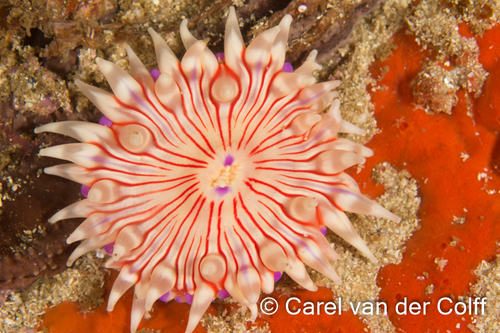
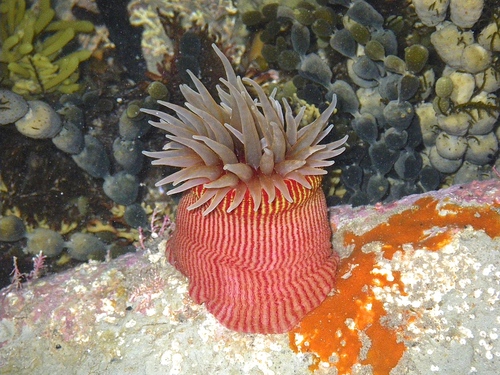
Epiactis thompsoni, commonly called the red-striped anemone, is a relatively large sea anemone species, reaching up to 75 millimeters in size. Its pedal disc, which protrudes from its base, can grow up to 45 millimeters in diameter. Vertical red and white stripes run along the full length of its body; the white stripes often become bright yellow or even lime green near the animal’s elevated mouth. This anemone has roughly 60 tentacles arranged in three whorls; the tentacles are typically white with mauve tips, and can reach up to 25 millimeters in length.
This species lives in rock pools around the low tide mark, where it adheres to stones and boulders. It broods its young, a reproductive strategy that has specific advantages for this intertidal species. Epiactis thompsoni is gonochoric, meaning its individuals have separate sexes. It practices internal brooding, where offspring develop inside the parent’s gastrovascular cavity. This method of reproduction is beneficial in the harsh conditions of the intertidal zone, and also reduces the dispersal distance of offspring. This species is known as the primary brooding species in its genus, and breeds continuously throughout the year. Some offspring produced in a single brood develop with multiple oral discs and multiple tentacular crowns; this unusual trait is thought to result from the fusion of two or more embryos during development.