About Epiactis prolifera Verrill, 1869
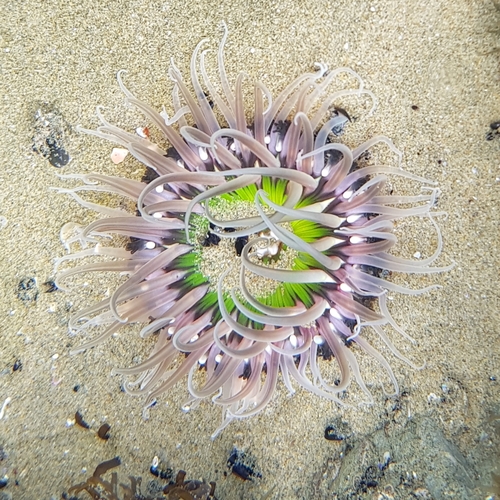
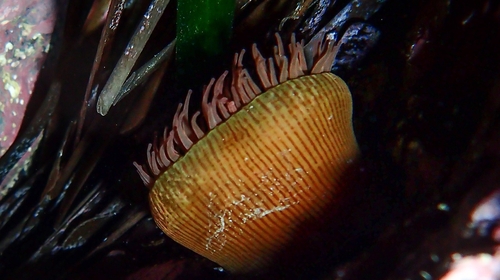
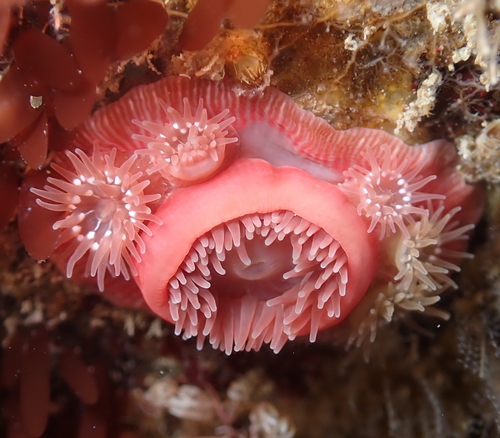
Epiactis prolifera Verrill, 1869, commonly called the brooding anemone, reaches up to 3 centimetres in height and 5 centimetres in diameter. It has variable coloration, most commonly greenish-brown, but may also be brown, pink, red, or dull green. Fine white lines radiate from the mouth across the oral disc, with additional white lines on the column and pedal disc. The lower section of the column and the pedal disc are occasionally blue, and radiating pale and dark lines often appear on the edges of the pedal disc and the lower column. The mouth is surrounded by 48 to 96 short, conical tentacles, each with a terminal pore at the tip.
This anemone is found in shallow waters of the north-east Pacific Ocean. It reaches its highest densities on or under rocks in the sublittoral zone, within surge channels, on rock shelves, and in areas exposed to wave action. It is commonly found in areas covered with encrusting coralline algae, and sometimes grows on eelgrass leaves. It cannot tolerate exposure to drying air or direct sunlight, and it moves across its substrate more freely than most other anemone species.
Although brooding anemones have stinging nematocysts, they are a preferred prey source for a number of other animals. Many nudibranch species are immune to the anemone's toxin; they eat the anemone and can store any unused nematocysts for their own defensive use. Documented predators of Epiactis prolifera include the nudibranch Aeolidia papillosa, the leather star Dermasterias imbricata, and certain fish such as the mosshead sculpin (Clinocottus globiceps). This anemone sometimes forms mutualistic relationships by attaching to hermit crabs or decorator crabs: the anemone protects the crab from predators, and in turn gains access to food fragments discarded by the crab. The copepod Doridicola sunnivae acts as an ectoparasite of the brooding anemone.