About Epiactis lisbethae Fautin & Chia, 1986
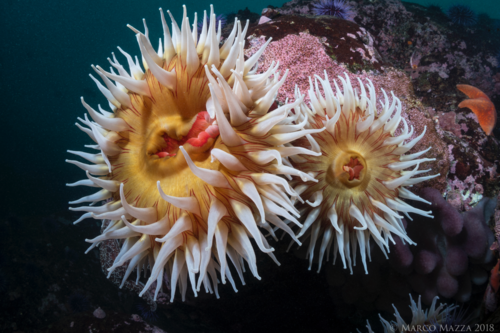
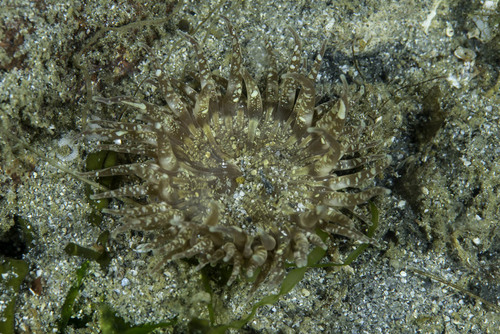
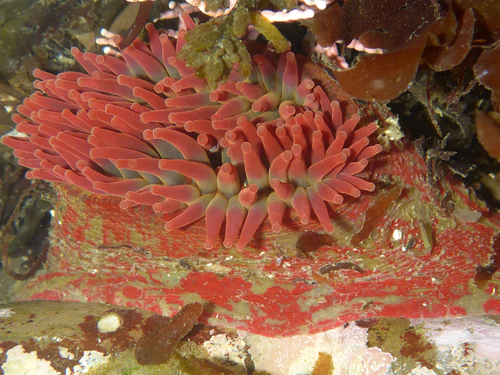
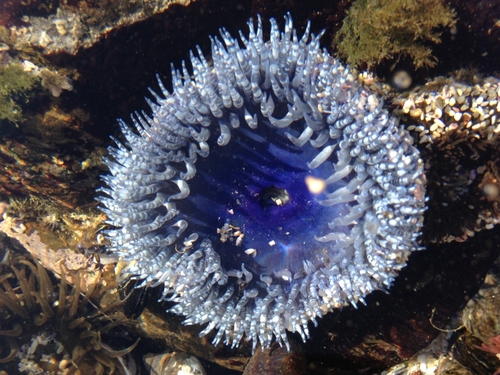
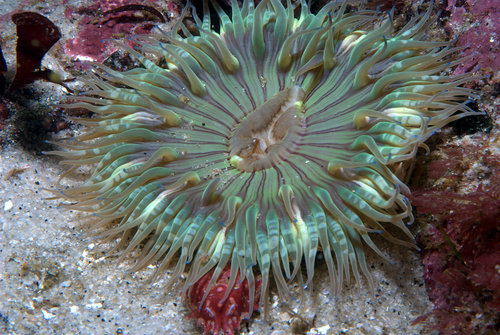
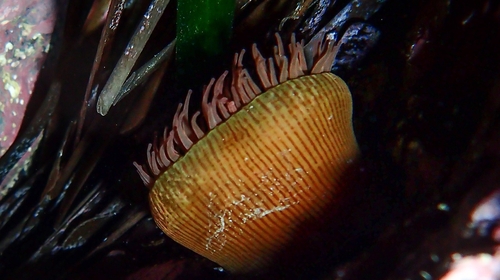
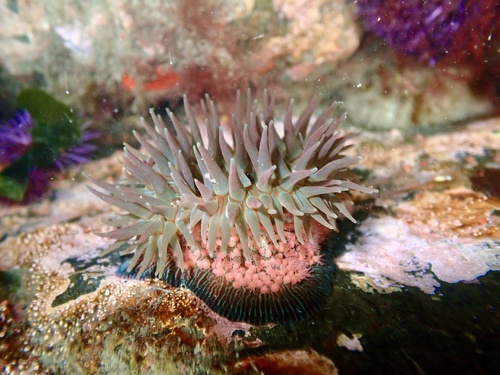
Epiactis lisbethae Fautin & Chia, 1986 is similar to the more common brooding anemone Epiactis prolifera, but it is typically larger, with a column diameter greater than 50 mm (2 in). When contracted, it has a dome shape, and sand particles do not stick to its column. Its pedal base, which spreads out over rock surfaces, features bold striping that extends upward along the column as striations. During certain seasons, several hundred juveniles are brooded in a band on the outside of the column, and all these young anemones are roughly the same size. The adult anemone can be dull red, greenish, brown, or orange. Its oral disc has fine white radial lines that run from the tentacles to the mouth. This species was first described in 1986 from the San Juan Islands of Washington state, and it was named to honor Lisbeth Francis, a marine biologist at Western Washington University. Its range extends south from Bamfield on Vancouver Island, Canada, to Coos Bay in southern Oregon, and continues into northern California, United States. It is uncommon in Oregon and California. This anemone has separate sexes, and breeding occurs seasonally. After internal fertilization, eggs are first held in the gastrovascular cavity. They are later expelled through the mouth and move down the column, where they attach in a broad belt halfway down the column. The larvae are brooded in this location for several months. Once sufficiently developed, the juveniles slither or crawl down the column and move to new locations. Red, green, and brown adult anemones typically produce pinkish young, while orange adults usually have orange young.